Older people shopping for one
A ready-to-heat tin avoids cooking and draining dry pasta. Check whether its size and labelled serving fit the meal rather than assuming a smaller tin is always enough.


Choose a ready-to-heat tin when minimal preparation matters most, but check its labelled serving size before treating one tin as one meal. A larger tin suits someone who can use its contents across portions and follow the pack’s storage instructions; dry pasta with sauce offers a different meal-preparation route that requires cooking and assembly. Check salt, allergens and ingredients on the exact pack.
A ready-to-heat tin avoids cooking and draining dry pasta. Check whether its size and labelled serving fit the meal rather than assuming a smaller tin is always enough.
A larger tin may suit someone who will share it or use it across servings. Consider what will happen to the remainder once the tin is opened.
Salt, wheat, soya, sulphites and meat ingredients may affect the choice. Read the declaration on the particular pasta product rather than relying on its brand or tin size.
Start with the preparation the shopper can manage, then decide how much of an opened tin they will use and check the exact product label.
| Concern | What to check | Who this matters to |
|---|---|---|
| Preparation and immediate portion | Check the tin’s net weight, labelled serving and heating instructions. | When cooking and draining pasta would be difficult, I want a ready-to-heat tin that fits the meal I have in mind. About 42% of consumers put easy preparation and an immediately suitable portion first. |
| Using the whole tin | Check how many labelled servings it contains and the pack’s instructions for storing any remainder. | If I open a larger tin, I need to know whether I can use the rest rather than leave it behind. For about 33% of consumers, making practical use of every portion is the primary concern. |
| Dietary-label suitability | Read the exact pack’s salt declaration, ingredients, highlighted allergens and suitability statement. | When an ingredient or the stated salt amount could rule out a tin, I need to inspect that particular recipe. Checking dietary-label suitability comes first for about 25% of consumers. |
Asda lists nutrition for Heinz Spaghetti 400g per 200g half-can. A single retail tin can therefore contain more than one labelled serving.
Compare the net weight and serving basis with the meal the shopper intends to eat.
Opening a larger tin for a light meal leaves a remainder to manage.
Asda’s Heinz Spaghetti 400g listing declares wheat and 0.7g salt per 200g half-can. Other pasta recipes can have different ingredients and allergen declarations.
Read the ingredients, highlighted allergens and salt information on the exact tin, particularly when switching recipes.
The Barilla and M&S dry pasta and Dolmio sauce considered here require cooking or meal assembly. They do not serve the same minimal-preparation purpose as tinned pasta.
Choose those products when the shopper can manage the additional preparation steps.
Dry pasta and a separate sauce also mean planning the other ingredients needed for the meal.
A tinned-pasta option appearing in the checked Tesco, Sainsbury’s and Asda listings.
An own-label tinned-pasta route that includes Tesco Spaghetti Rings In Tomato Sauce 410G.
Its canned-pasta listing includes own-label products alongside Heinz tins.
A retailer whose checked Heinz Spaghetti 400g listing gives pack-specific nutrition and ingredient details.
A sauce option for preparing pasta rather than a direct substitute for a ready-to-heat tin.
A dry-pasta option when cooking pasta separately is practical.
A dry-pasta alternative rather than a ready-to-heat single tin.
This 400g canned pasta meal is an option for shoppers considering a single tin and checking whether its labelled portions suit their plans.
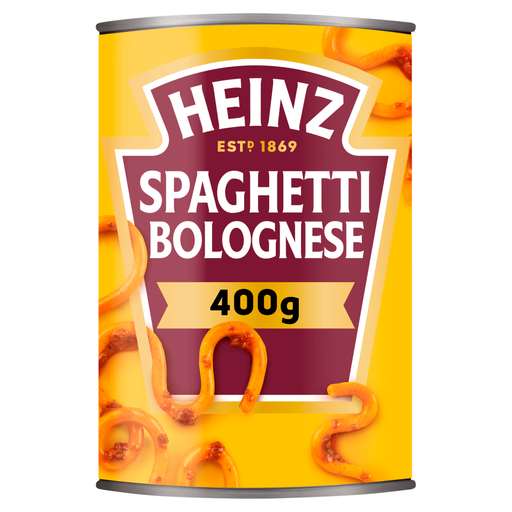 Image unavailable
Consider this canned pasta meal when a 400g tin can be used in suitable portions. Nutrition is stated per half-can, and the listing declares wheat and soya. Check the pack’s heating directions and instructions for storing any remainder.
Not necessarily. Asda’s Heinz Spaghetti 400g listing states nutrition per 200g half-can, so check the serving basis on the particular tin and compare it with the intended meal.
Choose a manageable preparation method and tin size, then follow the product’s handling and storage directions. The Food Standards Agency notes that older adults are more susceptible to foodborne illness, making food handling an important consideration.
Read the exact tin’s ingredients list and its emphasised allergens. GOV.UK guidance for UK prepacked food says the allergens among the 14 legally specified types must be emphasised within the ingredients list.
Compare figures stated on the same basis, such as per 100g, and check how much of each tin forms the labelled serving. The NHS advises checking food labels when comparing salt amounts; a figure for half a tin should not be mistaken for the whole tin.
They are an alternative when the shopper can cook and assemble the meal, not a like-for-like choice for minimal preparation. Barilla dry pasta needs cooking and draining, Dolmio’s checked Bolognese sauce instructions involve cooking other ingredients, and the checked M&S spaghetti is a 500g dry product with an 11-minute cooking time.