Solo diners planning a quick dinner
Check the labelled servings and ingredients before deciding whether to eat the whole tin, add a side or keep some for another meal.


For a quick dinner for one, consider a chunky soup if you want visible ingredients, or a smooth classic if you plan to add bread or another side. Check a condensed soup’s preparation directions before treating it like a ready-to-heat tin. A 400g tin is not necessarily one portion: Sainsbury’s labels both Heinz Carrot and Coriander and its own Mulligatawny soup as two servings, so check how much you intend to eat and what you would do with any remainder.
The useful starting point is whether the soup will be your whole dinner, part of a meal or a tin you plan to split.
Check the labelled servings and ingredients before deciding whether to eat the whole tin, add a side or keep some for another meal.
Compare smooth and chunky options by their ingredients, labelled servings and the quantity you expect to eat, rather than relying on the flavour name alone.
Read the exact can’s ingredients and allergen statement. The Heinz, M&S and Sainsbury’s examples discussed here show that a familiar soup name does not reveal every ingredient.
Choose the format that fits your dinner plan, then use the individual can’s serving, ingredient and preparation information to decide whether it works for one.
| Priority | What to check | Your needs |
|---|---|---|
| Soup format | Look at whether the soup is smooth, chunky or condensed. For condensed soup, follow the individual can’s preparation and serving directions rather than assuming it is ready to heat as sold. | I’d prefer visible ingredients if soup is doing most of the work at dinner; a smooth soup could suit me when I’m adding toast or another side. If I’m cooking with the soup, a condensed option may be worth considering. |
| Portion | Read the servings per can and compare nutrition for the amount you will eat. Sainsbury’s labels both Heinz Carrot and Coriander 400g and its own Mulligatawny 400g as two servings. | A whole tin might suit my dinner, but I don’t want to mistake the labelled half-can figures for the amount I’ll eat. |
| Heating | Check whether the exact can gives hob or microwave directions. Follow its instructions for the container, stirring, heating and standing time. | On a busy evening, I need a method that works with the equipment I’ll use. |
| Ingredients | Read the full ingredients and allergen statement on the current can. Sainsbury’s Heinz Carrot and Coriander listing identifies milk ingredients; M&S describes pearl barley in its chicken-and-vegetable soup, and Sainsbury’s describes beef in its Mulligatawny. | I need to check the exact soup for ingredients I avoid, even when its flavour name sounds suitable. |
| Leftovers | Check the opened-tin storage instructions before planning to save a portion. The Heinz, M&S and Sainsbury’s examples direct shoppers to refrigerate unused soup in a suitable container and use it within two days. | If I’m eating only part of a tin, I need a container and a plan for the remainder. |
Sainsbury’s labels the reviewed Heinz Carrot and Coriander and Mulligatawny 400g tins as two servings. That matters when you compare the label with the amount you expect to eat.
Check servings per can before deciding whether you want a side or will save some soup for another meal.
A name such as vegetable or chicken does not tell you every ingredient. The product examples include milk ingredients, barley and beef.
Use the current can’s ingredients and allergen statement to check your own requirements.
A per-100g or half-can nutrition figure is not the figure for a whole 400g tin.
Compare labels on the quantity you intend to eat, especially when looking at salt per serving.
The reviewed Heinz, M&S and Sainsbury’s labels instruct shoppers to transfer unused soup to a suitable container, refrigerate it and use it within two days.
If you intend to split a tin, have a lidded container ready and follow that product’s own storage directions.
These ranges offer different soup formats, but ingredients and serving directions belong to individual products, not to every tin from a brand.
Heinz has classic soups as well as Big Soup options. Check the named variety rather than assuming both formats have the same serving guidance.
Tesco Groceries lists classic, chunky and plant-based tinned-soup choices.
Sainsbury’s own-label range includes Mulligatawny, a spiced soup with rice and beef.
M&S lists chunky chicken-and-vegetable and bean-and-vegetable tinned soups among its range.
Campbell’s UK presents its soups for meals and for use as recipe ingredients.
Asda Groceries lists own-label tinned soup, including Just Essentials by Asda Tomato Soup.
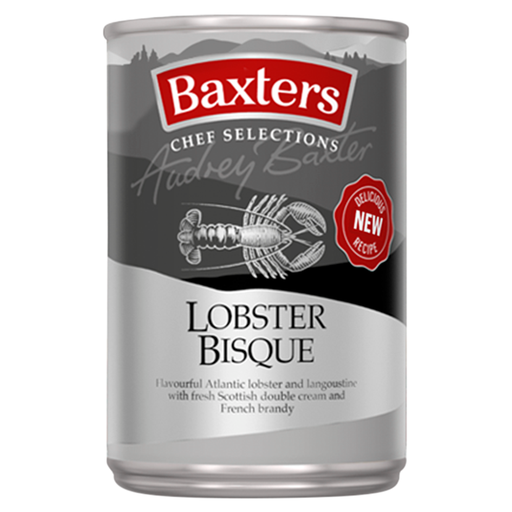
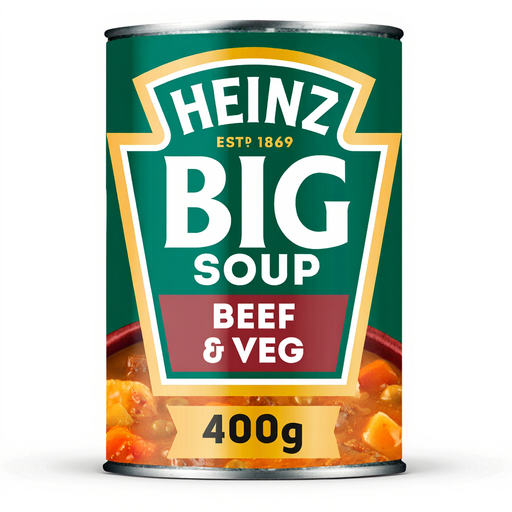
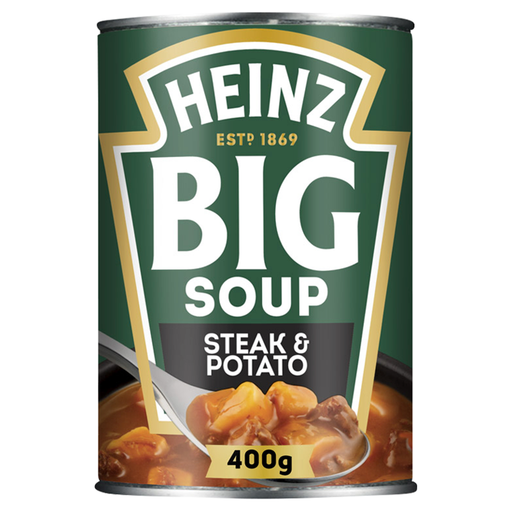
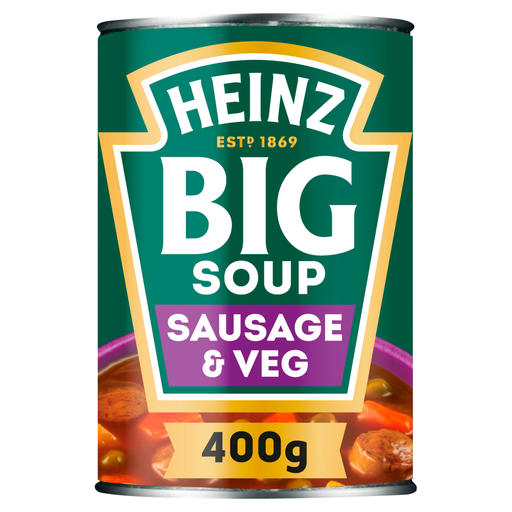
These tins include a lobster bisque, a cream-of-mushroom soup and three Heinz Big Soup varieties. Choose among them by the flavour and format you want, then check each can for portions, allergens and heating directions.
 No image available
If you want bisque for dinner, check the can’s serving statement against the portion you intend to eat. Check its current allergen information, particularly for crustaceans, milk, sulphites and celery, and follow its preparation directions.
 No image available
Consider this beef-and-vegetable variety if you prefer a chunky soup for dinner. Check its labelled servings before deciding whether to eat the whole tin or store a remainder; use the current can’s heating and allergen directions.
 No image available
This cream-of-mushroom variety is an option if you plan to serve soup with bread or another side. Check the serving count and current ingredient statement, including milk and wheat, before choosing it for your meal.
 No image available
Steak-and-potato soup may appeal if you want a meat-and-potato variety rather than a smooth classic. Read the can’s serving statement and heating directions before planning it as dinner for one.
 No image available
This sausage-and-vegetable variety is another chunky option for a weeknight meal. Check the labelled servings and preparation directions on the can, and read its allergen statement if wheat matters to you.
Not necessarily. Sainsbury’s labels both Heinz Carrot and Coriander and its own Mulligatawny 400g tins as two servings. Check the particular tin’s serving statement, then decide whether you want the whole amount, a side or a portion to save.
Use the microwave only according to the directions on the exact tin. The Sainsbury’s Mulligatawny listing gives instructions for a covered microwaveable dish, including stirring and standing time; follow the timings and checks stated for your product.
Follow that tin’s opened-product instructions. The reviewed Heinz, M&S and Sainsbury’s examples direct shoppers to transfer unused soup to a suitable container, refrigerate it and use it within two days.
Read the ingredients and allergen statement on the current can rather than relying on its flavour name. The examples here include milk ingredients in a Heinz vegetable soup, pearl barley in an M&S chicken soup and beef in Sainsbury’s Mulligatawny.