Family-meal quantity planners
If the tuna is going into a fishcake, filling or side dish, compare the recipe’s required amount with the pack’s drained weight where stated. Separate tins also let you keep unopened portions for another meal.


Choose a four-pack if you want separately sealed tins for a tuna side dish or another meal; consider a larger single tin when one recipe will use most of it, or smaller no-drain tins when fewer draining steps matter more than pack quantity. Compare drained weight where stated, not just the weight printed on the front, and check the exact variant’s packing liquid and nutrition label before deciding.
If the tuna is going into a fishcake, filling or side dish, compare the recipe’s required amount with the pack’s drained weight where stated. Separate tins also let you keep unopened portions for another meal.
If packing liquid, fat or salt affects your choice alongside chips and the rest of the meal, compare the exact variants on the same stated nutrition basis rather than judging by liquid alone.
Check the pack’s sourcing information and instructions for opened tuna. Fish-allergen information and pregnancy-related tuna guidance may also affect what is suitable for someone at the table.
For fish and chips night, decide how much tuna the dish needs before choosing a tin format; then compare the packing liquid and what will happen to any opened remainder.
| Concern | What to check | Who this matters to |
|---|---|---|
| Usable quantity | Compare tin count and declared drained weight with the amount your recipe calls for. Princes lists its spring-water 4 × 145g pack as 4 × 10²g drained. | If I am making one dish for the family, I need enough tuna without opening tins I cannot use. About 36% of consumers put usable quantity first. |
| Packing liquid and nutrition | Check ingredients and fat, salt and energy per 100g on the exact variant, using the same stated basis for comparisons. | When the meal already includes fried or salty components, I want to choose the tuna’s liquid and nutrition profile deliberately. For about 29% of consumers, that fit is the primary concern. |
| Opened leftovers | Work out how many tins you will open and follow the pack’s refrigerated storage and use instructions for any remainder. | I may need only part of a multipack tonight, so keeping the other tins sealed matters to me. Avoiding an opened remainder comes first for about 21% of consumers. |
| Household checks | Read the current fish-allergen declaration and sourcing information. Where relevant, consider NHS guidance on tuna during pregnancy or when trying for a baby. | If someone at the table has a fish allergy, or I need to check sourcing or tuna intake, those details decide whether the pack suits us. About 14% of consumers put these checks first. |
The headline weight includes packing liquid. Packs with the same net tin size need not declare the same drained quantity or serving basis.
Start with the amount your dish needs and use the drained weight where the pack states it. If it does not, do not assume a yield from the net weight.
Asda lists 1.0g fat per 100g drained for its spring-water tuna and 6.4g for its sunflower-oil version. Its spring-water version lists 0.90g salt per 100g drained, while Sainsbury’s lists 0.42g for its brine tuna; neither comparison describes every product in those liquids.
Compare the exact tins’ nutrition panels on a like-for-like stated basis, particularly if fat or salt influences your choice.
Once a tin is opened, its storage instructions matter. Sainsbury’s specifies using its brine tuna within one day after transferring it to a non-metallic container and refrigerating it; M&S specifies two days for its spring-water pack.
Open only what the meal needs. Transfer and chill any remainder, and follow the instruction on the product you bought.
An opened remainder that cannot be used within its stated period may go to waste.
For someone who is pregnant or trying for a baby, a family pack does not change the NHS weekly tuna guidance.
Consider their total tuna intake that week; the NHS advises no more than four cans of tuna or two tuna steaks a week for these groups.
These ranges offer different tin sizes or packing liquids to compare; the relevant details belong to the individual product, not every tuna pack carrying the brand.
Offers four-pack tuna chunks and a smaller 3 × 100g no-drain format.
Lists 4 × 145g tuna chunks in brine, spring water and sunflower oil.
Lists own-label 4 × 145g multipacks in several liquids alongside 400g single tins.
Lists an own-label 4 × 145g tuna-chunks pack in brine.
Lists own-label 4 × 145g spring-water and sunflower-oil variants.
Lists a 640g four-pack of tuna chunks in spring water with its own sourcing information.
These selections cover four-tin packs in spring water, brine or sunflower oil, plus a smaller no-drain option. Match the tin count and liquid to your dish, and check drained quantity on the pack when planning how much tuna to use.
 No image available
Four separate tins suit a meal that uses several portions or leaves sealed tins for another day. The stated 4 × 125g is net tin weight; check the pack’s drained quantity against your recipe.
 No image available
This four-tin brine pack suits a dish made with tuna drained from separate cans. Princes lists tuna, water and salt for this variant; compare its declared drained weight and nutrition label with any alternative you are considering.
 No image available
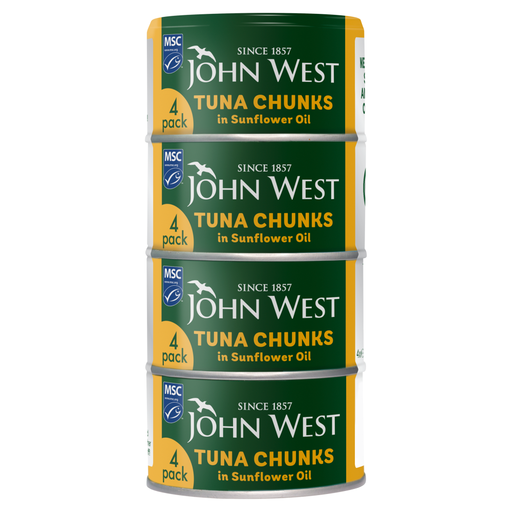
Choose this four-tin format if sunflower oil suits the dish and you want to open tins separately. Use the exact pack label for drained quantity and nutrition rather than treating its 125g net tin size as usable tuna weight.
 No image available
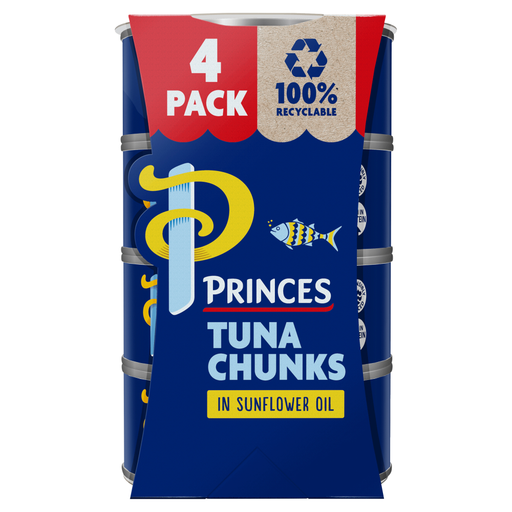
The four separate 145g tins suit an oil-packed tuna dish or several uses. Check the pack’s drained quantity before planning the recipe, and confirm the nutrition panel’s stated basis before comparing it with drained-weight figures for other tins.
 No image available
These three smaller no-drain tins suit a dish needing less tuna or a preference for fewer draining steps. They are a different format from a four-tin family pack, so check that the quantity suits your meal.
Compare the recipe’s required drained tuna amount with the drained weight stated on the pack, where available. Net weight includes liquid: Sainsbury’s lists the Princes spring-water 4 × 145g pack as 4 × 10²g drained, so the front-of-pack tin size alone is not a recipe yield.
No. Asda lists 0.90g salt per 100g drained for its spring-water tuna, while Sainsbury’s lists 0.42g per 100g drained for its own-label brine tuna. Compare the exact products’ labels on the same basis.
Follow that product’s instructions for transferring and refrigerating the remainder rather than leaving it in the opened tin. The stated use period differs: Sainsbury’s specifies one day for its brine tuna, while M&S specifies two days for its spring-water pack.
The pack format does not change the NHS guidance for people who are pregnant or trying for a baby: no more than four cans of tuna or two tuna steaks a week. Consider all the tuna they eat that week, not just the number of tins opened for this meal.
Tuna is fish and is unsuitable for someone with a fish allergy. Read the current pack’s allergen and ingredient declaration before serving it; product details can differ between variants.