Regular hosts serving several slices
If you often make toast for three or more people, four slots can reduce the number of batches. Separate browning controls are useful when guests prefer different results.


If you regularly toast fruit bread for several friends, a four-slice toaster can serve more slices in one cycle; independent browning controls are worth considering when preferences differ. For occasional visits or limited worktop space, a two-slice wide-slot model may suit you better, but compare your usual slices with the maker's slot guidance whichever capacity you choose.
If you often make toast for three or more people, four slots can reduce the number of batches. Separate browning controls are useful when guests prefer different results.
Prioritise the fit of your usual slices and adjustable browning rather than assuming that a fruit-bread label or four-slot capacity guarantees compatibility. Compare the slices with the exact toaster's instructions.
If you usually toast for one or two people, a compact two-slice model may be easier to accommodate. Look for slots that suit your bread and a removable crumb tray, while allowing for extra batches when friends visit.
Decide how many slices you normally need at once, then check the fit of your own fruit loaf. Capacity does not tell you whether a thick or long slice will fit.
| Concern | What to check | Who this matters to |
|---|---|---|
| Serving several guests | Check usable slot capacity and whether slot pairs have independent browning controls. | When friends want toast together, I would rather serve several slices in one cycle than have them wait through repeated batches; around 42% of consumers put serving capacity first. |
| Fruit-loaf fit and browning | Compare your sliced loaf with the maker's slot guidance, including dimensions where stated; check for adjustable browning. | If my fruit loaf is cut thickly, I need each slice to fit without forcing it and want to adjust how it browns; around 42% of consumers prioritise fit and browning control. |
| Compact ownership | Compare the appliance's footprint and crumb-tray access; check the plug and fuse for use in Great Britain. | For occasional visits, I would make room for a smaller toaster and accept more batches when serving a group; around 16% of consumers put compact ownership first. |
A four-slot toaster holds more slices, but that says nothing about the dimensions of each slot. A slice that is too thick or long can wedge in the carriage.
Compare your usual sliced loaf with the exact model's slot guidance before buying, and never force a slice into place.
Four-slot capacity does not itself mean that guests can choose different browning levels or that you can operate fewer slots for everyday use.
Check the controls on the specific model. Russell Hobbs lists independent variable browning controls for the Buckingham 20750; Dualit lists a one-to-four-slot selector for the NewGen four-slice model.
Crumbs can accumulate, smoke or burn, particularly when a loaf sheds pieces as it toasts.
Choose a tray you can remove and clean it frequently. Electrical Safety First advises unplugging the toaster before cleaning.
These models illustrate different features to compare; a feature listed for one model should not be assumed to apply across its brand.
The Buckingham 20750 offers a four-slice option for hosting, while the 26394 is a two-slice wide-slot option for smaller batches.
The Lite and NewGen four-slice models provide different approaches to slot fit and everyday operation.
The Dusk TFP30.000GY is a four-slot option with adjustable browning for serving several slices.
These four-slice choices suit serving several friends, while the two-slice choice suits smaller batches and occasional visits. For any of them, check your fruit-bread slices against the maker's slot guidance and confirm the plug and fuse for use in Great Britain before buying.
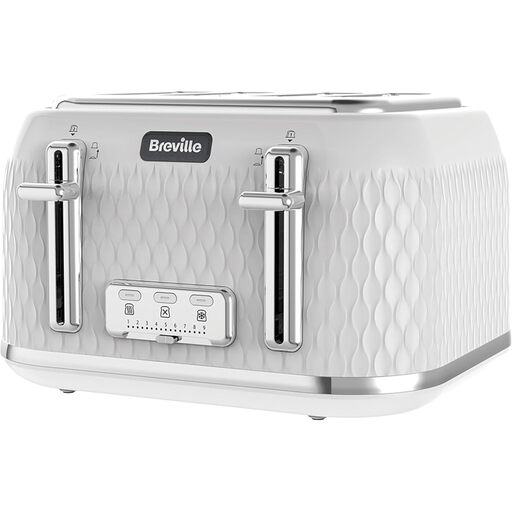 No image available
Consider this four-slice model when several friends want toast in the same round. Its name specifies wide slots and high lift; confirm that your own slices fit the slots.
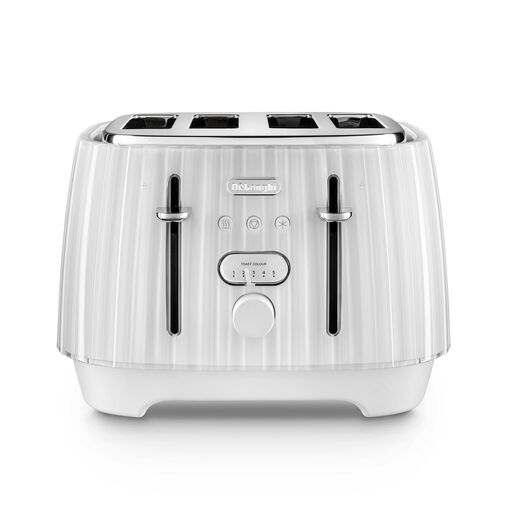 No image available
Its four-slice capacity suits preparing several servings at once. Check the slot guidance against your fruit loaf and the controls if guests prefer different browning levels.
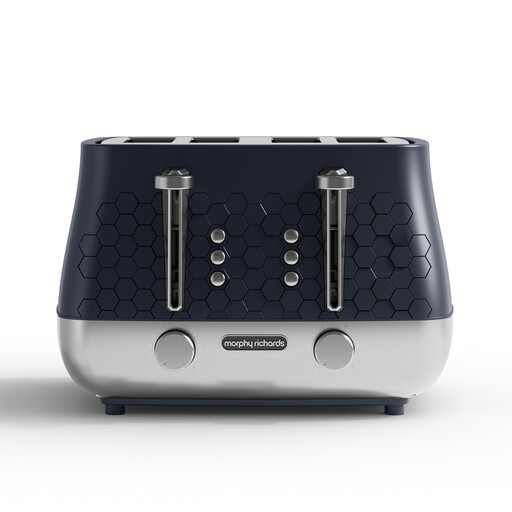 No image available
Four slices and the wide slots stated in its name make this a model to consider for serving a group, subject to checking your loaf's fit. Confirm the delivered colour variant if its appearance matters to you.
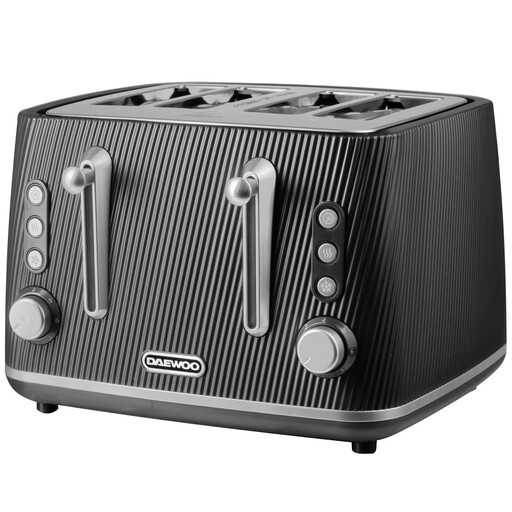 No image available
This four-slice model is suited to preparing several servings per cycle, provided your slices fit. Its name specifies wide slots; if you often toast short slices, check how they can be retrieved safely.
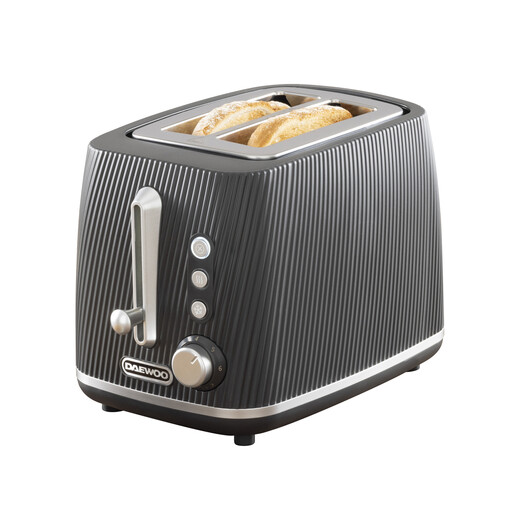 No image available
Consider this two-slice option if you usually make smaller batches and only occasionally serve friends; a group will need more cycles. Its name specifies wide slots, but check your fruit loaf's fit and how shorter slices are retrieved.
No: four slots are useful when you regularly need several servings at once, while two slots may suit occasional visits and limited worktop space. Neither capacity confirms that your fruit-bread slices will fit, so check the exact model's slot guidance.
Start with a conservative setting and adjust for your slices rather than relying on another toaster's dial number. Kenwood notes that dry or stale bread toasts faster than fresh bread, and thin slices faster than thick ones; follow the instructions for your model.
Unplug the toaster before attempting to remove the slice, and do not put fingers or metal utensils into the slots. Electrical Safety First advises using wooden tongs after unplugging; to help avoid a repeat, check that slices are not too thick or long for the toaster.
Clean it frequently, with the toaster unplugged and cool. Electrical Safety First advises regular crumb-tray cleaning; do not put water or cleaner inside the toaster.
Check that the toaster has a suitable UK three-pin plug and fuse, and inspect the plug, lead and socket for damage before use. For products placed on the Great Britain market, GOV.UK says CE marking continues to be recognised alongside or instead of UKCA marking where applicable; Northern Ireland follows a different process.