What matters when buying?
Choose between domestic and professional-use equipment according to how often the office will use it; within the domestic route, decide how much rye-bread flexibility and browning control colleagues need.
Shared-use domestic
Choose when: Toasting is intermittent, but colleagues may need separate batches or browning settings during the same break.
Trade-off: A domestic model’s four slots do not establish suitability for continuous, catering-style use.
Rye-control domestic
Choose when: Thick or varied rye slices make wide slots and mid-cycle viewing more important than straightforward batch capacity.
Trade-off: Extra controls cannot establish that the office’s particular loaf will fit; check its size and try the first slice at a moderate setting.
Professional-use
Choose when: Repeated high-volume use makes stated throughput and a maintenance plan relevant. Nisbets describes the Dualit 40352 as designed for everyday professional use.
Trade-off: The Dualit 40352 has a listed 2.2 kW rating; confirm that the office supply and location are suitable before selecting it.
| Concern |
What to check |
Who this matters to |
| Rye fit and browning |
Compare the usual slice’s thickness and height with the model’s slot guidance; check its browning controls. |
If I bring thick-cut rye to work, I want it to fit without being forced and to judge its browning before it gets too dark. Around 42% of consumers put rye fit and browning first. |
| Shared-use capacity |
Check for four slots and genuinely independent controls for the two pairs. |
When colleagues toast during the same break, I need room for separate batches and different shade preferences. For around 33% of consumers, shared-use capacity is the primary concern. |
| Cleaning and workplace use |
Check for a removable crumb tray, a suitable location and the office’s appliance-approval and maintenance process. |
With several people using one appliance, I need cleaning and safety checks to have clear owners. Keeping a shared toaster suitable and maintained comes first for around 25% of consumers. |
Brands to consider for this use
These examples illustrate different product features and intended uses; check the exact model rather than assuming every toaster from a brand has the same specifications.
Russell Hobbs
The domestic Futura 18790 illustrates a shared-use four-slot layout.
- Russell Hobbs specifies two independently operated carriages, extra-wide slots, seven browning settings, high lift and a removable crumb tray for the 18790.
- Check the office’s rye slices against the model’s bread-size guidance; these domestic-model features do not establish suitability for continuous professional use.
Sage
The Smart Toast BTA845UK is a domestic option for shoppers prioritising slot width and control.
- Sage specifies four extra-wide slots, dual toast control, Lift & Look, an additional-browning function and a front crumb tray.
- Those features do not guarantee a fit for a particular rye loaf; check its dimensions and follow Sage’s instructions when siting the appliance.
Dualit
The 40352 four-slot Vario is a professional-use option to assess where demand is frequent.
- Nisbets lists everyday professional use, output of up to 130 slices per hour, selectable slots, a timer, a removable crumb tray and replaceable elements for the 40352.
- Nisbets lists a 2.2 kW rating. Confirm that the office supply, worktop and maintenance arrangements suit this model.
De'Longhi
The domestic Eclettica CTY4003.BK is an example for differing browning preferences and routine cleaning.
- De'Longhi specifies four slots, independent side operation, wide slots, progressive browning, extra lift and a removable crumb tray for this model.
- Check the usual rye loaf against the chosen model’s slot guidance; the Eclettica’s domestic description does not establish professional-duty performance.
Joybuy four-slice domestic toaster options
These four-slice domestic models offer options for an office where toasting is intermittent. Compare the usual rye slice with each model’s slot guidance, and check the office’s appliance requirements before choosing.
 No image available
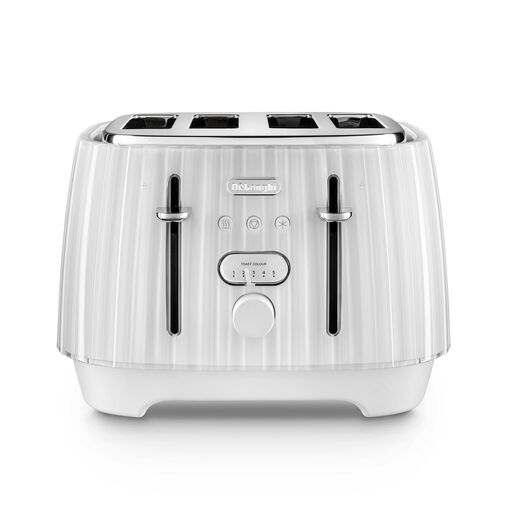
De'Longhi Ballerina CTD4003.W four-slice toaster, white
Consider this four-slice domestic option when colleagues may toast during the same break. Check the usual rye slice against the exact model’s slot guidance before buying.
View on Joybuy
 No image available
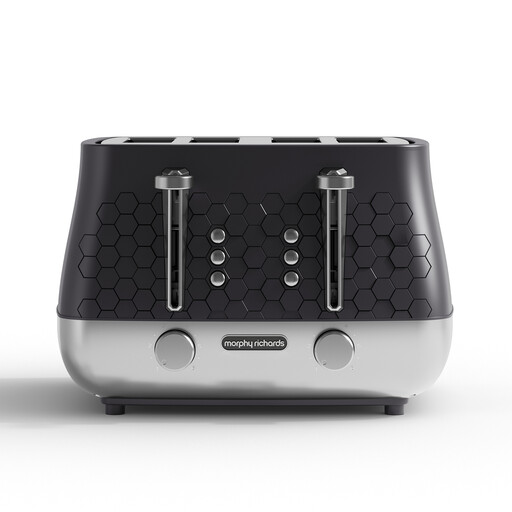
Morphy Richards Cassini 243020 four-slice wide-slot toaster, Moonless Night
The wide-slot design is worth considering if the office uses thick-cut rye. Confirm that the particular slices fit within the model’s bread-size guidance.
View on Joybuy
 No image available
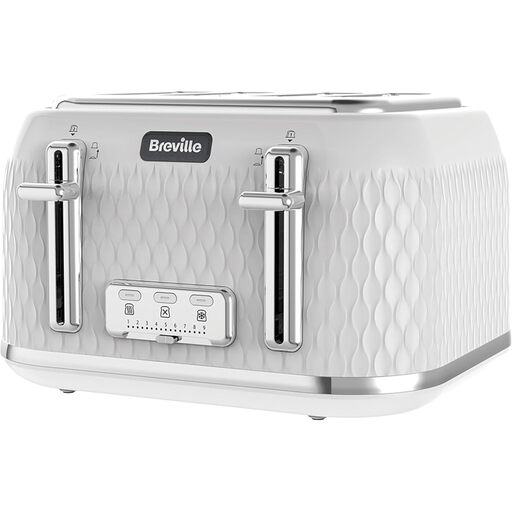
Breville Curve VTT911 four-slice wide-slot toaster, white and silver chrome
This is another wide-slot option for colleagues using varied bread slices. Check the rye loaf’s size against the exact model’s guidance rather than relying on the slot description alone.
View on Joybuy
 No image available
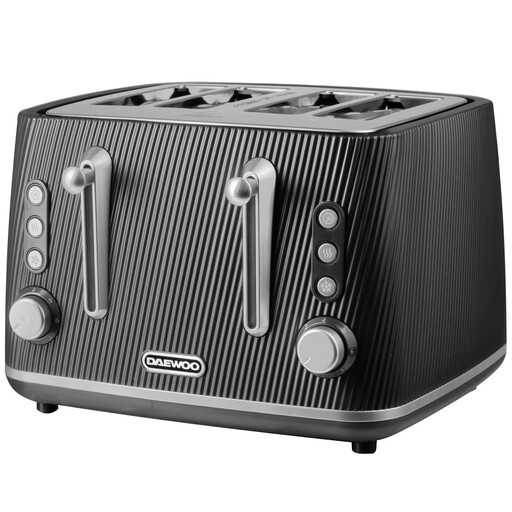
DAEWOO Cascade SDA2779GE four-slice wide-slot toaster, black
Its four-slice, wide-slot format makes it a domestic option to assess for shared breaks. Confirm the fit of the office’s usual rye slices before selecting it.
View on Joybuy
 No image available
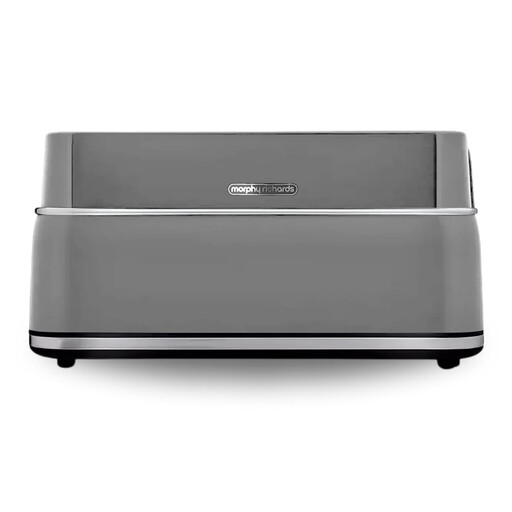
Morphy Richards Signature 245705 four-slice long-slot toaster, grey
Consider its long-slot format if slice length is a concern. Check width as well as length against the usual rye loaf; long slots alone do not establish a fit for thick bread.
View on Joybuy
Common questions
Will any four-slot toaster take rye bread?
No: four slots tell you how many slices a toaster can handle per cycle, not whether a particular rye slice fits. Compare its thickness and height with the exact model’s guidance, and try the first slice at a moderate browning setting.
Does an office toaster need an annual PAT test by law?
An annual PAT test is not automatically required simply because a toaster is used in an office. The Health and Safety Executive says the regulations do not prescribe what checks must be done or how frequently; inspection and maintenance should reflect the equipment, its condition and its working environment.
What should the office check before using a toaster?
Check that the appliance and electrical supply suit the intended use, and follow the office’s approval and maintenance process. The Health and Safety Executive advises assessing workplace electrical risks and ensuring equipment is suitable and kept in a safe condition; users should also follow the manufacturer’s instructions.
How should colleagues clean a shared toaster?
Unplug it, let it cool and empty the crumb tray regularly. Electrical Safety First identifies crumb build-up as a fire risk; follow the model’s cleaning instructions, and stop using the appliance if its plug or cable is damaged or it behaves unsafely.
How much space does an office toaster need?
Follow the clearances in the exact model’s manual. For the Sage BTA845UK, Sage specifies a stable, heat-resistant, level, dry surface with at least 10 cm clear at the sides and 20 cm above; those distances should not be assumed for other models.


