Office tea-break coordinators
If several colleagues use one appliance around the same time, consider teacake fit alongside capacity, available counter space and who will empty the crumbs.


Check whether your office permits a toaster, where it can be used and who will clean and maintain it before choosing a model. For regular shared teacake breaks, look for slots that accommodate thicker items, enough capacity for the people using it and a removable crumb tray; separate controls matter more when colleagues prefer different browning levels. Consider long slots if long or irregular slices are also a routine use, and confirm that the warranty covers the intended workplace use.
A shared toaster has to work for the people preparing food and for the person responsible for the office kitchen.
If several colleagues use one appliance around the same time, consider teacake fit alongside capacity, available counter space and who will empty the crumbs.
If thick teacakes and crumpets are the main items, slot width and access to smaller pieces deserve more attention than the appliance’s finish.
If you are arranging an appliance for the office, establish permission, a suitable location and responsibilities for electrical maintenance and cleaning before purchase.
For a shared-office teacake break, settle permission and placement first. Then compare the slot fit and the capacity your colleagues need.
| Concern | What to check | Who this matters to |
|---|---|---|
| Teacake fit and browning | Look for an explicit description of wide or variable-width slots suitable for thicker items. Check browning adjustment and whether smaller pieces can be lifted out easily. | I need thicker teacakes to fit without forcing them into a slot, with browning I can adjust; around 42% of consumers would put fit and browning first. |
| Shared-break capacity | Check the number of slots, available counter space and whether the exact model controls each pair separately. | When several colleagues toast at break time, I want to limit waiting without imposing one browning setting on everyone; around 33% of consumers would prioritise capacity and control flexibility. |
| Office approval and upkeep | Confirm the office’s rules, designated location and cleaning responsibility. Follow the employer’s electrical-maintenance process; the Health and Safety Executive says inspection and testing depend on risk rather than a universal annual testing interval. | Before bringing in an appliance, I need permission and a clear plan for cleaning and maintenance; for around 25% of consumers, these arrangements would come first. |
Capacity does not establish slot width. Dualit, Breville UK and Russell Hobbs describe particular wide-slot models for thicker items, but that does not apply to every four-slot toaster.
Check the exact model’s stated slot suitability and how you would lift out smaller teacakes.
An appliance suitable for teacakes may still be disallowed in a particular workplace. Derbyshire County Council’s 2026 staff policy is one example of an employer restricting where toasters may be used, not a rule for other offices.
Ask your facilities team whether a toaster is permitted and confirm its designated location before ordering.
The Health and Safety Executive explains that maintaining electrical equipment safely calls for a risk-based approach; an annual test is not a universal legal requirement or a substitute for noticing damage.
Follow your employer’s process for user checks, fault reporting and inspection or testing where appropriate.
Buckinghamshire Fire & Rescue Service warns that accumulated crumbs can ignite. A clean crumb tray also does not, by itself, rule out allergen cross-contact in shared equipment.
Assign responsibility for emptying crumbs and cleaning surfaces, and agree separate controls where a colleague needs allergen precautions.
These examples illustrate features to compare on specific product lines; a brand name alone cannot establish teacake fit or suitability for your office.
Dualit offers different four-slot designs, including wide-slot models and a serviceable Classic line.
Breville’s Obliq four-slot model is an example of a toaster with deep, variable-width slots.
The Cassini four-slot line is relevant when colleagues want different browning settings.
Russell Hobbs describes model 23540 as a four-slot option for thicker items, including teacakes.
These four-slot models are relevant to shared teacake breaks. Compare their stated slot features with the teacakes your colleagues use, and confirm office permission, counter space and warranty terms before purchase.
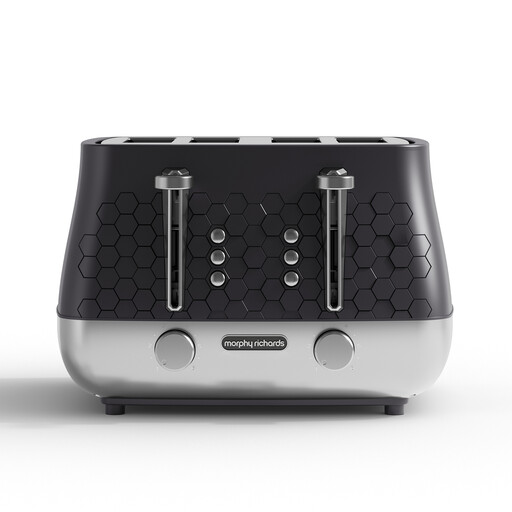 No image available
Consider this model if several colleagues need toast during the same break and thicker teacakes are a regular choice.
The product name identifies four slices and wide slots. Check the slot fit against your usual teacakes and confirm the warranty covers the intended office use.
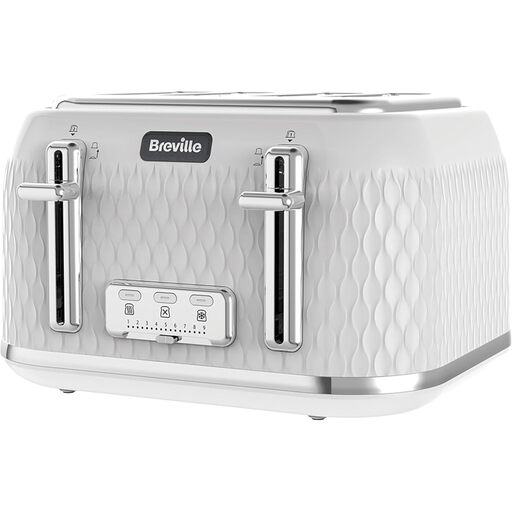 No image available
Consider this model where colleagues toast together and access to smaller teacake halves matters.
Its name specifies wide slots and high lift. Confirm that the slot opening suits your teacakes and that the warranty applies to shared-office use.
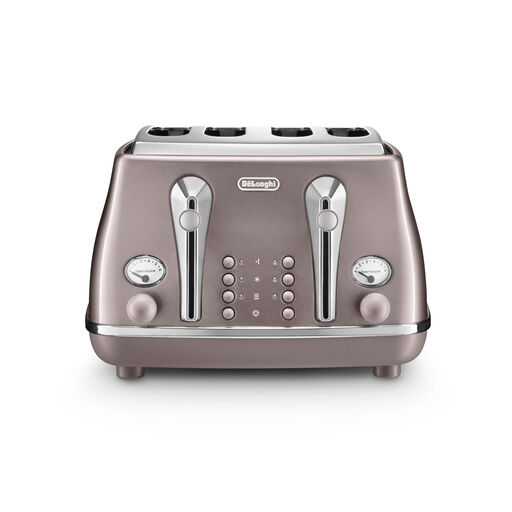 No image available
Four-slice capacity makes this a model to consider when colleagues may use the toaster around the same break time.
Check that its slots accommodate your teacakes, that it fits the approved counter location and that the warranty covers office use.
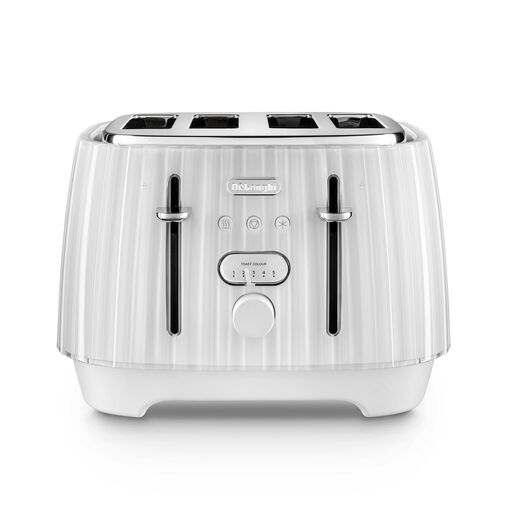 No image available
This four-slice model is relevant if more than one colleague may toast during a break.
Before choosing it for teacakes, confirm the slot fit, space at the permitted location and warranty terms for shared use.
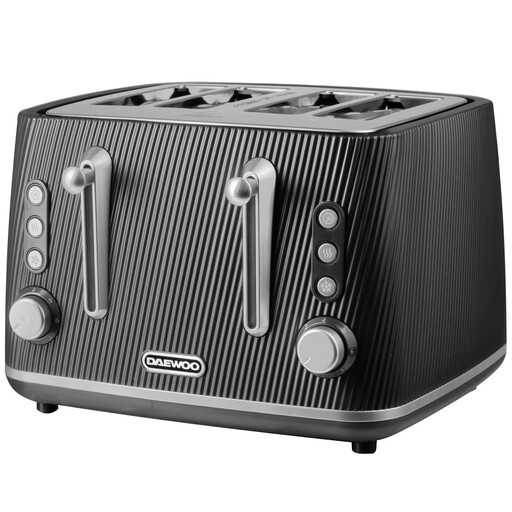 No image available
Consider this model if several colleagues share a toaster and wider slots are a priority for thicker items.
Its name specifies wide slots. If easy removal of small teacakes matters, check the lifting arrangement; also confirm counter fit and workplace warranty terms.
No universal annual PAT-testing rule applies to a shared-office toaster. The Health and Safety Executive says electrical equipment that could cause injury must be maintained in a safe condition, while the appropriate checks and their frequency depend on the equipment and its environment. Follow your employer’s maintenance procedure.
Only if your office permits it and approves an appropriate location. Derbyshire County Council’s 2026 staff policy illustrates how one employer restricts office toasters; it is not a UK-wide ban or permission for other workplaces. Ask your own facilities team before buying, and check the model’s warranty terms for office use.
Agree who will clean it, empty the crumb tray and report faults. Buckinghamshire Fire & Rescue Service advises frequent crumb removal because accumulated crumbs can ignite; the office should also establish a suitable position and follow its electrical-maintenance process. Do not leave the toaster unattended while it is operating.
No. It helps with routine crumb removal but does not establish that a shared toaster is free of allergen cross-contact. If a colleague needs allergen precautions, agree suitable controls under the office’s food-handling arrangements rather than relying on the tray alone.