
24/7 Customer Support

Free returns

Same-day & Next-day Delivery

Quality Guaranteed

Unlock Your Welcome Offers: FREE Delivery | Up to 80% OFF | Free 30-day JoyPlus trial
Download the APP
A toaster is a small appliance, but choosing the wrong one can quickly become frustrating. Bread may sit unevenly in the slots, thick slices may fail to fit or the exterior may take up more worktop space than expected. Some features also sound useful in product descriptions but make little difference if they do not match your daily routine.
As the Joybuy Product Recommendation Officer, I focus on practical specifications rather than polished marketing language. This guide explains the main buying traps, the measurements that matter and which types of toasters suit different UK households.
A 4-slice toaster does not always mean four completely separate operating sections. Some models use two long slots, while others have four standard slots. Long slots can accommodate larger artisan loaves, but the appliance may be wider or deeper than a conventional design.
Likewise, a 2-slice toaster with wide slots may be more useful for thick sourdough, crumpets and bagels than a narrow four-slot model. Check the slot width and length, not just the headline capacity.
An adjustable browning control gives you more choice, but the numbered dial is not a universal measurement. Setting 4 on one toaster may produce a different result from setting 4 on another. Bread thickness, moisture and whether it is frozen also affect the outcome.
Look for practical features such as self-centring guides, which help position slices between the heating elements. If different people prefer different toast shades, independent controls can be more useful than simply having a larger number of settings.
Crumbs collect beneath the heating elements and can create a fire risk if they are left unmanaged. A toaster with a removable crumb tray is easier to maintain than one that requires frequent turning upside down.
A high-lift toaster is also worth considering if you regularly toast crumpets, muffins or smaller slices. It raises the food above the slot opening, reducing the need to reach towards hot surfaces.
Choose a 2-slice toaster for one or two people, a smaller kitchen or occasional use. It generally takes up less worktop space and can be suitable for individual breakfasts. A 4-slice toaster is more convenient for families, shared kitchens and anyone preparing several portions together.
Measure the available area before ordering. Allow space around the toaster for ventilation and keep it away from curtains, wall cupboards, sinks and hobs. Also check the cord length and whether cord storage is included.
A wide-slot toaster is suitable for thick bread, bagels and crumpets. A long-slot toaster can be useful for large slices or two smaller pieces placed end to end, depending on the design.
Do not assume that a slot labelled “wide” will accept every pastry or oversized item. Follow the manufacturer’s instructions and avoid buttered, iced or heavily sugared foods that may melt, drip or burn inside the appliance.
For flexible everyday use, look for:
Before purchase, check the product listing for the rated power, dimensions, plug information and warranty details. UK households should also use a suitable mains socket and follow the supplied safety instructions. A toaster should never be operated unattended or with metal objects inserted into the slots.
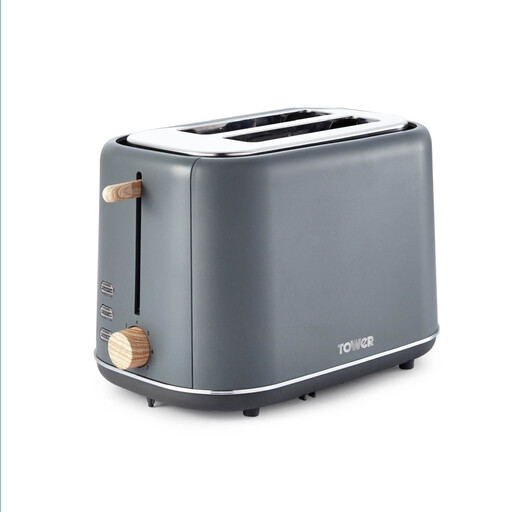
Why This Fits Their Persona: A compact option for students, couples and smaller UK kitchens, with a 28 cm width and 2-slice capacity.
Wide self-centring slots address the common problem of thick slices sitting poorly, while the removable crumb tray supports routine cleaning.
Seven browning levels, defrost, reheat, cancel, lift-up function and integrated cord storage.
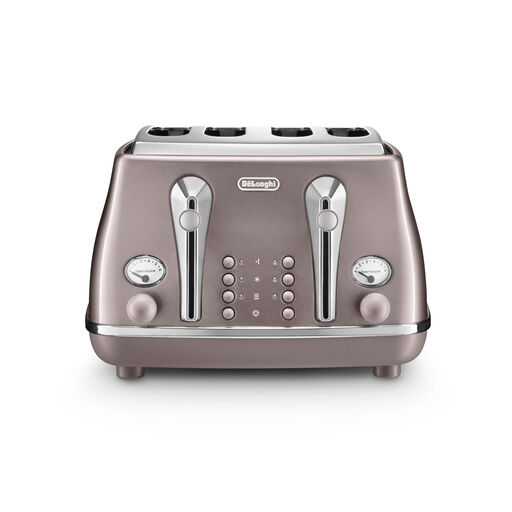
Why This Fits Their Persona: Suitable for style-conscious home cooks who want four-slice capacity and a metallic pink finish as part of their kitchen scheme.
The specification lists extra-wide slots, independent pairs and dual removable crumb trays, rather than relying on appearance alone.
Four-slice capacity, extra-wide slots, variable browning control, high-lift position and defrost, reheat and cancel functions.
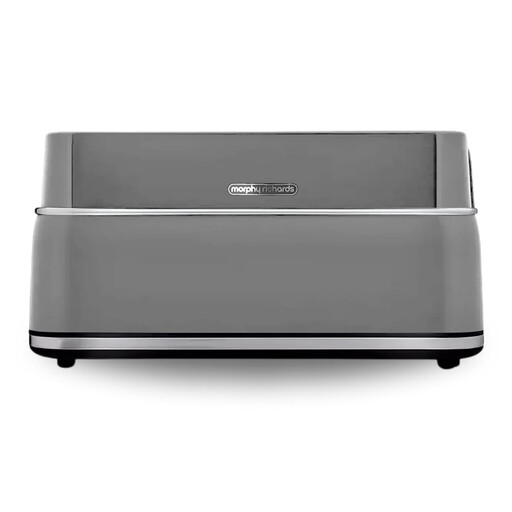
Why This Fits Their Persona: A practical match for families and households that regularly use large artisan slices, longer bread or several portions at once.
Two extra-long slots make the format clear, helping buyers avoid mistaking standard four-slot capacity for suitability with larger bread.
Four-slice capacity in two long slots, variable browning control, high-lift function and removable crumb trays.
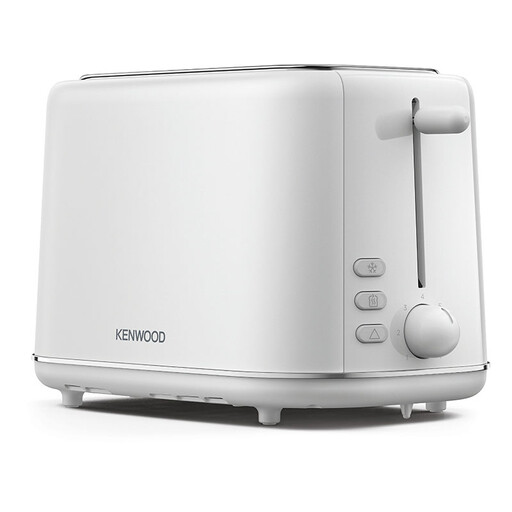
Why This Fits Their Persona: Suits couples and everyday users looking for a neutral white finish, compact proportions and straightforward controls.
It combines automatic bread-centring with a removable crumb tray, addressing uneven positioning and difficult cleaning.
Seven browning settings, 800W power, cool-touch housing, defrost and reheat functions, plus cord storage.
We have compiled a complete, real-time list of products that fully satisfy these strict selection criteria and UK safety regulations.
Power ratings vary, but a 4-slice toaster generally has a higher maximum wattage than a 2-slice model. Running cost depends on the appliance’s wattage and how long it operates. If you usually make one or two slices, a 2-slice model avoids heating unused slots. For a family making several slices in succession, a 4-slice toaster may reduce repeated cycles.
Lifespan depends on construction, frequency of use, cleaning and safe operation. Empty the crumb tray regularly, keep the toaster dry and do not force oversized items into the slots. Always unplug it before cleaning or moving it and stop using it if the cord, plug or controls show signs of damage.
Many current toasters include a defrost function, allowing frozen bread to be placed directly into the slots. Use the setting according to the instruction manual and monitor the first cycle, as bread thickness and moisture affect browning. Never toast food with coatings that may melt or drip into the appliance.