
24/7 Customer Support

Free returns

Same-day & Next-day Delivery

Quality Guaranteed

Unlock Your Welcome Offers: FREE Delivery | Up to 80% OFF | Free 30-day JoyPlus trial
Download the APP
Choosing a toddler balance bike can look straightforward until you compare wheel sizes, seat heights, tyre materials and age recommendations. Some products are marketed as suitable for a wide age range, yet may be too heavy, too tall or difficult to control for a younger child.
Parents and gift buyers in the UK should look beyond colour and character designs. The right first bike should match the child’s height, confidence and intended riding surface, while offering practical features that remain useful after the first few weeks.
An age range such as “2 to 6 years” is only a starting point. Children of the same age can have noticeably different heights and leg lengths. If the saddle cannot be lowered enough for both feet to reach the ground, the child may struggle to stop or regain balance.
Check the minimum seat height, minimum user height and maximum weight capacity where these details are available. A child should be able to sit comfortably with their feet near the floor rather than tiptoeing.
A 12-inch balance bike can offer useful room for growth, but it may be less manageable for a smaller beginner than a 10-inch model. Larger wheels can also increase the overall size and weight of the bicycle.
For a child aged around two, a compact 10-inch balance bike may be easier to steer. A 12-inch children’s balance bike can be more suitable for a taller child aged approximately three to five, subject to the manufacturer’s measurements.
Air-filled tyres can provide a familiar bicycle feel but require inflation and occasional puncture checks. Children’s bike with air-free tyres, such as EVA foam tyres, do not need pumping. This can be convenient for nursery trips, holidays and occasional garden use.
Also check whether assembly tools are included. A low price can become less attractive if a separate tool or complicated set-up is required.
An adjustable-seat balance bike can accommodate growth, but the adjustment range matters more than the feature label. Look for a saddle that allows the child to place both feet down while seated. The handlebar should also be within comfortable reach, with a grip that the child can hold without stretching.
For a no-pedal bike for toddlers, the rider moves by walking or gliding rather than pedalling. This helps them practise steering, stopping and balance at their own pace. A kickstand can be useful for storage, although it should not replace adult supervision during use.
A lightweight balance bike is generally easier for a small child to move and for an adult to carry. Compare the bike’s net weight with the child’s body weight; a bicycle that is too heavy may be difficult to lift after a fall or control when turning.
Useful design details may include:
The RoyalBaby model listed below uses a magnesium alloy frame, alloy front fork and EVA tyres. Its product details list a weight of 2.77 kg, a 22.7 kg maximum user weight and a minimum user height of 86 cm.
Look for clear product warnings, age guidance and load limits. EN71 information may appear on children’s ride-on toys, but parents should still follow the individual product instructions. The AIYAPLAY trike listed below specifies EN71-1-2-3 compliance in its product information.
Balance bikes and toddler tricycles should be used away from traffic and under direct adult supervision. Protective equipment, including a properly fitted cycle helmet, is sensible. Do not allow children to use these products on public roads, and inspect fasteners, tyres, seat mechanisms and handlebars before each outing.
The following options match different family needs rather than presenting one universal choice.
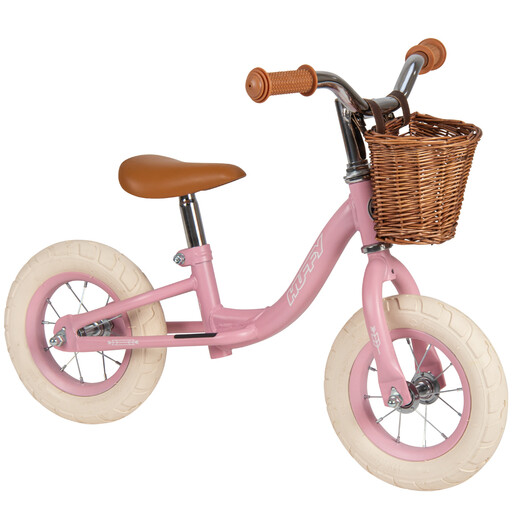
Why This Fits Their Persona: A compact option for a younger beginner from age two, particularly where a smaller frame and simple balance practice are priorities.
Its 10-inch wheels avoid automatically sizing up to a potentially difficult 12-inch frame for a smaller rider. The listing provides a 27 kg maximum user weight.
10-inch wheels, lightweight frame description and vintage-style finish. The listing includes clear warnings about supervision and protective equipment.
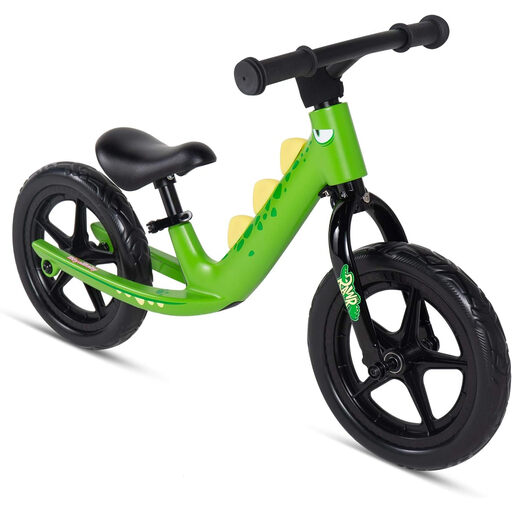
Why This Fits Their Persona: Designed for a taller or more confident child aged approximately three to five who needs a 12-inch balance bike with room for adjustment.
The listing gives measurable fit information, including an 86 cm minimum user height, rather than relying on age alone. EVA tyres also avoid routine inflation.
Magnesium alloy frame, adjustable seat, steering limiter, widened footrests, non-slip handlebar and supplied tool kit.
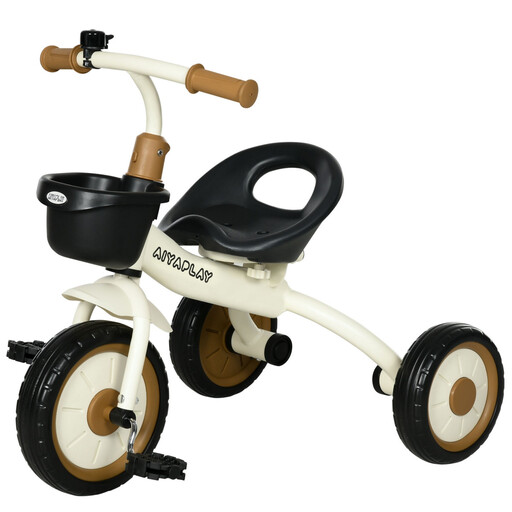
Why This Fits Their Persona: A practical choice for children aged approximately two to five who are not yet ready for a two-wheel balance bike and enjoy carrying toys outdoors.
The three-wheel layout provides a different starting point from a no-pedal bike for toddlers, while its adjustable seat helps address changing leg length.
10-inch front and 8-inch rear EVA wheels, adjustable seat, bell, basket, metal frame and 25 kg maximum load.
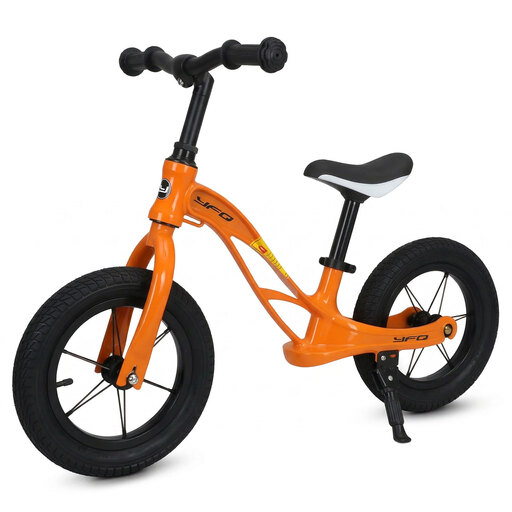
Why This Fits Their Persona: Suitable for families seeking a straightforward first bike for children aged three to six, with features designed for regular carrying and storage.
The product title specifies a lightweight, no-pedal design with an adjustable seat and air-free tyres, addressing weight, fit and maintenance concerns.
Adjustable seat, air-free tyres and kickstand. The same model is also listed in pink and black for different preferences.
We have compiled a complete, real-time list of products that fully satisfy these strict selection criteria and UK safety regulations.
Before the first ride, remove all packaging and complete the assembly according to the supplied instructions. Check that the seat and handlebar are firmly secured, then adjust the saddle so the child can place both feet down.
Start on a flat, quiet surface such as a garden path or traffic-free paved area. Avoid steep slopes, wet surfaces and roads. Recheck screws, nuts, wheels and seat adjustment regularly, particularly after transporting the bike.
Many models are listed for children from around two or three years, but height and confidence are more useful selection guides than age alone. A child should be able to sit on the bike with both feet close to the ground and reach the handlebars comfortably.
A balance bike focuses on steering, gliding and two-wheel balance, while a children’s tricycle offers three-wheel stability and introduces pedalling. For a cautious beginner, a tricycle may feel more familiar. For a child ready to practise balancing before moving to a pedal bicycle, a balance bike may be the more relevant format.
Lifespan depends on the child’s growth, weight, riding surface and care. An adjustable-seat model may remain usable for longer as the child grows, provided they stay within the stated height and weight limits. Air-free tyres can also reduce routine upkeep because they do not require inflation.