
24/7 Customer Support

Free returns

Same-day & Next-day Delivery

Quality Guaranteed

Unlock Your Welcome Offers: FREE Delivery | Up to 80% OFF | Free 30-day JoyPlus trial
Download the APP
Choosing a toddler balance bike can look straightforward until you compare wheel sizes, seat heights, tyres and safety information. A product may look appealing online but prove difficult to control, uncomfortable outdoors or unsuitable after a short growth spurt.
Parents and relatives shopping in the UK should look beyond colour and character designs. The right choice depends on the child’s measurements, confidence, riding surface and whether they are ready for a two-wheel no-pedal bike or would benefit from the support of a kids tricycle.
Age guidance is useful, but children of the same age can have significantly different leg lengths and coordination. A two-year-old may manage a balance bike comfortably, while another child of the same age may prefer a toddler trike with three wheels.
Check the minimum saddle height and ensure the child can place both feet flat on the ground while seated. This allows them to push, slow down and stabilise the bike without stretching or leaning excessively.
A 10-inch balance bike may be easier for a smaller toddler to control, while a 12-inch balance bike can suit a taller child with longer legs. A larger frame is not automatically a better long-term purchase if the child cannot reach the ground or turn the handlebars comfortably.
Look at the recommended height and weight limits, not just the wheel measurement. An adjustable balance bike can offer more flexibility, but adjustment range still varies between models.
Terms such as “lightweight”, “durable” or “smooth ride” are only useful when supported by clear details. Check the frame material, actual product weight, tyre construction, seat adjustment and assembly requirements.
For example, pneumatic tyres can absorb small bumps but require inflation checks. Air-free EVA tyres avoid punctures and pumping, although their ride feel may differ on uneven paths. Neither option is suitable for every family or surface.
The saddle should be low enough for the child to sit upright with both feet touching the ground. Allow a small bend in the knees so they can push along naturally. The handlebar should be reachable without the child leaning too far forward.
For a balance bike for toddlers, fit is particularly important because children learn by walking, gliding and gradually lifting their feet. If the bike is too tall or heavy, confidence can quickly turn into frustration.
Pneumatic tyres, such as those on the Huffy Pro Thunder, provide air cushioning and may feel comfortable over firm outdoor surfaces. They should be inspected regularly and inflated according to the manufacturer’s instructions.
Air-free tyres, used by several Neuleb models and the RoyalBaby Dinosaur, do not need pumping and are less vulnerable to punctures. They can be convenient for nursery trips, parks and storage in a flat, but parents should still check the wheels and axles for wear.
A young rider needs to steer and lift the bike with reasonable control. A lightweight balance bike may be easier to manoeuvre, but it should still have a clearly stated weight capacity and stable components.
Always compare the child’s weight with the listed maximum. Several products below specify a 25 kg limit, while the RoyalBaby Dinosaur lists a maximum user weight of 22.7 kg. These figures are product limits, not suggestions to exceed.
Follow the product warnings carefully. Children should wear suitable protective equipment, including a properly fitted balance bike helmet, and ride under direct adult supervision. These products are not for public roads. Inspect screws, nuts, handlebars, wheels and seat mechanisms before each use, and stop using the product if it is damaged.
Where a product lists EN71-1-2-3, this refers to stated toy safety standard compliance information supplied for that item. Check the current listing, packaging and instructions for the applicable UK conformity information before purchase. A helmet listing should also be checked for its relevant sizing and safety marking; the OutdoorMaster Ibex product information, for example, refers to US CPSC standards and an age range of five years and older, so it should not be assumed to suit a younger toddler or meet every UK requirement.
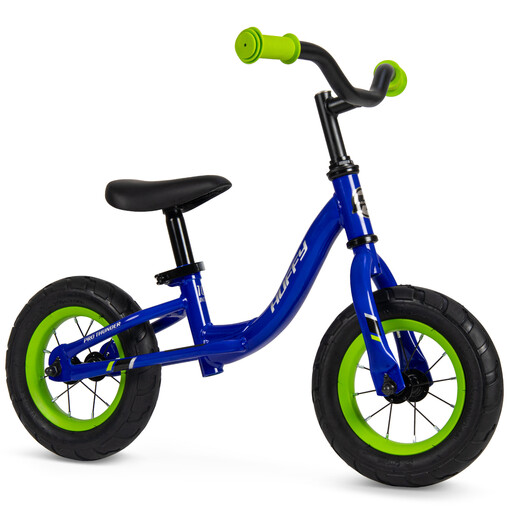
Why This Fits Their Persona: A practical starting point for families seeking a straightforward two-wheel ride for a child aged approximately 2 to 4 years.
The 10-inch pneumatic tyres and adjustable saddle provide clear, checkable features rather than relying only on promotional claims.
Pedal-free design, alloy steel frame, 25 kg maximum user weight and mostly pre-assembled setup.
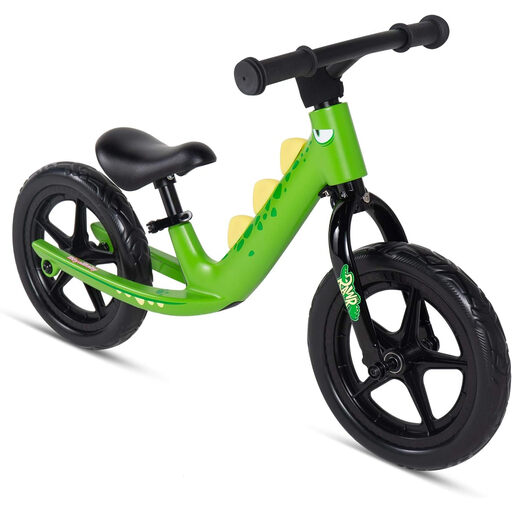
Why This Fits Their Persona: Suits families looking for a feature-led 12-inch balance bike for children aged around 3 to 5 years.
The listing provides specific frame, tyre, weight and height information, helping shoppers compare fit instead of choosing by appearance alone.
Magnesium alloy frame, maintenance-free EVA tyres, adjustable seat, steering limiter and widened footrests.
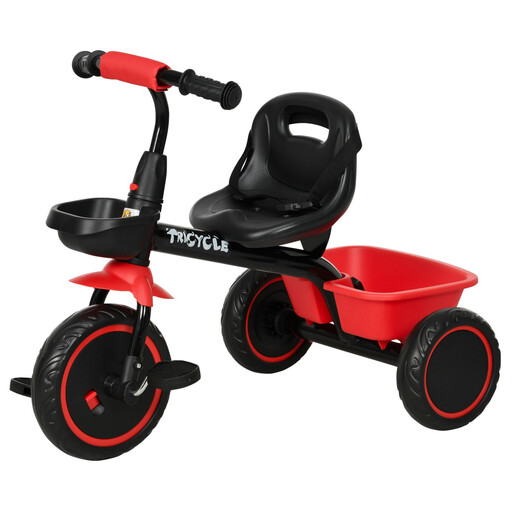
Why This Fits Their Persona: A practical option for toddlers who need three-wheel stability and storage for toys or essentials during park trips.
Its stated 25 kg capacity, 3 cm seat adjustment and dimensions make it easier to assess for regular family use.
Steel construction, non-slip pedals, safety belt, EVA wheels, mudguard and two storage baskets.
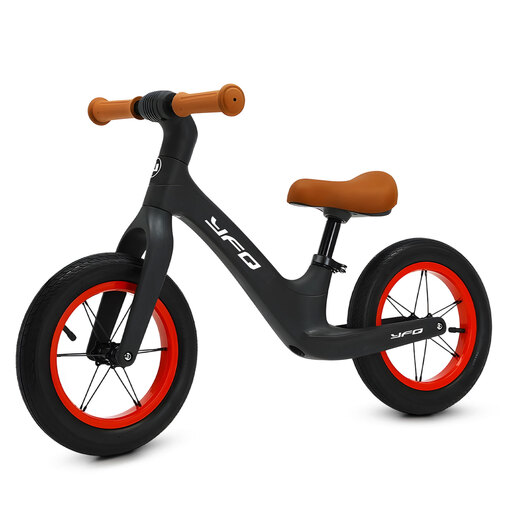
Why This Fits Their Persona: Designed for families wanting a lightweight children’s first bike for ages approximately 3 to 6 years.
The product title specifies an adjustable seat, air-free tyres and a kickstand, helping address maintenance and storage concerns.
No-pedal format, adjustable saddle, air-free tyres and kickstand for convenient storage.
We have compiled a complete, real-time list of products that fully satisfy these strict selection criteria and UK safety regulations.
Before the first ride:
A character-themed model, such as the Spider-Man 12 Inch Balance Bike, may encourage a child to use their bike, while the Huffy Vintage Style 10 Inch Balance Bike offers a different visual design. These choices can be worthwhile when the underlying fit and specifications are suitable.
Some models are listed from age two, but readiness depends on height, leg length and confidence. A child should be able to sit securely, reach the ground and follow simple instructions. Do not leave children under 36 months unattended on a riding toy.
They develop different skills. A balance bike focuses on steering, gliding and two-wheel balance, while a toddler tricycle offers more stability and introduces pedalling. For a hesitant beginner, a trike may be a more comfortable first step; for a child ready to practise balance, a no-pedal bike may be more suitable.
Yes. Pneumatic tyres need pressure checks, while air-free tyres do not require inflation. All models require regular inspection of wheels, frame, saddle, handlebars, screws and any adjustment mechanism. Store the bike somewhere dry and discontinue use if any component becomes damaged.