
24/7 Customer Support

Free returns

Same-day & Next-day Delivery

Quality Guaranteed

Unlock Your Welcome Offers: FREE Delivery | Up to 80% OFF | Free 30-day JoyPlus trial
Download the APP
A toddler balance bike can help a young child practise steering, movement and confidence before progressing to a pedal cycle. However, choosing the right model is not simply a matter of selecting the most colourful design. Seat height, weight, tyre construction and the stated age range all affect whether the bike is genuinely usable.
Parents, grandparents and carers in the UK should also watch for common marketing traps. A low price may hide limited adjustment, while a long list of features may not suit a child who is still learning to walk steadily. The guide below explains what to check before buying and compares suitable options for different household needs.
A product marked “for ages 2 to 5” may still be unsuitable if the seat is too high for your child. Children of the same age can have noticeably different leg lengths. The key measurement is whether the child can sit comfortably with both feet close to the ground and bend their knees slightly.
Always compare the bike’s minimum seat height with your child’s inside-leg measurement. A toddler who cannot place their feet down securely may struggle to control the bike, regardless of the advertised age range.
Pedals, stabilisers and conversion modes can extend a bike’s use, but they may also add weight and complexity. A no-pedal training bike is often straightforward for children learning to push and steer. By contrast, a 3-in-1 balance bike and tricycle may suit families who want a product that changes as the child develops.
Consider how the bike will actually be used. If it will be lifted into a car or carried up stairs, a lightweight balance bike may be more practical than a heavier multi-stage model.
Air-free tyres do not require pumping and are less vulnerable to punctures, but they can feel different from pneumatic tyres on uneven paths. EVA foam tyres are also commonly used on children’s bikes because they are light and do not need inflation. Check the tyre material, tread and wheel size rather than relying only on phrases such as “smooth ride”.
A toddler bike with an adjustable seat offers more flexibility as your child grows. Look for a clearly stated adjustment range and check that the lowest setting is suitable now, not only in several months.
A low-slung frame can make getting on and off easier. Handlebars should be within comfortable reach, with grips that are easy for small hands to hold. The child should be able to turn the bars without stretching or leaning too far forwards.
A lightweight balance bike is easier for a toddler to move and easier for an adult to carry. It should still have a stable frame and secure fastenings. Check the listed net weight and maximum load, particularly if the bike is intended for frequent outdoor use.
The HOMCOM model described below has a metal frame, a 4kg net weight and a maximum load of 25kg. These are objective specifications to compare with your child’s size and your storage needs.
A balance bike normally uses foot power rather than pedals. Children learn to glide by gradually lifting their feet, then develop steering and balance. A balance bike with stabilisers or removable pedals can offer another learning stage, although conversion parts should be fitted according to the instructions.
For UK paths and pavements, non-slip EVA tyres or air-free tyres can reduce routine maintenance. They do not remove the need for adult supervision, suitable footwear and a properly fitted helmet. Before purchase, check the product’s safety markings, instructions, importer or manufacturer information, age guidance and load limit. Look for relevant CE or UKCA information where applicable, rather than assuming that a product is suitable because it appears in a search result.
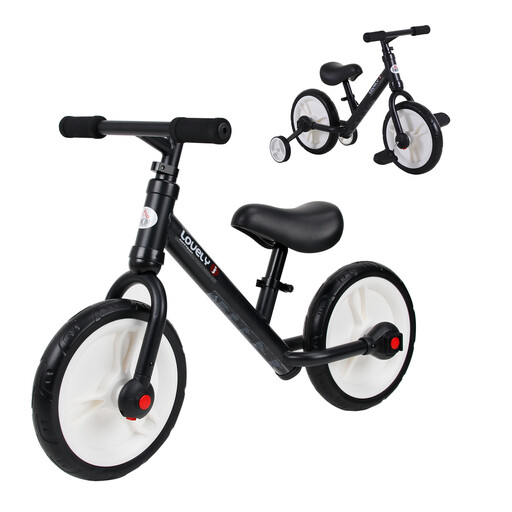
Why This Fits Their Persona: Suitable for families wanting one adaptable kids balance bike for a child aged approximately 2 to 5, with a stated 25kg maximum load and adjustable seat height.
The 33–38cm adjustable seat gives buyers a measurable fit range, while removable pedals and stabilisers avoid committing to one riding format.
Metal frame, EVA tyres, adjustable seat and a stated 4kg net weight. The dimensions are 85L x 36W x 54Hcm.
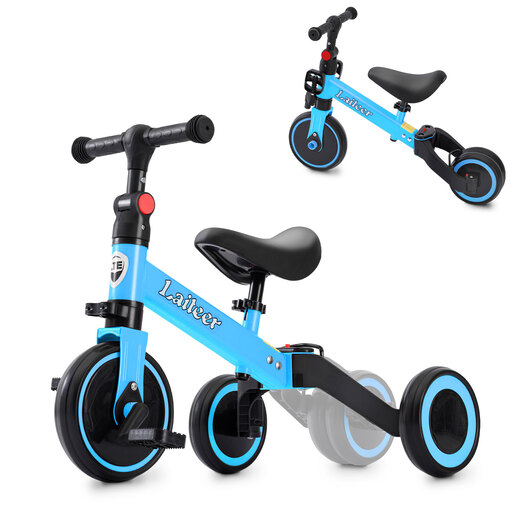
Why This Fits Their Persona: A flexible option for households seeking a baby balance bike that can transition between riding stages from approximately 1 to 5 years.
Its 3-in-1 format and removable pedal design let families choose the configuration that matches the child’s current confidence.
Folding design, adjustable seat, removable pedal and balance-bike/tricycle configurations.
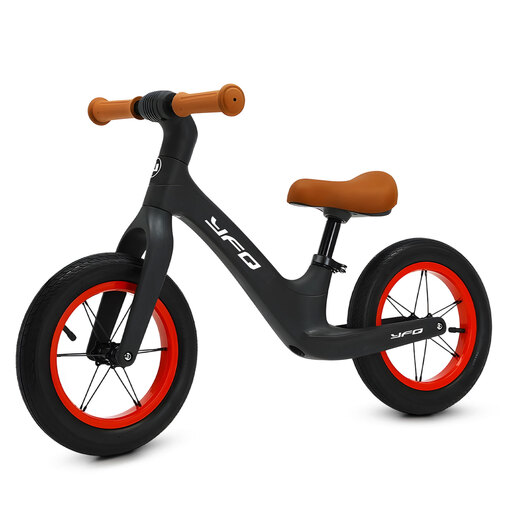
Why This Fits Their Persona: A practical kids first bike for children aged approximately 3 to 6 who are ready to focus on balance, foot movement and steering.
The no-pedal layout avoids unnecessary conversion parts, while the adjustable seat helps address the common problem of outgrowing a fixed-size bike.
Lightweight no-pedal format, adjustable seat, air-free tyres and a kickstand.
Before the first ride:
A toddler balance bike is usually a short-distance learning product rather than a transport solution. Its useful life depends on the child’s growth, the adjustment range, storage conditions and how frequently it is used. Wipe down mud and moisture after outdoor rides and store the bike in a dry location.
Suitability depends more on physical fit and coordination than age alone. Some models are labelled for 1 to 5 year olds, while others are intended for ages 3 to 6. Check the minimum seat height, maximum load and the child’s ability to sit and place both feet securely on the ground.
They provide different learning experiences. A no-pedal training bike allows a child to practise balance and steering directly. Stabilisers provide additional support but may add weight. A convertible model with removable stabilisers can give families more choice, provided the configuration is assembled correctly.
Most require limited maintenance. Air-free or EVA tyres do not need pumping, but adults should still check the frame, wheels, steering and fasteners regularly. Bikes with pedals or conversion parts may require extra checks as components are changed.
We have compiled a complete, real-time list of products that fully satisfy these strict selection criteria and UK safety regulations.