
24/7 Customer Support

Free returns

Same-day & Next-day Delivery

Quality Guaranteed

Unlock Your Welcome Offers: FREE Delivery | Up to 80% OFF | Free 30-day JoyPlus trial
Download the APP
As a Joybuy Product Recommendation Officer, my role is to help you navigate the crowded market of children's products. Choosing a first bike for kids can feel overwhelming, with every option promising to be the perfect start. However, many parents find their purchase gathering dust after just a few months. This guide cuts through the marketing jargon to focus on what truly matters, helping you avoid common pitfalls and find a toddler bike that your child will love and use.
Before you buy, be aware of these three common purchasing traps:
The first major decision is the type of bike. The two main contenders are the balance bike and the kids trike, and the right choice depends entirely on your child's age, confidence and your family's routine.
A balance bike, also known as a no pedal training bike, is a two-wheeled bike without pedals. Children propel themselves forward by pushing off the ground with their feet. This design is excellent for teaching the core skills of balance and steering, which often makes the transition to a pedal bike much smoother. They are typically ideal for children aged three and up.
A toddler tricycle, on the other hand, offers greater stability with its three-wheel design. A 3 wheel bike for toddlers is often a great choice for a bike for 2 year old children who are just starting to explore independent movement. Many models come as a toddler tricycle with parent handle, allowing you to push and steer the trike on walks, providing a secure and engaging alternative to a pushchair.
To ensure you're getting a bike that will last and be enjoyed, focus on these core parameters rather than flashy features.
Based on these practical criteria, we've matched some suitable options to different family needs.
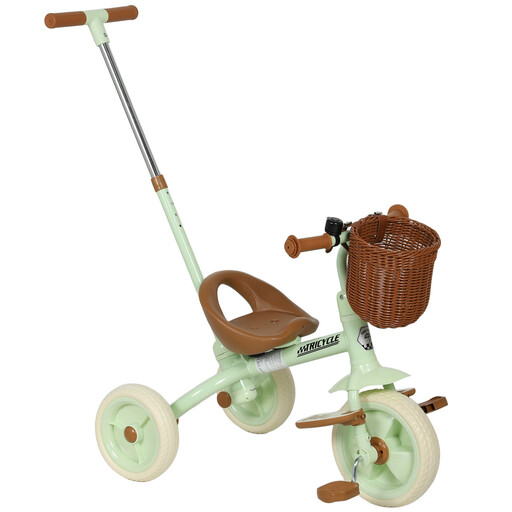
Why This Fits Their Persona: This is ideal for parents looking to make walks more engaging than a pushchair. The parent handle gives you full control over speed and steering, providing security for a younger child while they get used to the feeling of riding. It's a gentle introduction to bikes.
It avoids the "too much, too soon" trap by offering a stable, parent-guided mode. The robust carbon steel frame also sidesteps the durability mirage of flimsy, all-plastic alternatives.
Its 2-in-1 design allows it to convert from a push trike to an independent kids trike. The parent handle is adjustable for adult comfort and it includes practical footrests for when the child is not pedalling.
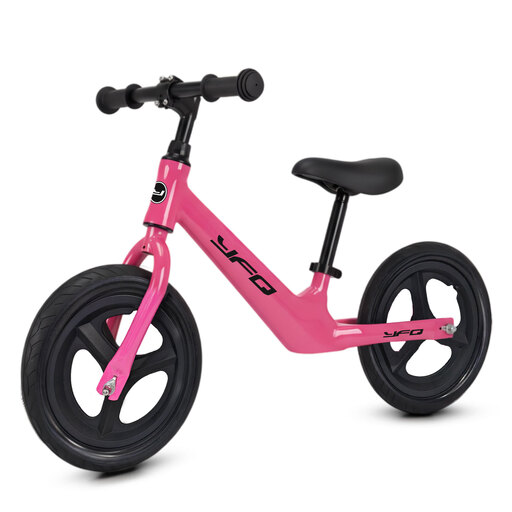
Why This Fits Their Persona: For the parent whose child is ready to learn balance, this is a focused tool for the job. As a classic `bike for 3 year old` and up, its purpose is to build the confidence and coordination needed for a two-wheeler, making the future transition to pedals much easier.
This bike directly counters the weight trap. Its lightweight design makes it easy for a child to handle, preventing frustration. The adjustable seat provides a genuine fit, avoiding the "one-size-fits-all" illusion.
The key advantages are its lightweight frame for easy handling and the air-free, puncture-proof tyres that eliminate maintenance. A kickstand is also a useful addition for tidy storage.
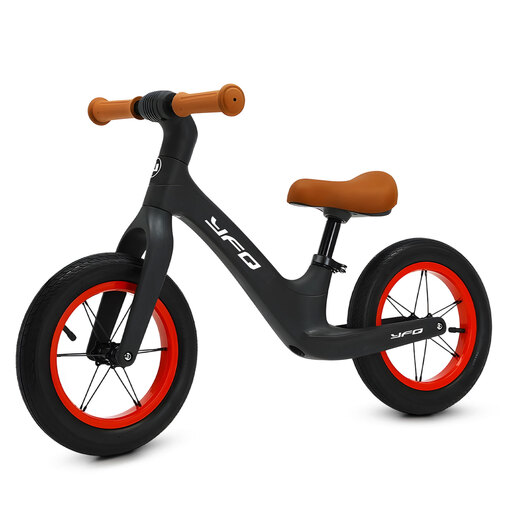
Why This Fits Their Persona: This is for the family seeking a no-fuss, durable option. Its classic black colour and robust build make it an excellent choice that won't date and it's perfect for being passed down to a younger sibling. It focuses on core function over frills.
By focusing on a simple, effective design, it avoids the trap of over-hyped features that add cost but not value. The air-free tyres completely sidestep the durability mirage of tyres that require constant maintenance or replacement.
Its primary advantages are its durable construction and zero-maintenance tyres. The simple, effective design ensures it will stand up to years of use without issue.
We have compiled a complete, real-time list of products that fully satisfy these strict selection criteria and UK safety regulations.
While some children can start earlier, the ideal age for a balance bike is typically between 3 and 5 years old. At this stage, they have developed the motor skills and physical strength to hold the bike up, push off effectively and control their steering. A bike for 3 year old children should be lightweight and have a low seat height.
The single most important factor for sizing is your child's inseam measurement. Have your child stand straight with their shoes on and measure from the floor to their crotch. The bike's seat height at its lowest setting should be about 1-1.5 inches less than this measurement. This allows them to sit on the seat with their feet flat on the ground and a slight bend in their knees, giving them the confidence and control they need.
A toddler tricycle with parent handle can be an excellent investment, especially for children aged 2 to 3. It serves a dual purpose: it's an engaging mode of transport for family walks where you remain in control and it allows the child to feel a sense of independence. It bridges the gap between a pushchair and a fully independent bike, making it a practical choice for many families.