
24/7 Customer Support

Free returns

Same-day & Next-day Delivery

Quality Guaranteed

Unlock Your Welcome Offers: FREE Delivery | Up to 80% OFF | Free 30-day JoyPlus trial
Download the APP
Watching your child take their first steps is a milestone, and their first ride is another exciting chapter. But choosing the right toddler bike can feel overwhelming. Should you get a baby balance bike to build their coordination, or a classic kids tricycle for immediate pedalling fun? With so many ride on toys available, it's easy to get lost in the options.
As the Joybuy Product Recommendation Officer, my role is to help you navigate these choices. This guide is designed to provide clear, practical advice, helping you find a safe and enjoyable first bike that will build your child's confidence and create lasting memories.
Before we look at specific models, here are a few key considerations to keep in mind during your search.
The main decision many parents face is between a no pedal bike (a balance bike) and a tricycle.
push along trike, come with a trike with parent handle, allowing you to guide your child until they are ready to ride independently.The right choice often depends on your child's age and your primary goal: teaching balance or teaching pedalling.
When it comes to your child, safety is paramount. Look for bikes that meet UK and EU safety standards, such as EN71 certification. Key features to check for include:
Toddlers grow quickly. A bike with an adjustable seat or a convertible design offers better long-term value. An adjustable seat allows the bike to grow with your child, ensuring their feet can always comfortably reach the ground (on a balance bike) or the pedals (on a tricycle).
Here are a few recommended options that cater to different ages and developmental stages.
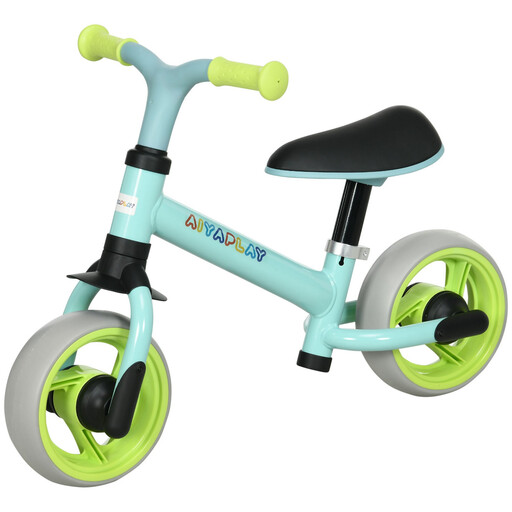
Why It Stands Out: This is a classic no pedal bike designed to be a brilliant first bike for a 2 year old. Its lightweight frame and straightforward design make it easy for little ones to handle, focusing purely on developing their balance and coordination.
Pros:
Who is it for? This is an ideal choice for parents of children aged 18 to 48 months who want to prioritise teaching balance and steering skills, setting a strong foundation for a future pedal bike.
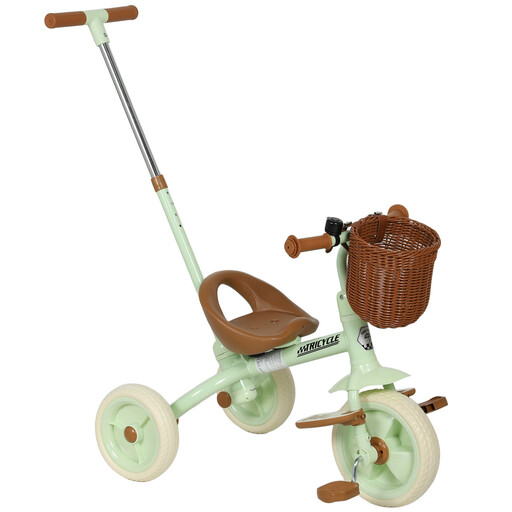
Why It Stands Out: This kids tricycle offers excellent versatility. It functions as a push along trike for younger children, with parents controlling the direction via the handle. As the child grows more confident, the handle can be removed for independent pedalling.
Pros:
Who is it for? This is a great option for families looking for a single, adaptable product that can be used from around 2 to 5 years old. It's perfect for walks in the park where a parent might want to maintain control initially.
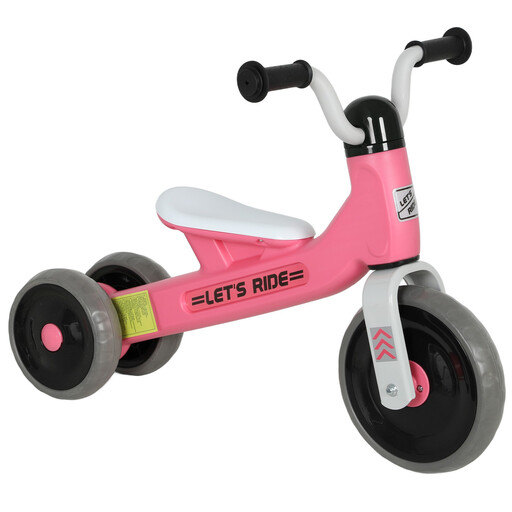
Why It Stands Out: This model combines the balance-building concept of a baby balance bike with the stability of a three-wheeled design. It’s an excellent introductory ride on toy for the youngest toddlers, designed with enhanced safety features.
Pros:
Who is it for? This bike is perfect for parents of one to three-year-olds who are looking for an exceptionally stable first bike. It helps build confidence and motor skills in a very secure and controlled way.
If your child has already mastered balance or you feel they are ready to start pedalling, you might be looking for a more traditional two-wheeled bike.
For a wider selection of bikes with pedals and stabilisers, explore our full range of toddler pedal bikes.
This depends on the type of bike. A stable, three-wheeled baby balance bike can be introduced as early as 12 months. Two-wheeled balance bikes are often suitable from 18 months, while tricycles and pedal bikes are typically recommended for children aged 2 and up.
Neither is inherently "better"; they just teach different skills. A balance bike is excellent for developing balance and steering, which can make learning to ride a pedal bike easier. A tricycle is great for building leg strength and teaching the motion of pedalling. The best choice depends on your child's developmental stage and what you want them to learn first.
Always look for products that meet EN71 safety standards. Check for features like a sturdy frame, limited steering to prevent tipping, enclosed wheels to protect feet and non-slip handlebars. Ensure the bike is the correct size for your child, allowing their feet to touch the ground comfortably.