
24/7 Customer Support

Free returns

Same-day & Next-day Delivery

Quality Guaranteed

Unlock Your Welcome Offers: FREE Delivery | Up to 80% OFF | Free 30-day JoyPlus trial
Download the APP
Watching your toddler take their first wobbly glides on a bike is a milestone moment. But choosing that first toddler bike can be a confusing journey. The market is filled with options, from a balance bike for toddlers to a classic kids tricycle, and it's easy to fall for marketing claims that don't hold up in the real world of parks, pavements and unpredictable British weather.
As a Joybuy Product Recommendation Officer, my role is to help you see past the hype. Many parents find themselves with a bike that's outgrown in months, rusts after a few damp outings or has design flaws that hinder rather than help a child's development. Before you buy, let's look at the most common pitfalls to avoid.
To ensure you're investing in a safe and durable toddler training bike, focus on these three non-negotiable factors.
A correctly-sized first balance bike allows a toddler to place their feet flat on the ground with a slight bend in their knees. This is crucial for confidence and control.
The materials used dictate the bike's weight, durability and the quality of the ride.
ride on toys for 2 year olds:
Always verify that the bike complies with UK safety standards.
Instead of a one-size-fits-all approach, we've matched some well-considered options to different family needs and priorities.
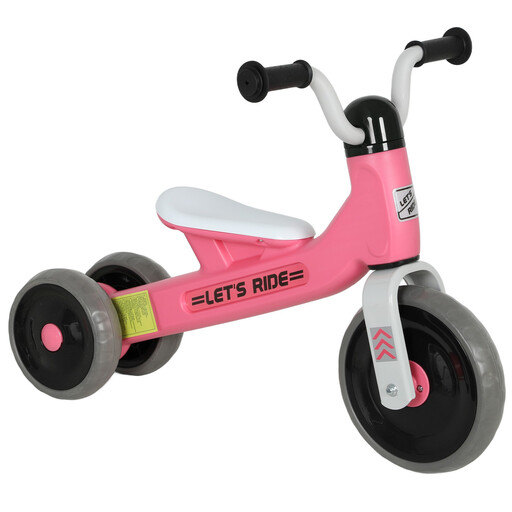
Why This Fits Their Persona: This model is designed for the youngest riders. Its three-wheel structure provides extra stability, helping build confidence from the very first push. It's an ideal indoor/outdoor hybrid for toddlers just finding their feet.
It directly counters the safety pitfall with a 30-degree steering limiter to prevent over-steering and tipping. The fully enclosed wheels also protect small feet from getting caught.
Features silent, puncture-proof EVA wheels that won't mark floors indoors and are robust enough for garden paths. The simple, quick assembly means less waiting and more playing.
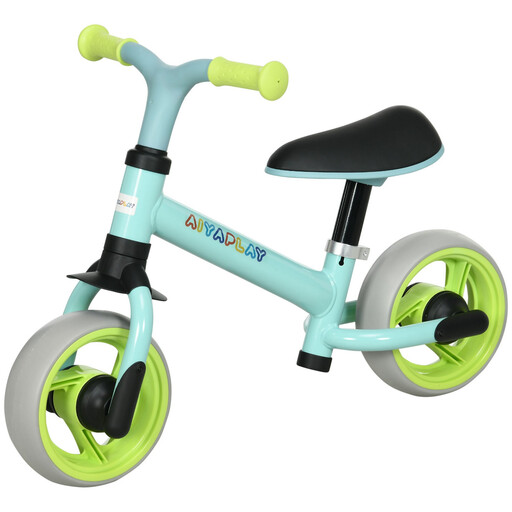
Why This Fits Their Persona: This is a classic two-wheel balance bike that serves as an excellent `toddler training bike`. It's for the parent who wants a no-fuss, effective tool to teach balance before transitioning to a pedal bike, without overspending.
It avoids the "grows with you" illusion by providing a clear and practical seat adjustment range of 25.5cm to 32cm. This 6.5cm range is substantial enough to accommodate a child from 18 to 48 months.
The lightweight steel frame is easy for a child to handle and the puncture-free EVA wheels mean no time is wasted on maintenance. It focuses purely on the core function of teaching balance.
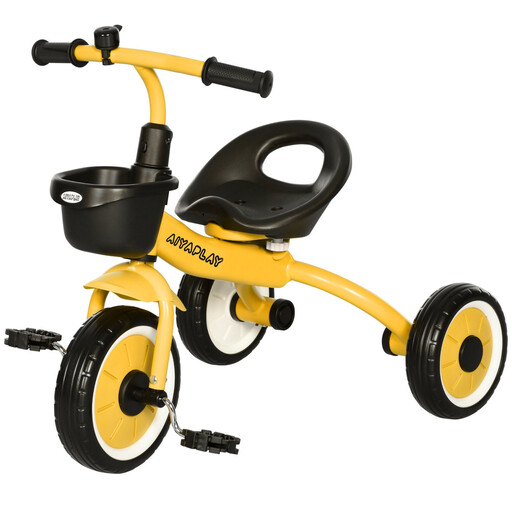
Why This Fits Their Persona: For those who love the classic look of a `baby trike`, this model delivers. It's perfect for steady, supervised rides and introduces the concept of pedalling. The added basket and bell enhance the play experience.
This trike avoids the material quality pitfall with a robust metal frame and solid EVA wheels (10" front, 8" rear). This combination is built for stability and durability, not just for looks.
The three-wheel design provides inherent stability, making it a secure choice for children aged 2-5. The inclusion of a front basket and a bell adds practical fun, letting kids bring toys along for the ride.
We have compiled a complete, real-time list of products that fully satisfy these strict selection criteria and UK safety regulations.
A balance bike for toddlers can often be introduced earlier, from around 18 months. It focuses solely on teaching balance and steering, which are the hardest skills to learn. A kids tricycle is typically suitable from 2 years and up. It introduces pedalling but is less effective at teaching two-wheeled balance, as the three wheels provide all the stability. Many parents find a balance bike provides a smoother transition to a pedal bike later on.
The most reliable method is to measure your child's inseam (the inside leg measurement). The bike's seat should be able to be set at or slightly below this height, allowing your child to sit on the saddle with their feet flat on the ground. Never buy a bike for them to "grow into" – an oversized bike is unsafe and will knock their confidence.
Yes, for most typical use cases, they are an excellent choice. EVA wheels are lightweight, which makes the bike easier for a toddler to manoeuvre. They are also completely puncture-proof, so you won't have to deal with flat tyres. While they don't offer as much cushioning as air-filled tyres on very rough ground, they are perfectly suited for pavements, patios and indoor floors.