
24/7 Customer Support

Free returns

Same-day & Next-day Delivery

Quality Guaranteed

Unlock Your Welcome Offers: FREE Delivery | Up to 80% OFF | Free 30-day JoyPlus trial
Download the APP
Watching your child gain their first taste of two-wheeled (or three-wheeled) freedom is a milestone. But choosing the right toddler bike can feel like navigating a maze of marketing claims and confusing options. As a Joybuy Product Recommendation Officer, my role is to help you sidestep common purchasing errors and find a ride-on toy that is safe, suitable and will actually get used.
Before you add that shiny new bike to your basket, let's look at the frequent pitfalls that lead to disappointment and wasted money.
The "Grows With Your Child" Illusion: Many products claim to be a 6-in-1 or 8-in-1 solution that lasts from 9 months to 6 years. While appealing, these often result in a machine that is a master of none. The push-along stage might be great, but when converted to a toddler trike, it can be heavy, cumbersome and have poorly positioned pedals. The result is a bike that is quickly outgrown or abandoned.
Ignoring True Adjustability: A bike might be labelled for "ages 2-5," but this is often a vague guideline. The critical detail is the actual adjustment range of the seat and handlebars. A seat that only moves up by 3-4 cm offers very little room for growth, meaning you could be shopping for another bike in less than a year.
Overlooking Weight and Materials: It's easy to be drawn to a sturdy-looking steel frame, but for a small child, weight is a significant factor. A heavy first bike for toddler can be difficult for them to manoeuvre and, crucially, to pick up after a fall. This can lead to frustration and a reluctance to ride, defeating the purpose of the purchase.
To ensure you're making a sound choice, focus on these key parameters rather than just the age recommendation on the box.
A child's age is a poor indicator of their size. The single most important measurement for any toddler training bike is their inside leg measurement.
Measure from the child's crotch to the floor while they are standing in their shoes. Compare this to the bike's saddle height range. This ensures a proper fit from day one and gives you a realistic idea of how long the bike will last them.
The bike's weight directly impacts how much your child will enjoy using it. A lighter bike is easier to control, steer and pick up independently.
For a first bike for toddler, a lighter frame often leads to a more positive learning experience.
When buying any toy for a child in the UK, look for the EN 71 safety standard certification. This is not just jargon; it's a crucial indicator that the product has been assessed for safety. The standard covers several parts, but EN 71-1-2-3 is particularly relevant for a toddler bike, as it relates to mechanical and physical properties, flammability and the absence of harmful chemicals. This certification provides a baseline assurance of safety.
Instead of a single "best" option, the right choice depends on your child's age, confidence and your family's lifestyle. Here are a few recommendations matched to different needs.
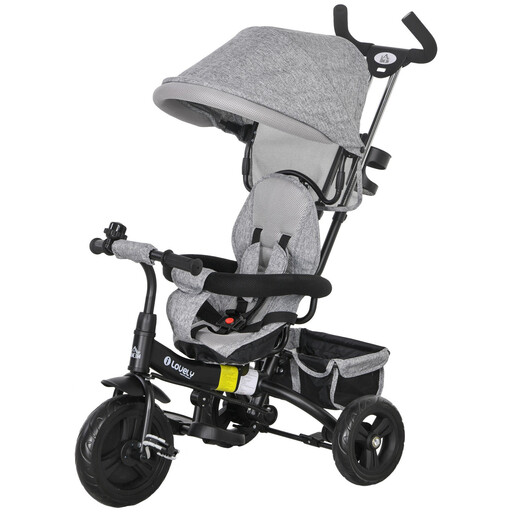
Why This Fits Their Persona: Ideal for parents of very young toddlers (1-2 years) who want a secure, guided introduction to ride-on toys. The parent-push handle, 5-point harness and canopy make it more of a fun pushchair alternative for walks in the park, providing full control and comfort.
While it is a multi-stage product, its primary function for the youngest users is a push-along trike. This is a distinct, highly practical stage that doesn't compromise on safety, unlike some vague "convertible" models.
Features a 5-point safety harness and a parent-push handle for steering control, offering peace of mind during early outings. The removable canopy provides weather protection.
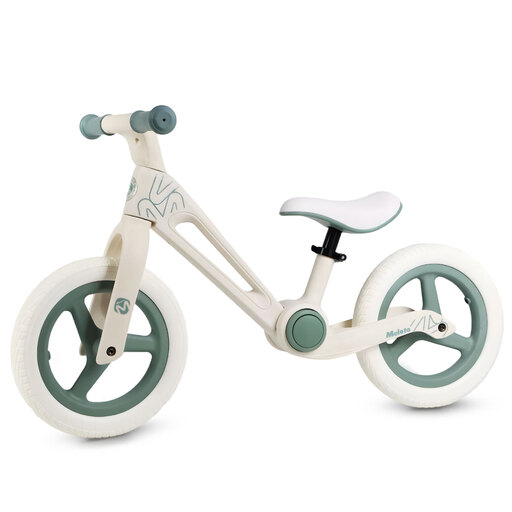
Why This Fits Their Persona: For parents who want to bypass stabilisers and focus on developing core balance and steering skills. This classic `no pedal bike` design is a popular choice for preparing a child for their first proper pedal bike.
It sidesteps the weight and complexity trap by being a simple, lightweight `toddler training bike`. Its sole purpose is to teach balance, and it does so effectively without the burden of unnecessary features or conversions.
Its lightweight construction makes it easy for a `balance bike for 2 year old` to handle, pick up and manoeuvre. The adjustable seat and handlebar accommodate growth.
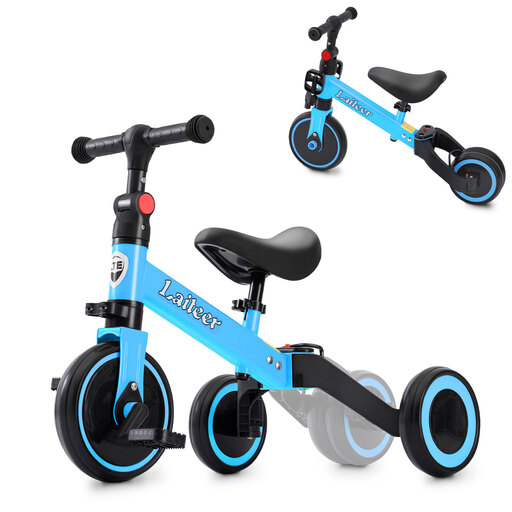
Why This Fits Their Persona: A great fit for families who want a single, adaptable product that can function as both a `kids tricycle` and a balance bike. It offers flexibility as the child's skills and confidence develop.
This model avoids the "master of none" trap by offering two distinct and functional modes. The conversion is straightforward, allowing it to be a proper trike or a proper balance bike, rather than a poor compromise of both.
Features removable pedals and a folding frame, making it a true 2-in-1. This allows a child to learn pedalling motion and then transition to balancing skills all with one familiar product.
We have compiled a complete, real-time list of products that fully satisfy these strict selection criteria and UK safety regulations.
While many are marketed as a balance bike for 2 year old, the best time to start depends more on physical development than age. The key is whether the child's inside leg measurement allows them to sit on the lowest saddle setting with their feet flat on the floor. For most children, this is typically between 18 months and 2.5 years old. Confidence is also a factor; some children take to it immediately, while others need more time.
They teach different skills, and one is not inherently "better" than the other. A toddler trike is very stable, which is great for very young children. It helps them understand the basic motion of pedalling. A no pedal bike, or balance bike, teaches the more complex skills of steering and balancing. Many children who master a balance bike find the transition to a pedal bike without stabilisers much quicker.
Have your child stand up straight against a wall, with their shoes on. Place a thin book between their legs and raise it gently to their crotch, mimicking a bike saddle. Mark the spot where the top of the book meets the wall, then measure from that mark to the floor. This is their inside leg measurement, which you can then compare against the saddle height range of any bike you are considering.