
24/7 Customer Support

Free returns

Same-day & Next-day Delivery

Quality Guaranteed

Unlock Your Welcome Offers: FREE Delivery | Up to 80% OFF | Free 30-day JoyPlus trial
Download the APP
Watching a toddler take to their first set of wheels is a milestone moment. But the journey to get there can be confusing. The market is filled with options, from classic tricycles to modern balance bikes, all making bold claims. As the Joybuy Product Recommendation Officer, my role is to help you navigate this landscape and find a ride that is safe, suitable and offers genuine value for your family.
Before you add anything to your basket, let's look at the common purchasing traps that catch many well-intentioned parents and grandparents out.
A little awareness can prevent a disappointing purchase that ends up gathering dust. Here are three pitfalls to watch for:
To avoid these issues, focus on a few core parameters. Getting these right is the key to a successful first biking experience.
The single most important factor for a good fit is the seat height.
How to check: Measure your child's inseam (from the floor to their crotch) and compare it to the bike's seat height range. A bike with a wide adjustment range, clearly stated in centimetres, is a much better long-term investment.
A heavy steel frame can be difficult for a small child to manoeuvre, making it feel like hard work. It's also a pain for parents to carry home from the park. A lighter frame, often made from aluminium or a well-designed lightweight steel, makes the toddler training bike easier to control, pick up after a tumble and transport.
When looking at any toy sold in the UK, including a kids trike or balance bike, you should see a reference to the EN 71 safety standard. This certification means the product has been assessed for safety, covering aspects like material toxicity, flammability and ensuring there are no sharp edges or entrapment risks. It's a baseline indicator of a responsibly made product.
Based on these practical criteria, we've matched a few options to different family needs.
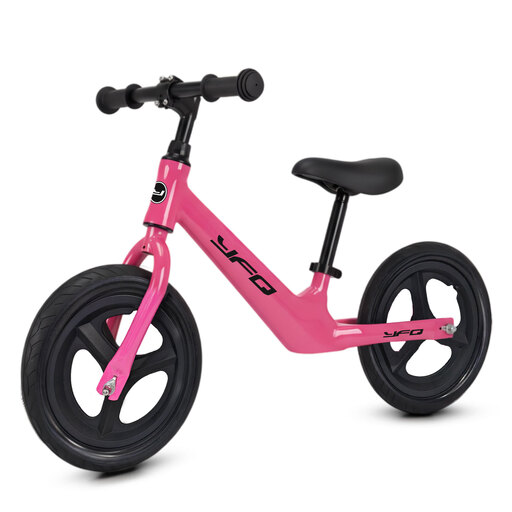
Why This Fits Their Persona: This is for the parent who wants to teach balance and coordination from the start, skipping stabilisers entirely. It's a dedicated learn to ride bike focused on the core skill of gliding and steering.
Its air-free tyres provide a smooth ride without the risk of punctures, directly addressing the tyre trouble. As a dedicated balance bike, it avoids the complex conversion trap entirely.
Features a lightweight frame that is easy for children to handle and an adjustable seat to accommodate growth spurts. The included kickstand is a practical touch.
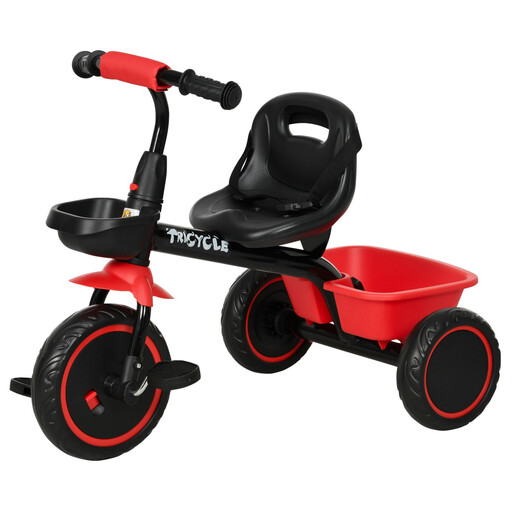
Why This Fits Their Persona: Ideal for those wanting the stability and straightforward fun of a traditional 3 wheel bike for kids. The storage baskets are perfect for carrying treasures found on garden adventures.
It clearly states a 3cm seat adjustment range, managing expectations about how it 'grows'. The EVA tyres are a durable, puncture-proof material suitable for typical outdoor use.
The robust steel frame and safety belt provide stability and security. It is also certified to the EN71-1-2-3 standard, offering peace of mind.
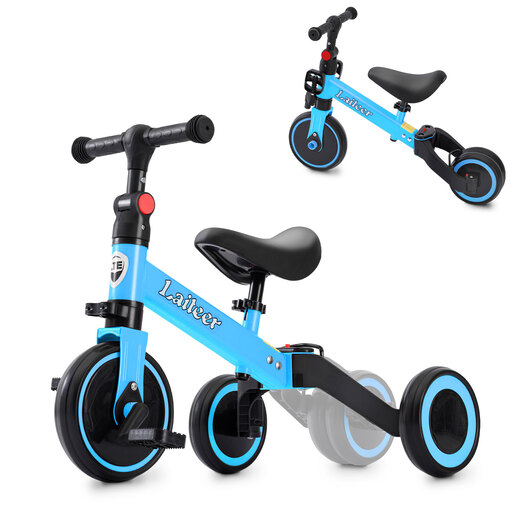
Why This Fits Their Persona: This is for the practical parent seeking maximum longevity from a single purchase. It adapts from a stable trike for the youngest riders to a balance bike for skill development.
By offering distinct, useful modes (tricycle and balance bike), it sidesteps the 'unusable after 3 months' trap. The design focuses on easy folding and removable pedals, tackling the conversion conundrum.
Its key advantage is its adaptability, covering a wide age range from 1 to 5 years. The adjustable seat and folding mechanism make it a practical, space-saving choice.
We have compiled a complete, real-time list of products that fully satisfy these strict selection criteria and UK safety regulations.
While many are marketed from 18 months or 2 years, readiness is more about physical development than age. The key indicator is whether your child can stand over the frame with their feet flat on the ground. A good starting point is when their inseam measurement matches or is slightly longer than the bike's lowest seat setting.
This depends on your goal. A toddler tricycle is great for stability, introducing the concept of pedalling and pure fun. A first bike for a 2 year old could also be a balance bike, which is excellent for teaching the fundamental skills of balance and steering. Many children who master a balance bike find the transition to a pedal bike without stabilisers much quicker.
Look for a model with a wide seat and handlebar adjustment range, specified in centimetres. Check that the frame is made from durable materials like steel or aluminium, not just heavy plastic. Finally, consider a convertible model if you want a single product to span several developmental stages.