Who this guidance is for

Parents choosing a routine toddler breakfast

For carers of children aged about 1 to 4 who want pancakes to be one part of a varied breakfast rather than a dessert-style default. Focus on simple ingredients, modest servings and less-sweet choices; NHS guidance advises avoiding foods and drinks with sugar or sweeteners for children aged 4 and under, while the British Nutrition Foundation advises limiting sweetened versions where possible.

Parents seeking a white-and-wholegrain compromise

For families whose toddler is more familiar with white-flour foods but who want to offer a mixture of white and wholegrain starchy foods. The British Nutrition Foundation gives this approach for 1-to-4-year-olds; a homemade blend gives clearer flour control than assuming a “Best of Both” claim applies to pancakes.

Parents packing food for an England school or early-years setting

For families sending pancakes in a packed meal. Check the individual setting’s allergy policy and the live product label, particularly where wheat or gluten, egg or milk are relevant. Department for Education guidance for England says schools must publish an allergy safety policy.

What to check before choosing pancakes

Homemade flour blend

Choose it when: You want direct control over the white-to-wholegrain flour mix, toppings and serving size.

Consider: It takes preparation and cooking time, and a wholegrain blend may change texture for some toddlers.

Plain ready-made pancakes

Choose it when: Convenience matters and the current pack label suits the child’s ingredient and allergen needs.

Consider: Recipes vary, so compare sugars, salt and allergens on the individual pack rather than relying on the product name.

Sweet pancake varieties

Choose it when: It is an occasional family treat rather than the default toddler breakfast.

Consider: Chocolate-chip, syrup-flavoured and dessert-style varieties can make sweetness the main flavour expectation.

Priority What to check Your needs
Sweetness Compare sugars per 100g and read the ingredient list. Check whether the variety is plain, chocolate-chip, syrup-led or dessert-style. I want breakfast pancakes that do not make sugary or sweetener-containing foods an everyday expectation. NHS guidance for children aged 4 and under advises avoiding foods and drinks with sugar or sweeteners.
Flour type Read the ingredient list for the actual flour types. Do not infer wholegrain content from brown colour, flavour or branding. I want a workable mix of familiar white-flour foods and wholegrain starchy foods. A homemade recipe lets me choose the blend my toddler will eat; the British Nutrition Foundation advises offering 1-to-4-year-olds a mixture of white and wholegrain foods.
Allergens Read the label just before purchase or packing. Check for cereals containing gluten, egg and milk, and review the individual school or nursery policy where relevant. I need a pancake that fits the child’s own allergy or dietary requirements and any setting arrangements. One M&S buttermilk pancake product lists wheat or gluten, milk and egg, so a familiar pancake type is not enough information on its own.
Portion size Serve a child-sized amount and let appetite guide whether more is wanted. Treat pancakes as one starchy component of breakfast rather than an adult-sized stack. I want enough flexibility to serve pancakes without pressure to finish a large portion. The British Nutrition Foundation gives 1/2 to 1 scotch pancake as an example starchy-food portion for 1-to-4-year-olds and notes that appetite varies day to day.

Common pancake-buying mistakes

  • Assuming brown colour or “Best of Both” wording proves a pancake is wholegrain

    The verified “Best of Both” item is Hovis bread with a stated 50% white and 50% wholemeal flour blend, not a pancake. A pancake’s colour, flavour or marketing wording does not establish its flour composition.

    Check the pancake’s own ingredient list for the flour types used. If a defined white-and-wholegrain mix matters, making pancakes at home gives clearer control.

  • Making chocolate, syrup-led or dessert-style pancakes the default breakfast

    NHS guidance advises avoiding foods and drinks with sugar or sweeteners for children aged 4 and under. The British Nutrition Foundation also advises limiting sweetened versions such as scotch pancakes where possible.

    For routine breakfasts, start with plain pancakes and use fruit or plain yoghurt when suitable for the child instead of relying on syrup or confectionery-style toppings.

  • Using an online listing as the final allergen check

    Product recipes and allergen information can change. An M&S buttermilk pancake pack lists wheat or gluten, milk and egg, but another pack may have a different recipe.

    Read the physical pack label at purchase and again before packing food for a child with an allergy or dietary restriction.

  • Assuming every school has the same packed-lunch allergen rules

    England guidance requires schools to publish an allergy safety policy, so arrangements can depend on the setting and the needs of its pupils.

    Ask the school or nursery about its current policy before sending pancakes or other food containing relevant allergens.

Relevant pancake brand references

M&S Food

M&S Food has a ready-made pancake range including buttermilk, blueberry, lemon, raisin-and-maple, red velvet, cookies-and-cream and pikelet options.

  • Individual product pages can provide ingredients, nutrition, allergen and storage information for a specific pack.
  • The 4 Buttermilk Pancakes label lists 9.4g sugars and 0.95g salt per 100g, plus wheat or gluten, milk and egg; this label applies to that product rather than the full range.

Tesco

Tesco’s pancake category includes own-brand scotch, banana, buttermilk and flavoured pancakes alongside branded products.

  • The category offers several pancake styles to compare in one shop.
  • Check each individual pack for current nutrition, ingredients and allergens before deciding whether it suits a toddler breakfast.

Waitrose

Waitrose is relevant for clarifying the “Best of Both” term because it lists Hovis Best of Both as a bread product rather than a pancake.

  • The Hovis product is described as an equal blend of white and wholemeal flours, showing what a stated 50/50 flour claim looks like.
  • This bread description should not be used to assume that ready-made pancakes have the same flour composition.

Joybuy pancake options

Joybuy product options for preparing pancakes at home, with flexible serving sizes and toppings for a toddler breakfast.
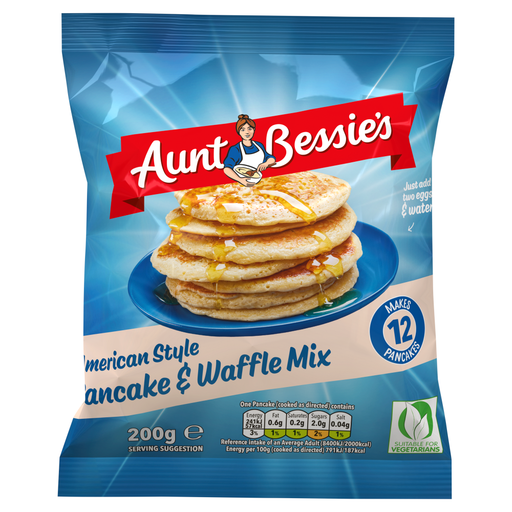
Aunt Bessie's American Style Pancake and Waffle Mix 200g

Aunt Bessie's American Style Pancake & Waffle Mix, 200g

A mix for home-prepared pancakes, allowing the carer to make smaller pancakes and choose the toppings.

Preparation requires eggs, water and oil, with cooking in a pan or waffle iron. The stated yield is approximately 12 pancakes.

The label states 6.6g sugars and 0.13g salt per 100g when cooked as directed.

Contains wheat and milk, and preparation requires egg. Check the current ingredient label if a defined white-and-wholegrain flour blend is important.

Joybuy

Frequently asked questions

Is “Best of Both” a type of toddler pancake?

No. The product using the Hovis Best of Both name is a medium sliced bread made with an equal blend of white and wholemeal flours. Use it as an example of a stated flour-blend claim, not as evidence that a similarly named pancake exists or has the same composition.

Are ready-made pancakes suitable for toddlers every morning?

They can be convenient, but the routine choice should start with the current nutrition and ingredient label. NHS guidance advises avoiding foods and drinks with sugar or sweeteners for children aged 4 and under, and the British Nutrition Foundation advises limiting sweetened versions such as scotch pancakes where possible.

How much pancake should I offer a toddler?

Keep the serving flexible rather than treating it as an adult breakfast stack. The British Nutrition Foundation gives 1/2 to 1 scotch pancake as an example starchy-food portion for 1-to-4-year-olds and notes that appetite varies day to day; offer more if the child is still hungry.

Do pancakes contain gluten?

Many do, but each pack needs checking. M&S 4 Buttermilk Pancakes list wheat flour and cereals containing gluten, alongside milk and egg. Check the exact label if the child has coeliac disease, an allergy or another medically required restriction.

Can I send pancakes to school or nursery in England?

Check the individual setting’s current allergy safety policy and the product’s current allergen label before packing. Department for Education guidance says schools in England must publish an allergy safety policy; it does not create one identical packed-lunch rule for every school.