Parents cooking a shared dinner
If butter is going into a dish everyone will eat, choose what suits the toddler’s portion before adding salt or other seasoning to adult servings.


For a toddler who can have milk, plain unsalted butter is a sensible choice when butter is needed in a family dinner: NHS guidance says children do not need salt added to their food. A richer or ‘mature’ flavour does not establish a toddler-specific benefit; check the ingredients and current pack label, and season adult portions after separating the child’s food.
If butter is going into a dish everyone will eat, choose what suits the toddler’s portion before adding salt or other seasoning to adult servings.
A stronger or saltier butter may appeal to adults, but it is not a necessary feature of a toddler’s dinner. An unsalted block offers a straightforward option when the recipe calls for butter.
Check for milk on the current label and tell anyone preparing or serving the meal what it contains. The Food Standards Agency identifies milk as a common ingredient in butter.
For a toddler’s portion, start with the butter’s salt and ingredients rather than a description of how rich it tastes; then consider how it fits into the meal.
| Priority | What to check | Your needs |
|---|---|---|
| Salt | Choose an unsalted product when adding butter to the child’s food. Read the current nutrition panel rather than assuming all unsalted products have identical salt figures. | I’m cooking one meal for the family and want to season the adult portions separately. NHS guidance says children do not need salt added to food or cooking water. |
| Place in the meal | Consider butter as an ingredient, not a replacement for the meal’s other foods. Lurpak lists 82g fat and 53g saturates per 100g for its Unsalted Butter. | Butter may be useful in a dish, but I don’t want its unsalted label to suggest that it is low in fat or a complete dairy serving. |
| Milk ingredients | Read the ingredients and allergen declaration on the current pack. Check any flavoured or spreadable product on its own terms rather than treating it as equivalent to block butter. | Someone else may serve dinner, so I need to pass on clear ingredient information. The Food Standards Agency identifies milk as a common ingredient in butter. |
| Flavour and format | Identify whether the product is unsalted, salted or flavoured, and whether its format suits the recipe. Do not use ‘mature’ flavour as a substitute for checking the label. | If the adults want a stronger flavour, I can add it after setting aside the toddler’s portion rather than choosing the child’s ingredients by taste alone. |
A richer taste does not tell you whether a butter is salted or has additional ingredients.
Choose the toddler’s portion by its ingredients and salt information. Add seasoning to adult portions after the child’s food has been separated.
Lurpak Unsalted Butter lists 82g fat and 53g saturates per 100g; the NHS also identifies butter as a food high in saturated fat.
Use butter as an ingredient in a varied dinner rather than treating its unsalted label as a reason to use it without regard to the rest of the meal.
Anchor’s page for its Original Unsalted Block Butter displays conflicting salt figures. Tesco also advises shoppers to read current food labels because products can be reformulated.
Check the pack’s nutrition and ingredient information if either affects which product you choose.
The Food Standards Agency identifies milk as a common ingredient in butter. Changing dairy butter brands does not, by itself, resolve a milk-allergen concern.
Check the current label and tell the person serving the meal about its ingredients. For a child with a diagnosed milk allergy, follow their existing clinical advice rather than assuming butter is suitable.
These examples distinguish particular UK butter products and ranges; their details should not be applied to every product carrying the same brand.
Lurpak Unsalted Butter is a plain block-butter option for a recipe that calls for butter.
Anchor identifies its Original Unsalted Block Butter as a milk-based product for cooking and baking.
Kerrygold UK lists both salted and unsalted 200g butters in its range.
Tesco lists a British Unsalted Butter alongside branded butter options.
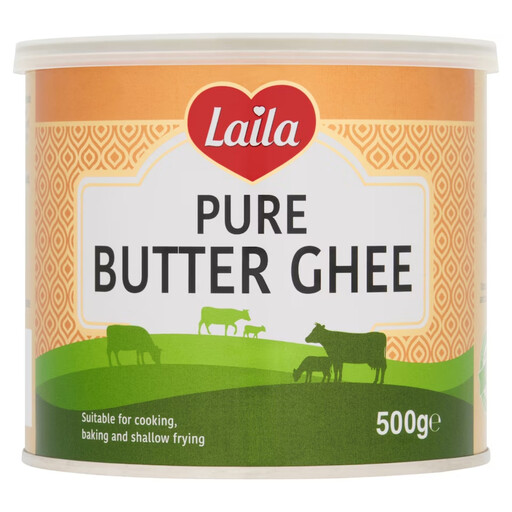
The option below is ghee, not the plain unsalted block butter discussed for recipes that call for butter. Consider it for a cooking use that suits ghee, and check the current pack before using it in a toddler’s meal.
 No image available
For a dinner recipe using ghee, check the current pack’s salt, ingredients and milk-allergen information before preparing the child’s portion. Ghee is not a plain block of butter, so do not assume it is a direct substitute in a recipe calling for one.
A richer flavour does not establish a toddler-specific advantage. If butter is needed in the child’s food, plain unsalted butter is a clearer choice than selecting by taste; check the label and reserve added seasoning for adult portions.
For a toddler who can have milk, butter can be an ingredient in a varied meal. It should not stand in for the meal’s other foods: NHS guidance discusses a variety of foods for young children and recommends full-fat dairy foods such as cheese and yoghurt up to age two.
Choose unsalted butter if adding butter to the toddler’s portion. NHS guidance says children do not need salt added to food or cooking water; adult portions can be seasoned separately.
Yes. The Food Standards Agency identifies milk as a common ingredient in butter, so check the current label and tell the carer what the meal contains. If the child has a diagnosed milk allergy, follow their existing clinical advice rather than substituting another dairy butter brand.
Do not assume the formulations are the same. If a recipe calls for a plain unsalted block, compare the spreadable product’s ingredients and nutrition label before deciding whether it suits that use.