Parents comparing chicken formats
Plain frozen breast fillets and coated chicken can have different fat and salt values. Compare their nutrition per 100g rather than relying on chicken-breast wording on the front of the pack.


Plain, skinless frozen chicken breast fillets give you a straightforward starting point if fat content matters for a toddler dinner: the retailer examples discussed here list 1.2g to 3.0g fat per 100g, while the coated examples list more fat and salt. Compare the current pack’s nutrition and ingredients, but judge the whole meal too. NHS guidance recommends fruit and vegetables with every meal and says children under two should have full-fat dairy foods.
Plain frozen breast fillets and coated chicken can have different fat and salt values. Compare their nutrition per 100g rather than relying on chicken-breast wording on the front of the pack.
A fillet still needs checking before it reaches a toddler’s plate. NHS guidance says to remove bones, cut meat into thin strips and supervise young children while they eat.
The M&S, Waitrose, Sainsbury’s, Tesco and Asda examples have different declared fat and salt values. Ingredients and preparation directions also matter when choosing one for dinner.
Start with the per-100g label, then consider how you will prepare the chicken and what else will be in the meal.
| Priority | What to check | Your needs |
|---|---|---|
| Nutrition labels | Compare fat and salt per 100g, not just pack size or front-of-pack wording. GOV.UK guidance sets no more than 3g fat per 100g as the criterion for a low-fat claim on a solid food; also read the ingredients for coating or additions. | I want to compare chicken products on the same basis. In a Food Standards Agency and Ipsos Northern Ireland survey of 611 consumers interviewed from September to November 2024, 49% said they actively used traffic-light labels when shopping for food; that figure describes general food shopping, not toddler-chicken purchases. |
| Whole meal | Plan what will accompany the chicken. NHS guidance recommends fruit and vegetables with every meal and says full-fat cheese, yoghurt and fromage frais are recommended up to age two. | Lower-fat chicken may suit the dinner I am planning, but I do not want to treat one low-fat ingredient as a judgement on the whole meal. |
| Bones and texture | Inspect the cooked chicken even if it is sold as fillets or boneless. NHS guidance says to remove all bones and cut meat into strips as thinly as possible. | My child needs pieces they can manage while seated and supervised; the shape of a frozen fillet does not settle how I should serve it. |
| Preparation | Follow the particular pack’s thawing, cooking and storage directions. Check whether it calls for refrigerator defrosting or provides a method for cooking from frozen. | If dinner needs to fit a short preparation window, I need to check the method before choosing a pack, rather than assume all frozen chicken cooks alike. |
Tesco’s listing for Birds Eye Original Chicken Breast Steaks gives 9.7g fat and 0.91g salt per 100g. M&S lists 1.2g fat and 0.13g salt per 100g for its plain frozen Oakham Gold breast fillets. The products are different formats, not interchangeable nutrition choices.
Check fat and salt per 100g and read the full ingredients list. GOV.UK guidance places the low-fat claim criterion for a solid food at no more than 3g fat per 100g.
A lower-fat chicken choice does not determine the nutritional balance of a toddler’s dinner. NHS guidance recommends fruit and vegetables with every meal and full-fat dairy foods up to age two.
Consider the chicken alongside vegetables and a suitable starchy food, rather than trying to remove fat from every part of a young child’s diet.
Frozen-fillet packs can warn that bones may remain. NHS guidance says bones must be removed from meat before it is served to a young child.
Inspect each cooked portion, remove any bones and cut the meat into thin strips. Seat and supervise the child while they eat.
Sainsbury’s states that its British Skinless Chicken Fillets are not suitable for cooking from frozen, while other frozen chicken products give different preparation directions. A familiar-looking pack is no substitute for its own instructions.
Read the current label before thawing or cooking, and follow its directions for thorough cooking and storage.
These examples show why the exact product and its per-100g label matter more than the retailer or brand name alone.
M&S lists frozen Oakham Gold British Chicken Breast Fillets in a 1kg pack.
Waitrose lists both plain frozen breast fillets and Southern Fried Chicken Mini Fillets.
Sainsbury’s British Skinless Chicken Fillets are plain frozen breast-fillet portions.
Tesco Chicken Breast Fillet 1kg is a frozen, skinless breast-portion product with added water.
Asda lists frozen chicken breast fillets in formulations with different declared nutrition values.
Birds Eye Original Chicken Breast Steaks are a coated product, rather than plain frozen fillets.
These chicken breast fillets, slices and strips are options to compare for a toddler dinner. Check each current pack’s fat and salt per 100g, ingredients and preparation directions before choosing.
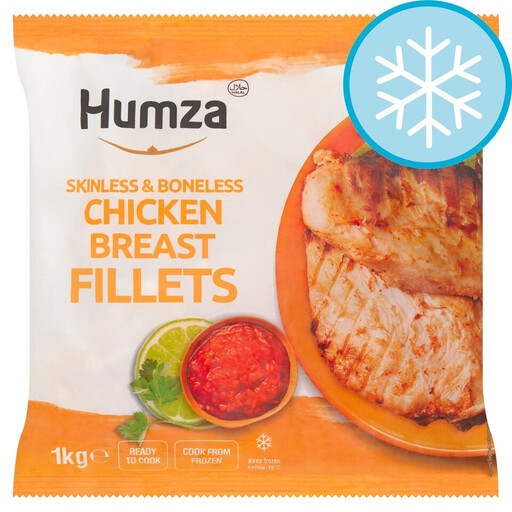 Image unavailable
For a dinner built around breast fillets, this is a 1kg skinless and boneless-labelled option. Inspect the cooked meat for bones despite that wording, then cut it into thin strips before serving.
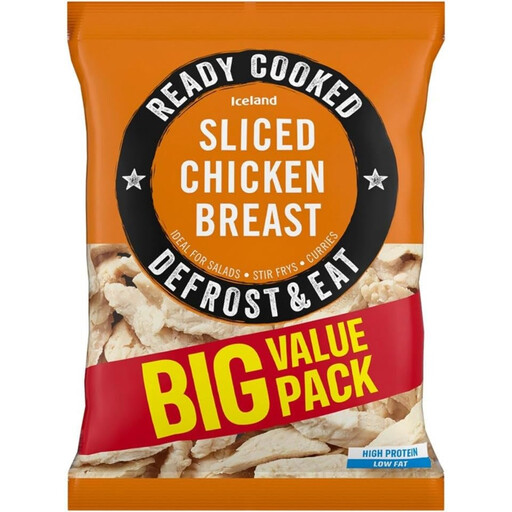 Image unavailable
The sliced breast format may suit a meal in which you want to portion the chicken yourself. Check the pack for skin, bone and cooking information, and make sure cooked slices are cut appropriately for the child.
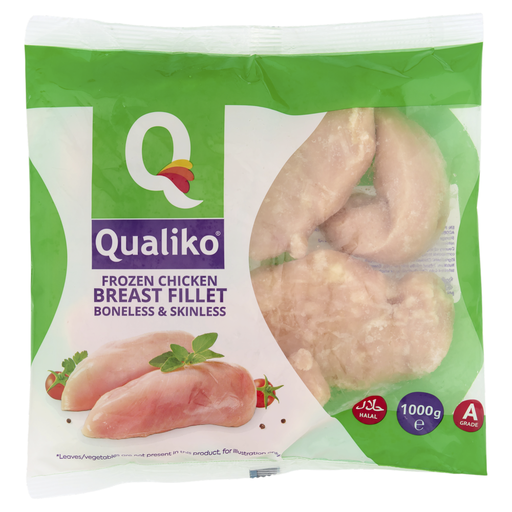 Image unavailable
This 1kg frozen breast-fillet option is described as boneless and skinless. Follow its pack-specific cooking directions, inspect the cooked portions and cut the meat into thin strips for serving.
 Image unavailable
The 500g strip format gives you pieces to assess when preparing a toddler portion. Check the current pack’s cooking directions; after cooking, inspect for bones and adjust the pieces to a suitable size.
Not necessarily. Lower-fat chicken can be one part of dinner, but the whole meal and the child’s age matter. NHS guidance recommends fruit and vegetables with every meal and full-fat cheese, yoghurt and fromage frais up to age two; choosing chicken with less fat is not a reason to remove fat from every food.
Compare the fat value per 100g. GOV.UK guidance sets a maximum of 3g fat per 100g for a low-fat claim on a solid food. Check salt per 100g and the ingredients as well, particularly when comparing plain fillets with coated chicken.
No. Tesco’s listing explains that the wording on Birds Eye Original Chicken Breast Steaks refers to the chicken meat used; the product also has other ingredients, including its coating. Its listed fat value is 9.7g per 100g, so use the full nutrition and ingredients panels for the comparison.
Follow that product’s thawing and cooking instructions and cook raw chicken thoroughly. Before serving, NHS guidance says to remove bones and cut meat into strips as thinly as possible. Keep the child seated and supervised while eating.
Check the individual pack before thawing it. The Waitrose frozen breast fillets discussed here say not to refreeze once defrosted; use the storage and preparation directions on the chicken you buy rather than applying another product’s instructions.