Carers choosing an everyday toddler snack
If you need something for between meals, start with the snack examples in NHS guidance rather than choosing confectionery because the pieces look small.


For everyday toddler snack time, choose foods such as fruit, plain unsweetened yoghurt or vegetable sticks rather than mini white chocolate, in line with NHS guidance for young children. If you are considering white chocolate as an occasional treat, a small pack or button shape does not establish that it is suitable for a toddler: check the current pack’s ingredients, allergens and any age or choking warning.
If you need something for between meals, start with the snack examples in NHS guidance rather than choosing confectionery because the pieces look small.
If you are comparing white-chocolate buttons, look beyond pack size to the nutrition panel, ingredient and allergen information, and any warning on the exact product.
If food will be supplied by a school or early-years provider in England, check the rules that apply to that setting and its own food policy. A household purchase is a different context.
Decide whether you need an everyday snack or are considering confectionery as an occasional treat; then check the exact pack rather than relying on words such as “mini”.
| Priority | What to check | Your needs |
|---|---|---|
| Everyday snack | The NHS advises avoiding food and drink with sugar or sweeteners for children aged 4 or younger. Its snack examples for young children include fruit, vegetable sticks and plain unsweetened yoghurt. | For a regular between-meal snack, I want an option that follows the NHS examples rather than a smaller version of confectionery. |
| Pack and pieces | Check both the pack size and the stated nutrition serving. Nestlé Confectionery UK lists 8.0g sugars per stated 17-piece portion of Milkybar Buttons. A separate Milkybar Giant Buttons listing at Waitrose warns that children under 4 could choke on small sweets. | A small bag would be convenient, but I do not want to mistake “bite-size” or “button” for an age-suitability statement. |
| Ingredients and allergens | Read the current pack’s ingredients, highlighted allergens and precautionary statements. ASDA’s White Chocolate Buttons listing names milk and soya and warns of possible peanuts and nuts. | If I am buying for a child with a food allergy or an avoidance plan, I need the information on this pack, not an assumption based on another size or flavour. |
| Food supplied by a setting | Check the setting’s policy and the rules for its nation. Department for Education guidance covers food and drink provided in state-funded schools in England; its early-years nutrition guidance is for providers in England. | Before supplying food at a school or nursery, I need to know which policy applies there rather than treating a household choice as permission for the setting. |
Piece or pack size does not change the NHS advice on sugary food for children aged 4 or younger.
For routine snack time, consider the NHS examples such as fruit or plain unsweetened yoghurt. Treat a white-chocolate purchase as a separate, occasional confectionery decision.
Waitrose’s listing for Milkybar Giant Buttons carries a product-specific warning that children under 4 could choke on small sweets.
Read the warning on the exact pack. Neither “mini” nor “giant” tells you that a piece is suitable for a toddler.
Ingredient and precautionary allergen statements are product-specific. ASDA’s White Chocolate Buttons listing, for example, names milk and soya and warns of possible peanuts and nuts.
Check the physical pack each time, particularly when buying for a child with an allergy or an avoidance plan.
The Department for Education’s school-food guidance concerns food and drink provided in state-funded schools in England. Its early-years nutrition guidance also has an England-specific provider scope.
Check the individual setting’s food policy and the rules for the relevant nation; do not treat guidance for provider-supplied food as a household purchasing ban.
Cadbury White Giant Buttons are a 100g white-chocolate button product. The “giant” format should not be confused with a confirmed mini-piece option.
Nestlé Confectionery UK describes Milkybar White Chocolate Buttons as bite-size and sells them in a 30g bag.
Lindt’s LINDOR White Chocolate Truffles are filled confectionery sold in a 200g box, a different format from a small bag of buttons.
M&S Milk Chocolate Baby Buttons come in mini bags, but they are milk chocolate rather than white chocolate.
This giant-button product is relevant if you are comparing white chocolate as an occasional treat. It is not a confirmed mini-piece format or an everyday toddler-snack recommendation.
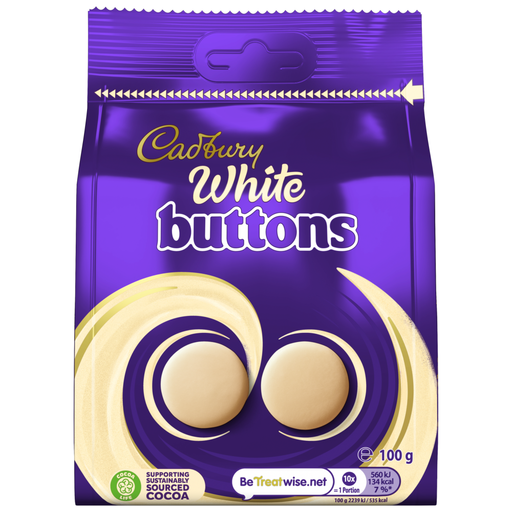 No image available
If you are comparing white chocolate for an occasional treat, this is a 100g giant-button product rather than a confirmed mini-piece option. For a child, check the current pack’s ingredients, allergens and any age or choking warning before deciding whether to buy it.
Choose another food for routine snack time. The NHS advises avoiding food and drink with sugar or sweeteners for children aged 4 or younger and suggests options including fruit, vegetable sticks and plain unsweetened yoghurt for young children. A mini format does not change what the chocolate is.
No. Those descriptions identify pack size or format, not age suitability. Nestlé Confectionery UK lists 8.0g sugars per stated 17-piece portion of its 30g Milkybar Buttons; a separate Milkybar Giant Buttons listing at Waitrose warns that children under 4 could choke on small sweets. Check the exact product’s label and warnings.
Read the ingredients, highlighted allergens, any “may contain” statement, the nutrition panel and any age or choking warning on the current pack. Allergen information varies by product: ASDA’s White Chocolate Buttons listing, for instance, names milk and soya and warns of possible peanuts and nuts.
Do not assume one rule covers every setting or food brought from home. The Requirements for School Food Regulations 2014 define chocolate as confectionery, while Department for Education school-food guidance addresses food and drink provided in state-funded schools in England. Check the individual setting’s policy and the rules for its nation before supplying chocolate.