For routine snack time for a child aged 1 to 5, choose something other than a potato crisp sharing bag: the NHS recommends fruit and vegetables and lists several other snacks for young children. If you are buying crisps for a wider family occasion, compare salt and fat per 100g on the exact pack and put any amount offered to the toddler in a separate bowl; a lower-salt crisp is still not a reason to make it the routine snack.
Who is making this choice?
Caregivers planning routine snacks for children aged 1 to 5
The first decision is what to offer at ordinary snack time, rather than which crisp flavour to buy. The NHS recommends fruit and vegetables and also lists options such as plain unsweetened yoghurt, toast and unsalted rice cakes for young children.
Families buying crisps for a mixed-age occasion
If a bag is mainly for adults or older children, decide separately whether to offer any to a toddler. The exact pack’s nutrition label and a separate serving matter more to that decision than an adult reference-intake percentage.
What matters when choosing?
Decide on the toddler’s snack first. If crisps are also going into the family shopping, compare the packs and plan how they will be served.
| Priority |
What to check |
Your needs |
| Routine snack |
Consider fruit or vegetables first. The NHS also lists plain unsweetened yoghurt, crackers, breadsticks, toast and unsalted rice cakes for young children; it says children under 1 should not be given snacks. |
I’m choosing an ordinary snack for a child aged 1 to 5, rather than buying crisps for everyone else. |
| Salt and fat |
Compare the exact packs per 100g, not flavour names. The NHS labels more than 1.5g salt or 17.5g total fat per 100g as high; UK government guidance gives an average limit of 2g salt a day for children aged 1 to 3. |
If we buy crisps for a family occasion, I want to compare salt without assuming that a lower-salt pack is also low in fat. |
| Serving from a bag |
Check the pack size and whether it contains individual packs. Compare nutrition per 100g when stated serving sizes differ; adult reference-intake percentages are not toddler portion guidance. |
With a sharing bag on the table, I’d rather decide what goes into a separate bowl than leave the open bag within reach. |
Common buying mistakes
-
Making a sharing bag the toddler’s default snack
A bag bought for several people does not answer what to offer a young child at routine snack time. The NHS recommends fruit and vegetables and lists other simple snack options for young children.
Choose the toddler’s usual snack separately; consider crisps, if bought, as part of a wider family occasion.
-
Assuming a salted flavour name tells you the salt content
Manufacturer figures for specific products differ: KETTLE Lightly Salted lists 0.7g salt per 100g, while Walkers Ready Salted, Seabrook Sea Salted and REAL Sea Salt each list 1.3g per 100g. All four list more than the NHS high-fat threshold of 17.5g per 100g.
Read both salt and total fat per 100g on the pack you are buying. Do not treat “lightly salted” or “sea salt” as a conclusion about the whole nutrition panel.
-
Using an adult reference intake to decide a toddler serving
Walkers identifies its reference intake as that of an average adult. Separately, UK government guidance says children aged 1 to 3 should, on average, aim for no more than 2g salt a day.
Keep any amount offered to the toddler separate from the open bag, and read the pack’s salt information without treating its adult percentage as a child allowance.
Brand and product references
These examples help with label comparisons; figures for a named flavour do not describe every product from its brand.
Walkers
Walkers Ready Salted is a reference point for checking a familiar salted crisp against the exact pack being considered.
- Walkers lists 1.3g salt and 31g total fat per 100g for Ready Salted.
- Those figures should not be applied to other Walkers flavours or variants.
Tyrrells
Tyrrells identifies Lightly Sea Salted among its 150g sharing packs.
- The named flavour and sharing-pack format give shoppers a specific variant to look for.
- Check that variant’s nutrition panel before comparing its salt or fat with another pack.
KETTLE Chips
KETTLE Lightly Salted provides a product-specific example of why salt and fat need separate checks.
- KETTLE lists 0.7g salt per 100g for Lightly Salted.
- It also lists 29.5g total fat per 100g, above the NHS high-fat threshold of 17.5g per 100g.
Seabrook
Seabrook Sea Salted has both per-100g information and a stated figure for its 31.8g bag.
- Seabrook lists 1.3g salt and 30.4g total fat per 100g for Sea Salted.
- Its stated 0.4g salt per 31.8g bag describes that bag, not every Seabrook pack or flavour.
Pipers
Pipers describes Anglesey Sea Salt as crisps salted with Welsh sea salt.
- The named flavour makes it possible to check the corresponding pack rather than compare brands in general.
- The type of salt does not establish the pack’s salt or fat content; read its nutrition panel.
REAL Hand Cooked Crisps
REAL lists Sea Salt crisps in 150g and 35g bags, giving households two stated pack sizes to consider.
- REAL lists 1.3g salt and 30.0g total fat per 100g for Sea Salt.
- The smaller bag changes the amount available in a pack, not those per-100g nutrition figures.
Crisps and potato snacks for family occasions
These Joybuy options include individual packs and a sharing bag for a wider family occasion. They are not alternatives to choosing a routine toddler snack.
 No image available
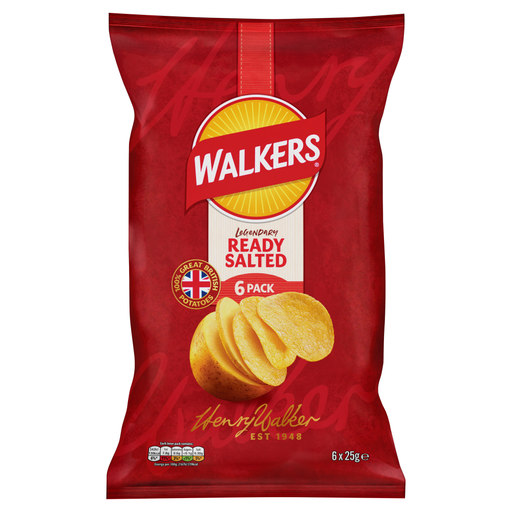
Walkers Ready Salted Crisps 6 x 25g
For a family occasion where separate packs are useful, this multipack contains six 25g bags. An individual bag is still not a toddler serving recommendation; decide separately whether and how much to offer.
View on Joybuy
 No image available
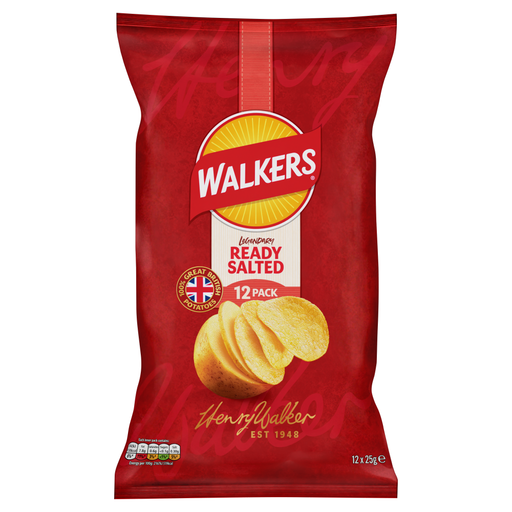
Walkers Ready Salted Crisps 12 x 25g
This option contains twelve separate 25g bags for a family occasion. Pack size makes it easier to keep servings separate, but it does not make a whole bag an appropriate toddler portion.
View on Joybuy
 No image available
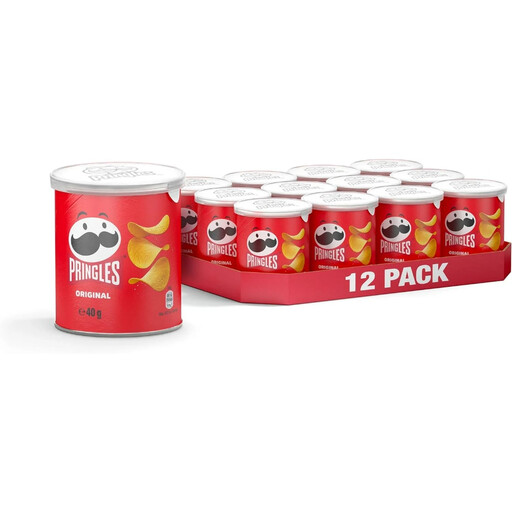
Pringles Original 12 x 40g
This potato snack comes as twelve 40g packs for sharing among the family. Each pack contains more than a 25g pack, so its size should not be treated as a toddler serving guide.
View on Joybuy
 No image available
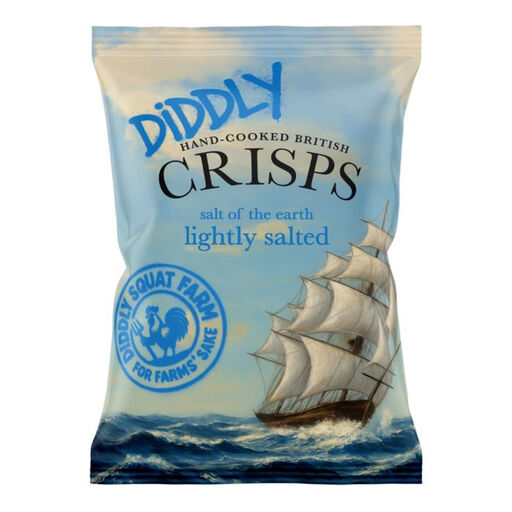
Diddly Squat Farm Ready Salted Crisps 150g
The 150g sharing bag suits a family occasion where crisps will be served from one pack. If offering any to a toddler, put the chosen amount in a separate bowl rather than using the open bag as a serving.
View on Joybuy
Questions about toddler snack time
Are crisps an everyday snack for a toddler?
Choose a different option for routine snack time. The NHS recommends fruit and vegetables for children’s snacks and lists plain unsweetened yoghurt, toast, crackers, breadsticks and unsalted rice cakes among options for young children. A crisp bag bought for a family occasion need not become the toddler’s usual snack.
Does “lightly salted” tell me whether crisps are suitable for a toddler?
No: check the exact pack’s salt and total fat per 100g. KETTLE lists 0.7g salt and 29.5g total fat per 100g for Lightly Salted; the NHS classifies more than 17.5g total fat per 100g as high. The flavour name alone does not settle the snack-time decision.
How should I compare two crisp bags with different serving sizes?
Use the nutrition figures per 100g for a like-for-like comparison, then check the pack sizes separately. The NHS classifies more than 1.5g salt or 17.5g total fat per 100g as high. An adult reference-intake percentage is not a toddler portion target.
Can a child under 1 have crisps as a snack?
The NHS says children under 1 should not be given snacks. This article’s discussion of toddler snack time should not be applied to babies; follow age-appropriate feeding and weaning guidance instead.


