For a child aged 4 or under, do not make a sugary frozen dessert a routine finish to dinner: NHS guidance says to avoid giving this age group food and drink with sugar or sweeteners. If you choose an occasional treat, a defined serving helps you control the amount offered, but you still need to check the current pack for ingredients and allergens and consider the dessert’s shape and texture while supervising the child.
Who is this decision for?
Carers planning everyday toddler dinners
If the child is aged 4 or under, portion size is not the first question. NHS guidance says to avoid giving this age group food and drink with sugar or sweeteners, so a sweet frozen dessert should not become the expected end to dinner.
Parents considering an occasional treat
A clearly marked individual serving makes it easier to see how much you are offering. You still need to consider the ingredients, the child’s ability to manage the shape and texture, and supervision while they eat.
Households checking food allergens
Read the exact current pack rather than relying on the range name. The frozen desserts described by Tesco, Waitrose & Partners and M&S Food have different milk, egg, wheat, soya and nut-related information.
What should you check first?
Start with whether a sweet dessert belongs in this meal. If you decide on an occasional treat, check the serving, physical form and current label before choosing between packs.
| Priority | What to check | Your needs |
|---|
| Everyday use |
Check for sugar or sweeteners in the ingredients. NHS guidance says children aged 4 or under should avoid food and drink containing them; a single-serve wrapper does not change that advice. |
I do not want a sweet dessert to become the expected finish to a toddler’s dinner. |
| Serving size |
Look for the volume of one unit and nutrition per serving, not just the pack total. Tesco lists Wall’s Mini Milk as 35 ml per lolly, with 4.7 g sugars and 0.5 g saturates per serving. |
If I choose an occasional treat, I want to know the amount I am offering without estimating a scoop from a tub. |
| Shape and texture |
Consider whether the child can manage the food’s size, shape and texture. GOV.UK guidance identifies small round foods as a higher choking risk; keep the child seated upright and supervise them while eating. |
A bite-sized ball may look like a small portion, but I need to consider how my child will eat it. |
| Ingredients and allergens |
Read the current pack’s ingredient list, allergen declarations and precautionary statements. Check each flavour separately rather than assuming a range shares one recipe. |
I need the exact item’s allergen information before offering it, particularly where milk, egg, wheat, soya or nuts are a concern. |
Common mistakes to avoid
-
Assuming “single serve” means suitable for a toddler
A measured portion limits how much is served, but it does not remove sugar or sweeteners. NHS guidance advises avoiding food and drink containing them for children aged 4 or under.
For an occasional choice, read the ingredients and nutrition for one serving instead of relying on “mini” on the front of the pack.
-
Choosing round mini bites for their small size
Small round foods present a higher choking risk according to GOV.UK guidance. M&S Food describes some of its mini ice-cream bites as balls, so their portion size alone does not settle the decision.
Consider the individual child’s ability to manage the shape and texture. Keep them seated upright and supervise them while eating.
-
Relying on a range name for allergen information
Ingredients and allergen statements differ between frozen desserts. A description such as “mini” or “gluten-free” does not answer whether an item contains another relevant allergen.
Read the physical pack each time, including its precautionary statements, before serving the exact flavour purchased.
Relevant brands and ranges
These examples show how individual portions can differ; inclusion here does not mean that a product is suitable for a toddler’s dinner.
Wall’s Mini Milk
A small ice-lolly format: Tesco lists a pack of 12 lollies at 35 ml each.
- Tesco lists 4.7 g sugars and 0.5 g saturates per lolly, making the amount in one unit clear.
- It contains sugar and milk and may contain soya; the defined portion does not override NHS advice for children aged 4 or under.
Häagen-Dazs
Waitrose & Partners lists Dessert Collection as four individual 95 ml mini cups.
- Each cup has a stated volume, so there is no need to estimate a scoop.
- Waitrose & Partners lists milk, egg and wheat in this collection. Its 95 ml cups are not interchangeable with a smaller lolly simply because both are individually packed.
M&S Food
Its frozen range includes fruit pops and coated mini ice-cream bites, which call for different checks.
- M&S says its range includes fruit-juice pops and whole-milk pops; check the exact product label for ingredients and serving details.
- Its Birthday Cake Mini Bites are ball-shaped and labelled unsuitable for people with nut, peanut or egg allergy. Shape and allergen warnings matter more than the word “mini”.
Tesco
Its frozen selection includes individual desserts as well as the Wall’s Mini Milk lollies listed above.
- Product-level serving and nutrition details allow checks against a specific pack.
- An “individual dessert” category is not a toddler-suitability label; products can differ in portion, ingredients and texture.
Waitrose
Its mini ice-cream range includes tubs, sticks and bites.
- The range offers distinct formats to compare by serving size and how they are eaten.
- Check the exact current flavour and pack: a mini tub and a bite-sized coated piece present different portion and texture considerations.
A portioned Joybuy option
This individually packed ice-bar option is relevant only if you have decided to consider an occasional frozen treat; it is not a routine toddler-dinner recommendation.
 No image available
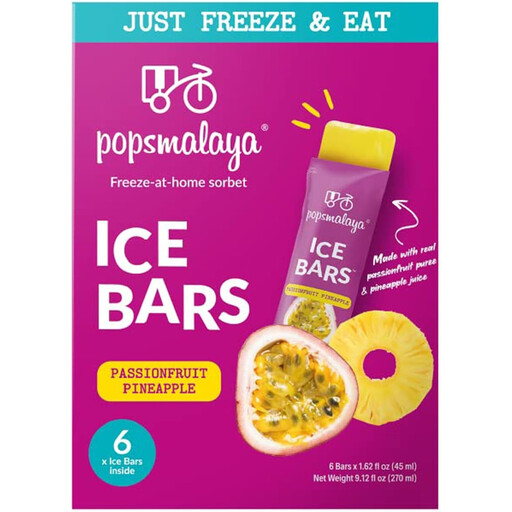
PopsMalaya Passion Fruit Pineapple Ice Bars, 6 × 45 ml
For an occasional, individually portioned frozen treat, this pack contains six 45 ml passion fruit and pineapple ice bars.
The product information describes fruit juices and sugar. NHS guidance advises avoiding food and drink with sugar or sweeteners for children aged 4 or under, so the small serving does not make this a routine dinner dessert.
Check the current pack’s nutrition, ingredients and allergen statements, and consider the bar’s shape and texture for the individual child. Keep the child seated upright and supervise them while eating.
View on Joybuy
Questions about toddler desserts
Can a frozen dessert be part of an everyday toddler dinner?
Do not make a sugary or sweetened frozen dessert a routine choice for a child aged 4 or under. NHS guidance says to avoid giving this age group food and drink with sugar or sweeteners; an individual portion does not change that advice.
Is a mini ice lolly safer than a round dessert bite?
A mini lolly has a defined serving, but its size alone cannot establish suitability for a toddler. GOV.UK guidance identifies small round foods as a higher choking risk; consider the child’s ability to manage the particular food, and keep them seated upright and supervised while eating.
What should I read on the frozen-dessert pack?
Check the serving size, sugars and saturates per serving, ingredients, allergen statements and storage instructions on the current pack. This matters even if you have bought another flavour or an earlier version of the product.
Does “mini cup” mean a small toddler portion?
Not necessarily. Waitrose & Partners lists Häagen-Dazs Dessert Collection cups at 95 ml each, whereas Tesco lists Wall’s Mini Milk lollies at 35 ml each. Compare the exact serving and ingredients rather than treating “mini” as a standard size or a suitability claim.


