Carers planning separate desserts
Individual pots avoid dividing an opened tin at dinner. Tesco, for example, lists pear and peach pieces in a 4 × 120g pack, but the amount in one pot is not a prescribed serving for every toddler.


Choose individual fruit pots when you want a separate dessert without dividing a tin; choose a small can if you would rather portion the fruit yourself. A larger tin makes sense only if its contents fit your planned servings and you can follow its storage instructions. For children aged four or under, NHS guidance cautions against sugar and sweeteners, including syrup and fruit juice, so check the exact ingredients rather than assuming fruit packed in juice is toddler-specific. Prepare the pieces to suit your child’s eating ability, as the Department for Education advises to minimise choking risk.
Individual pots avoid dividing an opened tin at dinner. Tesco, for example, lists pear and peach pieces in a 4 × 120g pack, but the amount in one pot is not a prescribed serving for every toddler.
If the packing liquid is your first concern, compare the ingredients on the exact variant rather than relying on a front-of-pack description. NHS guidance for children aged four or under cautions against sugar and sweeteners, including syrup and fruit juice.
Pieces, slices and halves may require different preparation for a particular child. The Department for Education advises preparing food appropriately to minimise choking risk.
Decide how many servings you plan to use, then check the packing liquid and the fruit’s size and texture before serving.
| Concern | What to check | Who this matters to |
|---|---|---|
| Packing liquid | Read the ingredients for syrup, juice and sweeteners; compare the nutrition panels of the exact variants. | For a child aged four or under, I want to know what accompanies the fruit before choosing a dessert. About 36% of consumers put that ingredient check first. |
| Ready portioning | Check the number and size of pots, and whether the product contains fruit pieces or a dessert in jelly. | If dinner calls for a separate fruit dessert without opening a tin, pre-separated pots save a portioning step. About 29% of consumers prioritise that convenience. |
| Piece size and texture | Inspect the fruit after opening and cut or mash it as appropriate for the child. | When pieces or slices need adapting before serving, I need to see and prepare the actual fruit. Roughly 21% of consumers put adaptable texture first. |
| Unused fruit | Choose a pack size that fits the servings you plan to use, and check its instructions for storage after opening. | When planning more than one dinner, I would rather use the fruit I open than leave it unused. About 14% of consumers make that their primary concern. |
Tinned fruit and fruit pots may contain juice, syrup or jelly. For children aged four or under, NHS guidance cautions against sugar and sweeteners, including syrup and fruit juice.
Check the ingredients of the exact product. Do not treat its packing liquid as a drink for your toddler.
A pot’s stated weight describes the commercial pack, not how much every toddler needs at dinner.
Serve an amount that fits the child and the meal rather than assuming the whole pot must be eaten.
The size and texture of the fruit matter for a child’s eating ability. The Department for Education advises preparing food appropriately to minimise choking risk.
Check the contents after opening, cut or mash the fruit as needed, and supervise the child while eating.
Tesco lists pear and peach pieces in pear juice from concentrate as a 4 × 120g multipack.
Princes lists Peach Slices with Juice in 220g and 410g cans for shoppers who prefer to portion fruit themselves.
Del Monte Europe lists Pear Halves in Juice in a 415g tin; Tesco also lists Del Monte fruit variants in juice and light syrup.
These selections cover separate peach pots and a small tin to portion yourself for a toddler-dinner dessert. Check each product’s ingredients and prepare the fruit for the child before serving.
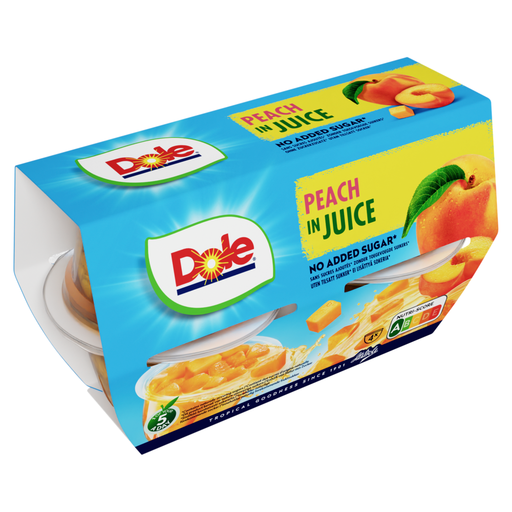 Image unavailable
The four separate pots suit a dinner where you do not want to divide an opened tin. The listed ingredients include steviol-glycoside sweetener and white grape juice concentrate; NHS guidance advises avoiding sweeteners for children aged four or under, so this variant does not meet a no-sweetener requirement. Inspect and adapt the fruit before serving, and do not treat one pot as a prescribed serving.
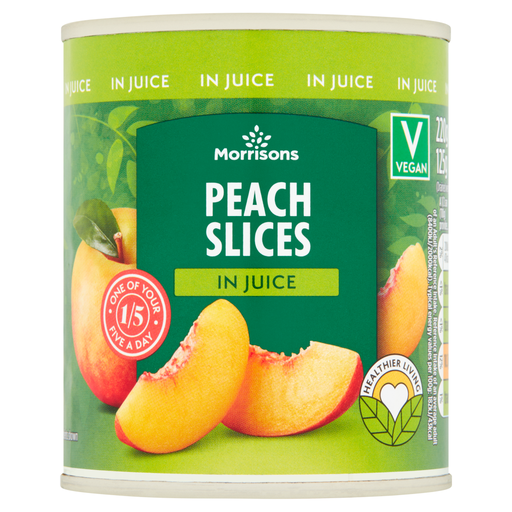 Image unavailable
This tin suits a dinner where you plan to portion the peach slices yourself rather than use separate pots. The listed ingredients include clarified grape juice concentrate; check the exact pack and do not serve the packing liquid as a drink. Inspect and cut or mash the slices as needed. For unused contents, follow the listing’s instruction to refrigerate after opening and use within two days.
Yes. The NHS includes canned fruit among the forms of fruit that can offer variety. Prepare the contents for the child’s eating ability and serve them as part of dinner, not as a complete meal.
No. NHS guidance cautions against sugar and sweeteners for children aged four or under and includes fruit juice in that caution. Check the exact ingredients rather than treating “in juice” as a toddler-specific claim, and do not serve the packing liquid as a drink.
Choose a form you can prepare for your child’s current eating ability. The Department for Education advises preparing food appropriately to minimise choking risk, so inspect the contents and cut or mash them when needed.
Compare the ingredients, packing liquid and nutrition information on the exact variants, including sugars per 100g where shown. Those figures help compare products, but they do not separately identify which sugars come from the fruit or its packing liquid.
Yes. Read the ingredients and allergen information on the exact pack, particularly if the child has a diagnosed allergy or a medically directed diet. Do not assume a fruit pot, jelly dessert and tin have the same ingredients.