Who this is for

Parents needing a quick toddler breakfast

For parents considering crunchy granola because a small pack seems convenient, but who need to check texture, whole nuts and whole seeds before offering it to a child under 5. The Department for Education advises that children under 5 should not be given whole nuts or peanuts because of choking risk.

Carers packing breakfast for nursery or school

For carers who need a portable breakfast but must check the exact allergen label and follow the receiving setting’s allergy arrangements, particularly where nuts or cereals containing gluten are relevant.

Families comparing lower-sugar granola claims

For families comparing low-sugar or no-added-sugar wording who still need to inspect the full product information. A front-of-pack claim does not settle questions about texture, ingredients or allergens.

Buying priorities

Use granola only after a safety screen

Choose this when: the exact label and physical texture confirm there are no whole nuts or whole seeds, the child can manage the texture and the setting permits the listed allergens.

Trade-off: a portion pack can simplify transport, but it does not prove a toddler-appropriate texture or serving amount.

Choose a softer breakfast when details are unclear

Choose this when: whole nuts, whole seeds, hard clusters or their physical form cannot be ruled out from the product information.

Trade-off: this gives up the ready-made granola format, so a carer may need to prepare breakfast instead.

Priority What to check Your needs and respondent concerns
Texture and ingredients Check the ingredient list and visible pieces for whole nuts and whole seeds. Look for hard clusters or unclear pieces before serving. I need to know that a crunchy cereal has no whole nuts or whole seeds before it is offered to a child under 5.
Sugars and claims Read the ingredients and nutrition panel, including the stated serving basis. Compare traffic-light information where it is available rather than treating a front claim as a verdict. I want to compare what is actually in the cereal, not just a low-sugar or no-added-sugar message. In the Food Standards Agency and Ipsos Northern Ireland Making Food Better Tracker Survey 2024, 49% of adults interviewed in Northern Ireland said they actively used traffic-light labelling when shopping for food.
Allergens and setting rules Check the current allergen declaration for nuts, cereals containing gluten and precautionary statements. Confirm the nursery or school’s current allergy policy before packing. Before breakfast goes into a bag, I need the exact pack and the receiving setting’s arrangements to be acceptable.
Portion-pack convenience Check whether the pack is genuinely individually portioned and whether its contents still meet the texture and allergen checks. Treat the manufacturer’s serving information as product information, not a toddler portion prescription. A separate pack can make transport and portion separation easier, but I still need to assess what the child will actually eat.

Common buying pitfalls

  • Treating a portion pack as a toddler-safety claim

    Individual packaging can be convenient, but it does not establish whether there are whole nuts, whole seeds, hard clusters or an appropriate amount for a young child. Dorset Cereals Oat Granola portion packs list sunflower seeds, so the physical form of the seeds matters before serving.

    Do not serve a single-serve granola as-is until the exact product has passed the whole-nut and whole-seed check. Choose a different breakfast if the physical form cannot be confirmed.

  • Using low-sugar wording as a shortcut for suitability

    A low-sugar or no-added-sugar message does not answer questions about choking risk, allergens, texture or a suitable serving amount. The NHS advises keeping the frequency and amount of sugary foods and drinks as low as possible.

    Read the ingredients and nutrition panel, then assess texture and allergens separately. Compare products on the same stated basis rather than relying on the front-of-pack claim alone.

  • Packing granola without confirming allergy arrangements

    Granola may contain nuts or cereals containing gluten. In England, schools must publish an allergy safety policy, and individual settings may discourage specified allergens on site.

    Ask the receiving setting about its current policy and re-check the product label when changing flavour, pack size or recipe.

Relevant brand references

Dorset Cereals

A relevant option for shoppers looking for individually packed granola, as Dorset Cereals Oat Granola is sold in portion packs by Out of Eden.

  • The listed portion-pack product contains jumbo oats and sunflower seeds.
  • Portion packaging does not establish toddler suitability. Check the physical form of seeds and any nuts before serving.

Lizi's

Relevant for families comparing granola ranges marketed with lower-sugar positioning.

  • Lizi's describes a broad granola range and a Low Sugar Range.
  • Check each exact product for portion format, nuts, seeds and texture before considering it for a toddler.

Jordan's

Relevant for a broad granola selection that includes fruit-and-nut, raisin-and-almond, triple-nut and no-added-sugar lines.

  • The range offers several distinct granola styles.
  • Product names containing nuts or almonds underline the need to check the exact ingredients and physical pieces for a child under 5.

Rude Health

Relevant for shoppers considering low-sugar, organic or alternative-ingredient granola options.

  • Rude Health offers a Nutty Low Sugar Granola.
  • That product lists almonds and hazelnuts, so lower-sugar positioning does not resolve toddler texture or choking-safety checks.

Nature's Path

Relevant for households comparing organic granola with gluten-free, grain-free or protein-labelled variants.

  • Nature's Path lists granola options across several dietary categories.
  • Dietary filters do not establish individual portions, the absence of whole nuts or seeds, or an appropriate toddler texture.

Joybuy product options

These Joybuy options represent softer, prepared cereal alternatives for toddler breakfasts when ordinary crunchy granola does not pass the required texture and ingredient checks.
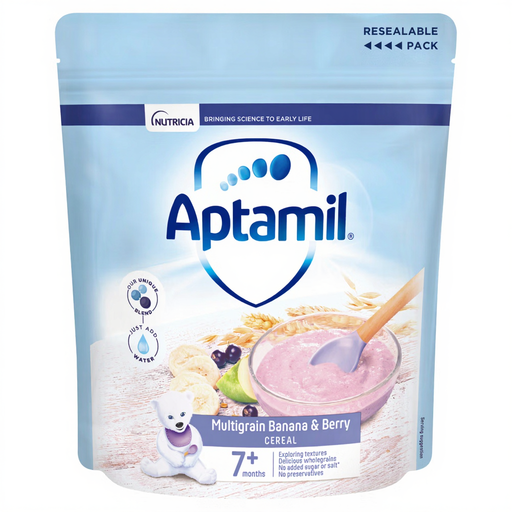
Aptamil Multigrain Banana Cereals 200g

Aptamil Multigrain Banana Cereals 200g

A non-granola breakfast alternative for home preparation where a softer consistency is preferred.

Stated as suitable from 7+ months and prepared with warm water; the consistency can be adjusted during preparation.

No added sugar or salt is stated. The listed allergens include cereals containing gluten, oats and milk; the product may contain barley, soya and wheat.

It is not individually portioned and requires preparation. Check the exact pack label, the child’s needs and any nursery or school allergy policy before packing.

Joybuy
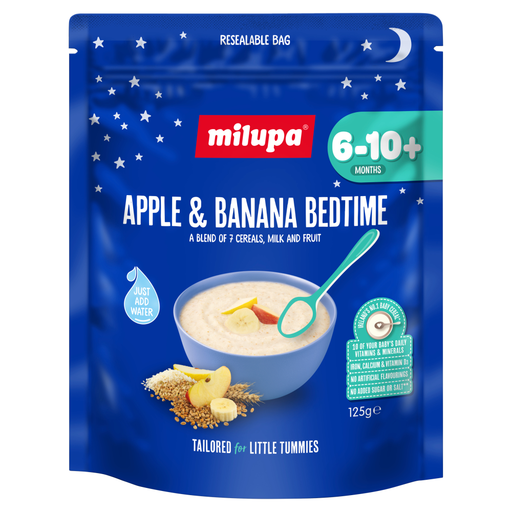
Milupa Apple and Banana Bedtime Cereal 6-10+ Months 125g

Milupa Apple & Banana Bedtime Cereal 6-10+ Months 125g

A spoon-fed, non-granola cereal option for a carer preparing breakfast rather than packing ready-to-eat crunchy cereal.

Stated for 6+ months and prepared with cooled, boiled water, allowing the consistency to be adjusted.

No added sugar or salt is stated. The declared allergens include milk, wheat, rye, oats, spelt and soya.

It is not individually portioned and requires bowl preparation. Check the exact pack label and the receiving setting’s current allergy policy before packing.

Joybuy

Questions parents and carers ask

Can I give ordinary crunchy granola to a toddler?

Do not assume it is suitable. The Department for Education advises that children under 5 should not be given whole nuts or peanuts because of choking risk; check both the ingredient list and the physical pieces, including whole seeds. If this cannot be confirmed, choose an age-appropriate alternative rather than serving the granola as-is.

Is a single-serve granola pack automatically the right portion for a toddler?

No. A single pack indicates retail packaging convenience, not a toddler-specific serving recommendation. Dorset Cereals Oat Granola is available in portion packs, but the pack format alone does not establish that its contents or amount are appropriate for a toddler.

Does low-sugar or no-added-sugar granola suit toddlers automatically?

No. Sugar positioning does not assess choking risk, allergens, texture or child-appropriate portioning. Check the ingredients and nutrition information alongside the physical texture and the child’s allergen requirements.

Should I check a school or nursery policy before packing granola?

Yes. In England, schools must publish an allergy safety policy for managing known allergens, and settings may discourage particular foods such as nuts. Ask the receiving setting about its current policy and check the exact pack label before packing; arrangements may differ elsewhere in the UK.

Does granola containing oats always contain gluten?

Do not assume either way. The Food Standards Agency identifies oats among cereals containing gluten for allergen purposes, while foods labelled gluten-free must meet specified gluten limits and still emphasise oats. Use the exact product’s current allergen declaration.