What matters when choosing?
Decide whether this is a routine toddler drink or an occasional drink for the wider household before comparing packs. Then check the label, preparation method and amount you are likely to use.
| Priority | What to check | Your needs |
|---|
| Serving occasion |
For children aged 1 to 5, Healthier Together NHS identifies water and milk as the best drinks. Its oral-health guidance says to keep sugary drinks to mealtimes and avoid them for one hour before bedtime. |
I’m choosing a drink for dinner every day, rather than planning an occasional chocolate drink with a meal. |
| Ingredients and allergens |
Read the current pack’s ingredients and allergen statement. Marks & Spencer lists milk ingredients in its 250 g instant product and says its 300 g drinking chocolate is not suitable for people with a milk allergy; Tesco Groceries lists a ‘may contain milk’ warning for Cadbury Drinking Chocolate 2 kg. |
Someone in the household has a diagnosed allergy, so I need to assess the exact product against their allergy advice, not rely on the words ‘drinking chocolate’. |
| Pack size and storage |
Compare the pack quantity with likely household use and read its once-opened instructions. Marks & Spencer says to consume its 250 g Instant Hot Chocolate within four weeks of opening; that instruction does not establish a limit for other products. |
Hot chocolate is only an occasional household drink, and I want a pack we can use as instructed after opening. |
| Preparation |
Check which liquid the directions call for and who will handle it. Tesco Groceries directs users to mix its Cadbury Drinking Chocolate 2 kg with hot milk; Marks & Spencer also specifies hot milk for its 300 g Drinking Chocolate. |
At a family dinner, an adult will prepare and cool any hot drink before offering it to a toddler. |
Brand and retailer references
These pack examples show why the exact product label matters; a brand name alone does not establish ingredients or suitability for a toddler.
Cadbury
Tesco Groceries lists Cadbury hot-chocolate products in 500 g and 2 kg formats.
- The two sizes give households different quantities to consider according to how often they use the product.
- Tesco Groceries lists 73 g sugars per 100 g powder and ‘may contain milk’ for the 2 kg Drinking Chocolate. Check the label of the particular pack being bought.
Galaxy
Tesco Groceries lists Galaxy Instant Hot Chocolate Drink in a 370 g format.
- A 370 g pack provides an alternative quantity to the 500 g packs considered here.
- Check the chosen Galaxy pack for its current ingredients, allergens and preparation directions; the range name does not establish them.
Options
Tesco Groceries lists Options hot chocolate in 220 g jars and 11 g sachets.
- A sachet or smaller jar is a different quantity to store than a family-size tub.
- Check ingredients and allergens for the exact flavour and format rather than assuming all Options products share a label.
Tesco
Tesco Groceries lists an own-brand Instant Hot Chocolate in a 400 g pack.
- The 400 g size sits between the smaller jars and 500 g household packs described here.
- Check its current ingredients, allergen statement and preparation directions on the exact product before choosing it for a household with a toddler.
M&S
Marks & Spencer describes a 250 g Instant Hot Chocolate and a 300 g Drinking Chocolate.
- Its 250 g instant product carries an instruction to consume it within four weeks once opened, giving households a product-specific storage limit to plan around.
- The instant product lists dried whey and skimmed milk; the 300 g Drinking Chocolate is labelled as not suitable for people with a milk allergy.
Joybuy drinking chocolate options
These two 500 g drinking chocolates are options to consider for occasional household use, not replacements for a toddler’s routine dinner drink. Check the current pack before serving either product to a child with an allergy.
 No image available
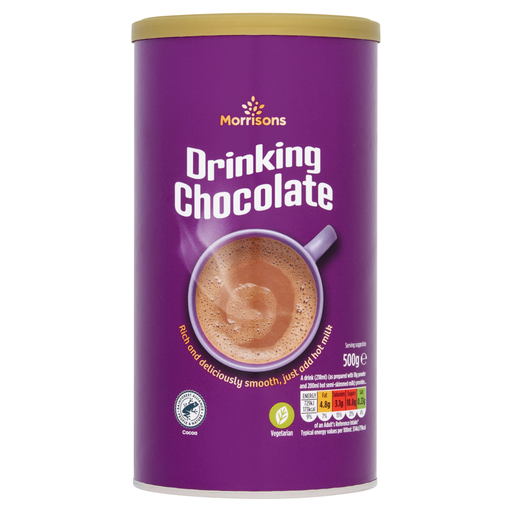
Morrisons Drinking Chocolate 500 g
The 500 g pack is a quantity to consider if other household members will share an occasional hot chocolate. Its directions call for hot milk, so an adult should prepare and cool the drink before offering it to a toddler. Check the current pack’s ingredients, allergen declaration and storage instructions.
View on Joybuy
 No image available
Cadbury Drinking Chocolate 500 g
The 500 g pack is another quantity for occasional shared household use. The product directions describe mixing three teaspoons with hot milk; an adult should prepare and cool it before offering any to a toddler. Product information flags a ‘may contain milk’ warning, so check the current pack and do not assume it is suitable for a child with a milk allergy.
View on Joybuy
Common questions
Should hot chocolate be a toddler’s regular dinner drink?
No. Healthier Together NHS identifies water and milk as the best drinks for children aged 1 to 5 and advises keeping sugary drinks to mealtimes. A family pack of hot chocolate does not change that guidance.
What if the family serves hot chocolate occasionally with dinner?
Treat it as an occasional drink with the meal, not a routine or bedtime drink. Healthier Together NHS advises avoiding sugary foods and drinks for one hour before bedtime; an adult should also cool a freshly prepared hot drink before offering it to a toddler.
Is drinking chocolate suitable for a child with a milk allergy?
Do not judge suitability from the category name. Marks & Spencer lists milk ingredients in its 250 g Instant Hot Chocolate and labels its 300 g Drinking Chocolate as unsuitable for people with a milk allergy; Tesco Groceries lists ‘may contain milk’ for Cadbury Drinking Chocolate 2 kg. Check the exact current pack and follow the child’s clinical allergy advice.
When does a larger pack make sense?
Consider a larger pack when older household members will use it and the product can be kept and finished according to its instructions. If hot chocolate is only an occasional drink, check the pack’s once-opened directions before choosing a family-size tub mainly for the toddler.
Does a reduced-sugar label make hot chocolate a routine toddler drink?
No. NHS guidance says diet or reduced-sugar drinks are not recommended for babies and toddlers. For a regular dinner drink, Healthier Together NHS identifies water and milk as the best choices for children aged 1 to 5; still check the exact product’s ingredients and allergens if considering it for occasional household use.


