Carers of toddlers under 2
NHS guidance says wholegrain foods can fill an under-2 before they have taken in sufficient calories and nutrients. An age-appropriate breakfast matters more than choosing the highest fibre figure.


High-fibre muesli is not a default breakfast choice for toddlers: many conventional blends contain whole or hard nut pieces, and NHS guidance warns that wholegrain foods can fill children under 2 before they have eaten enough calories and nutrients. For a child aged 2 to 4, check the current pack for whole nuts, hard fragments, gluten and other allergens, and treat muesli as one breakfast option within a varied diet.
NHS guidance says wholegrain foods can fill an under-2 before they have taken in sufficient calories and nutrients. An age-appropriate breakfast matters more than choosing the highest fibre figure.
Check texture and ingredients before anything else. NHS guidance says whole nuts should not be given to children under 5 because they can cause choking, and many mueslis contain nuts or hard pieces.
Use the current pack and the setting's allergen policy rather than relying on a brand name or an older listing. Gluten-containing cereals and nuts are common ingredients in muesli.
Start with the child's age and the texture of the cereal, then check the current ingredient list, allergens and nutrition panel.
When to choose: Choose unsweetened porridge or another lower-sugar cereal rather than deliberately seeking high-fibre muesli.
Key consideration: NHS guidance says wholegrain foods can be filling for under-2s, so they should not be the only starchy choice.
When to choose: Consider muesli only after ruling out whole nuts, peanuts and hard-fragment warnings on the exact pack.
Key consideration: A high-fibre claim concerns fibre composition; it does not establish suitability for every toddler.
When to choose: Pack muesli only when the exact product fits the setting's current allergen policy.
Key consideration: Ingredients and allergen information can change, so the physical pack is the relevant check.
| Priority | What to check | Your needs |
|---|---|---|
| Texture and nut content | Read the ingredients and caution statements for whole nuts, peanuts, shells, stones, husks or pits. Do not assume soaking makes whole nuts suitable. | I want a breakfast with no whole nuts or peanuts for a child under 5, and no hard-piece warning that could affect safe serving. |
| Fibre for the child's age | Use age before a front-of-pack fibre claim. For an under-2, avoid making wholegrain foods the only starchy option; introduce more wholegrain choices gradually after age 2. | For a younger toddler, I need a breakfast pattern that does not prioritise fibre over adequate energy and nutrients. |
| Sugars and dried fruit | Compare sugars per serving on the current nutrition panel and read the ingredient list for dried fruit. “No added sugar” is not the same as having no sugars. | I am looking for a lower-sugar cereal choice and will serve dried-fruit muesli as part of a meal rather than a grazing snack. |
| Allergens and setting rules | Check highlighted allergens and precautionary statements for cereals containing gluten, milk and nuts. Confirm the nursery or school's current policy before packing. | I need the exact pack to suit my child's dietary requirements and the rules of the setting where breakfast will be eaten. |
A high-fibre claim describes the fibre content of a food, not whether it suits a particular child. NHS guidance notes that wholegrain foods may fill an under-2 before they have eaten enough calories and nutrients.
Use the child's age first. For under-2s, keep breakfast varied rather than making high fibre the main goal; for ages 2 to 4, introduce wholegrain choices gradually.
Many standard mueslis contain almonds, hazelnuts or other hard pieces. NHS guidance says whole nuts and peanuts should not be given to children under 5 because they can choke.
Reject muesli containing whole nuts or peanuts for toddlers under 5, and read the pack for warnings about shells, stones, husks or pits.
A no-added-sugar muesli can still contain sugars from ingredients such as raisins and other dried fruit.
Compare sugars per serving on the current pack and use NHS lower-sugar cereal guidance as a starting point. Serve dried-fruit muesli as part of a meal rather than a between-meal snack.
Muesli can contain gluten-containing cereals, nuts and milk ingredients, while food formulations and allergen information may change.
Read the physical pack immediately before serving or packing. Do not assume that one variant has the same allergen profile as another product from the same brand.
Alpen Original is positioned as a wholegrain, high-fibre muesli.
Dorset Cereals makes muesli with wholegrain flakes, fruit, nuts and seeds; its Gloriously Nutty variant is marketed as high in fibre and with no added sugar.
Lizi's makes cereal and muesli products using ingredients such as oats, nuts, seeds and fruit.
Jordans offers wholegrain cereal and muesli variants, including fruit-and-nut blends.
Rude Health offers organic and plant-based cereal products, including The Ultimate Muesli and Soft & Fruity Bircher Muesli.
Tesco offers Swiss Style No Added Sugar Muesli as a supermarket own-label option.
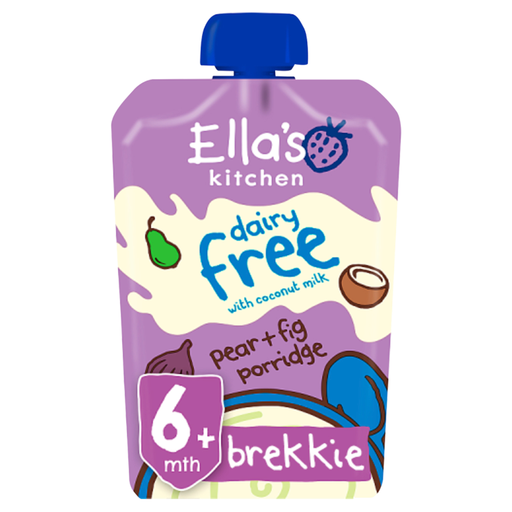
Joybuy product options for the age-appropriate porridge route, rather than high-fibre muesli, for toddler breakfast.
 No image available
A porridge alternative for the under-2 breakfast route, rather than a high-fibre muesli choice.
Stated age: 6+ months. Contains oats; check the current label and any nursery or school allergen policy before packing. Keep the pouch cap out of reach of children under 36 months and serve the contents in a bowl or on a spoon.
Not as a default choice. NHS guidance says children under 2 should not receive only wholegrain starchy foods because the fibre may fill them before they have eaten enough calories and nutrients. For children aged 2 to 4, consider muesli only after checking its texture, allergens, sugars and place within a varied diet.
Many standard mueslis contain whole or hard nut pieces. NHS guidance says whole nuts and peanuts should not be given to children under 5 because they can choke, regardless of whether the pack also highlights wholegrains, fibre or no added sugar.
No. Under UK nutrition-claim rules, a high-fibre claim relates to fibre content, with the legal threshold generally set at at least 6g per 100g or 3g per 100kcal. It does not assess nut texture, allergens, sugars or a toddler's overall diet.
No. A no-added-sugar product can still contain sugars from ingredients such as raisins and other dried fruit. Compare the current nutrition panel and ingredient list, and use NHS guidance favouring lower-sugar cereal choices for toddlers.
Only if the current nursery or school allergen policy permits it and the exact pack fits that policy. Muesli often contains gluten-containing cereals and nuts, so check the pack immediately before packing; for a child with a diagnosed allergy, coeliac disease or another medical dietary requirement, follow the child's clinical advice and the setting's written policy.