For a child aged 1 or over, the NHS says an unsweetened, calcium-fortified oat drink can be part of a balanced diet; a 1+ carton is one option, but a fortified whole oat drink may also fit. If it will regularly replace cow’s milk for a child with cow’s-milk protein allergy, Hertfordshire and West Essex NHS-linked guidance advises checking for added calcium, vitamin D, B12 and iodine, around 40 kcal per 100 ml or more, and at least 1 g protein per 100 ml. A standard carton used in a dinner recipe has a different role, and any option still needs an allergen check.
Who is choosing the oat drink?
Parents of children aged 1 or over avoiding cow’s milk
If oat drink will be a regular alternative to cow’s milk, its fortification, energy and protein matter alongside the child’s wider diet. The NHS permits unsweetened, calcium-fortified alternatives from age 1; Hertfordshire and West Essex NHS-linked guidance gives further checks for children with cow’s-milk protein allergy.
Families cooking toddler dinners
An oat drink stirred into porridge or savoury food is not necessarily serving the same role as a child’s main milk alternative. Decide how the carton will be used before comparing its nutrition panel.
Families managing food allergies
Check the exact carton for milk warnings, oats and other relevant allergens. A vegan recipe or gluten-free claim does not, by itself, settle whether a product fits a child’s allergy requirements or a nursery’s arrangements.
What should you check first?
Decide whether the oat drink is an ingredient in dinner or a regular alternative to cow’s milk, then check the current carton against the child’s age and allergy needs.
| Priority |
What to check |
Your needs |
| Age and use |
Check the carton’s age wording and whether the drink is unsweetened and calcium-fortified. The NHS says such milk alternatives can be given from age 1 as part of a balanced diet; oat drink is not a breast-milk alternative in the first 12 months. |
Am I adding a little oat drink to dinner, or choosing something my child will drink regularly instead of cow’s milk? |
| Nutrition |
For a young child who cannot tolerate cow’s milk and needs a main non-dairy alternative, Hertfordshire and West Essex NHS-linked guidance advises added calcium, vitamin D, B12 and iodine, around 40 kcal per 100 ml or more, and at least 1 g protein per 100 ml. |
If this is replacing cow’s milk, I need to compare the current per-100-ml panel rather than assume a 1+, whole or standard carton provides the same nutrients. |
| Allergens |
Read the ingredients and precautionary statements for milk, oats and any other allergens relevant to the child. The Food Standards Agency notes that gluten-free oats can still matter to someone with an oat allergy. |
A vegan label alone will not answer whether this particular carton fits my child’s milk-allergy or oat-allergy requirements. |
| Use outside home |
Check the current label and discuss the child’s dietary requirements with the nursery or school before the drink is supplied or used there. |
If dinner or snacks are provided by someone else, I want them to have the exact product and allergen information they need. |
Which assumptions can cause problems?
-
Assuming every oat drink can replace cow’s milk in the same way
Protein differs between named cartons: Tesco lists 0.3 g per 100 ml, while Oatly Whole lists 1.0 g per 100 ml. Hertfordshire and West Essex NHS-linked guidance advises at least 1 g per 100 ml when choosing a main non-dairy alternative for a young child who cannot tolerate cow’s milk.
For that replacement role, compare energy and protein per 100 ml and check the listed fortification, rather than choosing by carton style alone.
-
Taking a growing-up name as a clear age instruction
Alpro’s UK Oat Growing Up page uses “1-3+” in its naming but refers to children aged 3+ in its page text. That difference matters when choosing for a 1- or 2-year-old.
Check the age instruction on the physical carton or ask the manufacturer before choosing it for a child of that age.
-
Treating vegan or gluten-free wording as allergy clearance
M&S says its Plant Kitchen Whole Oat Drink may contain milk and is not suitable for people with a milk allergy, wheat allergy or coeliac disease. The Food Standards Agency also explains that gluten-free oats remain relevant to an oat allergy.
Read the current ingredients and allergen warnings against the child’s own requirements and follow their allergy plan.
-
Using oat drink in place of infant formula
For the first 12 months, the NHS identifies first infant formula as the suitable alternative to breast milk; an oat drink does not take that role.
For a baby under 1 with feeding or diagnosed allergy concerns, seek advice from an appropriate healthcare professional rather than substituting an oat drink.
How do the named brand options differ?
These are distinctions between the named products, not a judgement that every drink from a brand has the same recipe or allergy information.
Sainsbury’s
Sainsbury’s lists both a 1+ Years Oat Drink and a standard fortified Oat Drink.
- Its 1+ Years product lists 42 kcal and 1.4 g protein per 100 ml, with calcium, iodine, iron and vitamins A, D, B2 and B12.
- Its standard Oat Drink lists 39 kcal and 0.7 g protein per 100 ml. That protein figure is below the 1 g per 100 ml guide in Hertfordshire and West Essex NHS-linked guidance for a main non-dairy alternative in the stated allergy context.
Oatly
Oatly Whole is a fortified whole oat drink named as an example in Hertfordshire and West Essex NHS-linked guidance for children over 1.
- The Oatly Whole listing gives 58 kcal and 1.0 g protein per 100 ml, plus calcium, iodine and vitamins D, B2 and B12.
- The listing says it is free from milk and soya, but the current carton still needs checking against the individual child’s allergens.
Alpro
Alpro Oat Growing Up is a child-oriented product; its UK page lists 65 kcal and 1.3 g protein per 100 ml, plus calcium, iron and iodine.
- Its listed per-100-ml energy and protein figures can be compared directly with the guidance for a main non-dairy alternative.
- The UK page has conflicting age wording, referring to “1-3+” in the product name and children aged 3+ in the page text. For a 1- or 2-year-old, check the physical carton or ask Alpro before relying on it.
Minor Figures
Minor Figures Everyday Oat is a fortified oat drink positioned for everyday food and drinks, rather than specifically for toddlers.
- Minor Figures lists calcium, iodine and vitamins D, B2 and B12; its stated 200 ml serving contains 99 kcal and 2.1 g protein.
- Check its age suitability, current allergen information and role in the child’s diet rather than treating everyday positioning as toddler-specific guidance.
Tesco
Tesco Oat Drink is a standard fortified carton that may be considered as a recipe ingredient.
- Tesco lists added calcium, iodine and vitamins B12, B2 and D2.
- It lists 48 kcal and 0.3 g protein per 100 ml; the protein figure is below the Hertfordshire and West Essex NHS-linked guide for a main non-dairy alternative for a young child who cannot tolerate cow’s milk.
M&S
M&S lists Whole and Barista oat drinks, but their allergy statements are important when choosing for a child.
- Plant Kitchen Whole Oat Drink lists 55 kcal per 100 ml and added calcium, iodine, vitamin D and B12.
- Plant Kitchen Whole lists 0.2 g protein per 100 ml and says it is not suitable for people with milk allergy, wheat allergy or coeliac disease. M&S Barista Oat Drink also says it is not suitable for people with a milk allergy.
Joybuy oat drink option
This child-oriented oat drink is one carton to assess for a toddler dinner; confirm its age instructions, nutrition and allergens before deciding whether it fits the child’s needs.
 No image available
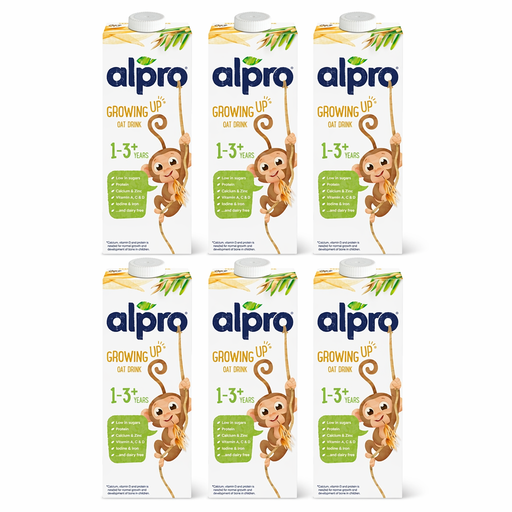
6 Alpro Oat Growing Up Drink
A child-oriented oat drink to assess if oat drink will be used regularly as well as in dinner recipes. Its listed ingredients include oats and pea protein, and its description lists calcium, vitamin D, B12 and iodine. Check the current carton for the age instruction, energy and protein per 100 ml, and allergen and milk cross-contact warnings—particularly for a child aged 1 or 2 or one with a milk allergy.
Joybuy
Questions about age and allergens
Can oat drink replace breast milk or formula before age 1?
No. The NHS says first infant formula is the suitable alternative to breast milk during the first 12 months. From age 1, an unsweetened, calcium-fortified oat drink can be included as part of a balanced diet.
What matters if oat drink is replacing cow’s milk because of an allergy?
Check the child’s allergens and look for added calcium, vitamin D, B12 and iodine. Hertfordshire and West Essex NHS-linked guidance advises around 40 kcal per 100 ml or more and at least 1 g protein per 100 ml for a main non-dairy alternative for a young child who cannot tolerate cow’s milk. Seek GP or dietitian advice if growth is poor or the child’s diet is very restricted.
Does a vegan oat drink suit a child with a milk allergy?
Not necessarily. Check the exact carton’s current allergen statement: M&S says its Plant Kitchen Whole Oat Drink may contain milk and is not suitable for people with a milk allergy.
Are gluten-free oats suitable for someone with an oat allergy?
Not on the strength of a gluten-free claim alone. The Food Standards Agency explains that gluten-free oats are still oats and must be identified as such because oat itself can cause an allergic reaction.
What should I check before sending oat drink to nursery or school?
Check the current carton’s ingredients and allergen warnings, then confirm the setting’s arrangements for the child’s dietary needs. Do not assume a drink used safely at home has already been checked for food prepared or served at the setting.


