Who is this for?
The child’s age and the reason for choosing oat drink change which label details matter most.
Parents of children aged 1–2
For porridge, cereal or a drink alongside breakfast, start with an unsweetened, calcium-fortified option within a balanced diet, as NHS guidance advises. If oat drink will be used regularly in place of dairy, check protein, energy and other fortification too; do not assume an ordinary oat drink is a like-for-like replacement.
Parents of children aged 3 and over
A growing-up oat drink may be worth comparing with standard fortified cartons. Follow the age statement on the product you buy: Alpro’s current UK page describes its Oat Growing Up Drink as 3+, even though older descriptions use different age wording.
Families checking food allergens
Read each carton’s allergen and precautionary statements rather than relying on a vegan or dairy-free description. Marks & Spencer, for example, says its Plant Kitchen Whole Oat Drink is not suitable for people with milk or wheat allergy. Speak to a GP or health visitor about a suspected allergy before making a lasting dietary change.
What should you check before buying?
Check age and allergen suitability first, then compare nutrition labels for the way the child will use the drink. Work out the pack quantity against the carton’s storage instructions before buying for several breakfasts.
| Priority |
What to check |
Your needs |
| Age and use |
Check the carton’s age statement and whether it is intended as an occasional ingredient or a regular drink. NHS guidance permits unsweetened, calcium-fortified milk alternatives from age 1 as part of a balanced diet; oat drink does not replace breast milk or infant formula during the first 12 months. |
For a child under 1, I cannot use oat drink in place of breast milk or formula. For an older child, I need a carton appropriate to their age and how often they will have it. |
| Nutrition |
Look for calcium fortification, then compare protein, energy, iodine, vitamin D and B12 on the nutrition panels. NHS regional dietetic guidance describes fortified oat drinks as a second-choice plant option for children with cow’s-milk protein allergy because oat drinks can be lower in protein. |
If this will regularly replace a milk drink, I need to consider the child’s overall diet, not just whether the carton is fortified or labelled for toddlers. |
| Sugars |
Read the sugars figure per 100 ml and distinguish a stated zero-sugars value from a no-added-sugar message. Check age suitability and the rest of the nutrition panel separately. |
I may want a no-sugars drink for cereal, but that claim alone does not tell me whether it fits the child’s regular breakfast routine. |
| Allergens |
Check the actual carton for oats and any milk, wheat or other relevant warnings, including precautionary wording. The Food Standards Agency identifies oats as an allergen even when a food is described as gluten-free. |
When an allergy is involved, I need a product-specific label check rather than assuming that dairy-free or vegan wording settles it. |
| Quantity and storage |
Four UK pints is about 2.27 L; three 1 L cartons provide 3 L. Check the pack’s unit count, use-by date, storage before opening and instructions after opening. |
I want enough for several breakfasts without opening more cartons than we can use within their stated storage periods. |
Which brands and ranges are relevant?
Brand names are a starting point, not a substitute for checking the particular carton’s age statement, nutrition panel and allergens.
Alpro
Alpro offers standard, no-sugars and growing-up oat drinks. Its current UK product page positions Oat Growing Up Drink for children aged 3+.
- The Alpro No Sugars product listed by Sainsbury’s includes calcium and iodine in its nutrition information.
- That listing gives 0.8 g protein per 100 g; a no-sugars description does not settle whether a product suits a child’s wider diet. Check the current growing-up carton’s age statement rather than relying on older 1–3+ wording.
Oatly
Oatly has standard and no-sugars oat drinks among its UK range.
- Sainsbury’s lists 0 g sugars, 1 g protein, 120 mg calcium and 22.5 µg iodine per 100 ml for Oatly Oat Drink No Sugars Chilled 1L.
- Those figures describe that specific carton, not every Oatly drink. Check its storage and allergen instructions before choosing it for repeated breakfasts.
Sainsbury’s
Sainsbury’s lists an own-label 1 L oat drink for general grocery use.
- Its product description states that the drink is fortified with calcium, iodine, vitamin D and B12.
- Sainsbury’s says this drink is not suitable as a main milk-drink alternative for children under 3. That distinction matters if breakfast oat drink will regularly take the place of milk.
M&S
M&S has oat drinks with different formulations and product-specific suitability statements.
- Plant Kitchen Whole Oat Drink is described by Marks & Spencer as enriched with calcium, iodine and vitamins D and B12.
- The same product is labelled unsuitable for people with milk or wheat allergy. M&S says its unfortified Only 3 Ingredients Oat Drink is not recommended as a dairy replacement for children under 36 months.
Tesco
Tesco’s oat-drink range includes its own 1 L carton alongside branded options.
- The range gives shoppers different cartons to compare for pack size and formulation.
- Read the nutrition, age and allergen information for the individual Tesco product rather than applying another brand’s details to it.
Minor Figures
Minor Figures describes its Barista Oat range primarily in relation to coffee.
- The range includes oat-drink options for shoppers comparing barista-style cartons.
- Coffee-oriented positioning does not establish suitability as a regular milk replacement for a toddler. Check the exact carton’s age information, nutrition and allergens for that use.
Joybuy oat drink options
These options cover no-sugars oat drinks and an Alpro growing-up drink for breakfast planning. Compare the pack quantity with roughly 2.27 L, and check the child’s age and the current carton label before choosing.
 No image available
Alpro Oat No Sugars Long Life Drink, 8 × 1 L
This no-sugars option could serve repeated breakfasts, but eight 1 L cartons are considerably more than four UK pints. The product information lists 0.0 g sugars and 0.9 g protein per 100 ml, with calcium, iodine and vitamins including D2 and B12. Check the carton’s allergen information; the stated period after opening is five days.
View on Joybuy
 No image available
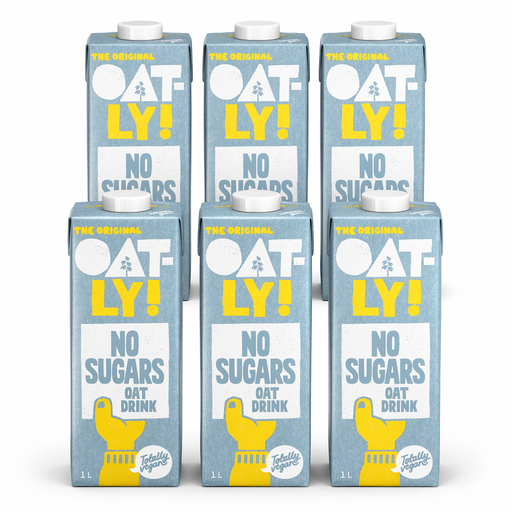
Oatly No Sugars Oat Drink, 6 × 1 L
This no-sugars listing may suit a household using oat drink across several breakfasts; confirm the bundle contents when ordering, as the six-count title exceeds a four-pint plan. Its product information lists 0 g sugars and 1 g protein per 100 ml, plus calcium, iodine and vitamins D2 and B12. It says to refrigerate after opening and use within approximately five days; check the carton for allergens.
View on Joybuy
 No image available
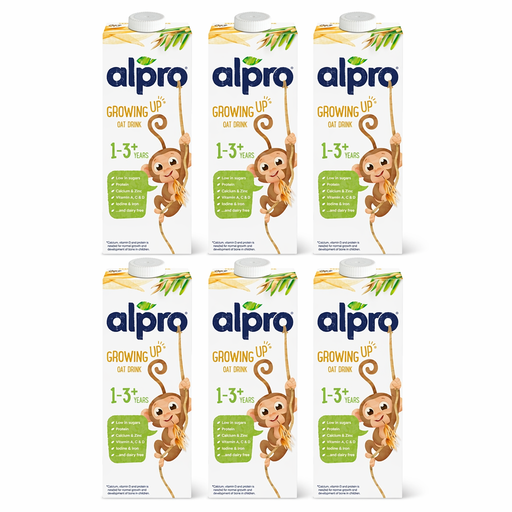
Alpro Oat Growing Up Drink, 6 units
This is a toddler-positioned option, but Alpro’s current UK page says ages 3+ while the Joybuy description uses ages 1–3; check the current carton before considering it for a younger child. The listing gives 1.8 g protein, 120 mg calcium and 2.5 g sugars per 100 ml, and identifies oats as an allergen. Confirm the bundle contents and the carton’s instructions after opening when planning how much to buy.
View on Joybuy
Common questions
Can a toddler have oat drink for breakfast?
From age 1, NHS guidance says children can have an unsweetened, calcium-fortified oat drink as part of a balanced diet. During the first 12 months, oat drink must not replace breast milk or infant formula.
Is oat drink nutritionally the same as cow’s milk?
Do not assume they are interchangeable. NHS regional dietetic guidance notes that plant drinks can be lower in protein, energy and micronutrients than animal milk, and describes fortified oat drinks as a second-choice plant option for children with cow’s-milk protein allergy. Consider the child’s overall diet if oat drink will regularly replace milk.
What matters besides a no-sugars label?
Check the child’s age against the product label, then read the protein and energy values and whether the drink is fortified with calcium, iodine, vitamin D and B12. A no-sugars claim answers only one part of that decision.
Does dairy-free mean suitable for a child with milk allergy?
Not necessarily: read the individual carton’s allergen statement and precautionary wording. Marks & Spencer says its vegan Plant Kitchen Whole Oat Drink is not suitable for people with milk allergy. Oats are also an allergen in their own right, as the Food Standards Agency explains; seek advice from a GP or health visitor about a suspected allergy.
How many cartons cover roughly four UK pints?
Four UK pints is approximately 2.27 L, so three 1 L cartons provide enough volume. Check whether you will use the extra drink and follow each carton’s storage instructions after opening; those periods differ between products.


