What should you check?
Start with the child’s age and whether the drink will replace regular milk intake, then compare the carton’s nutrition and allergen information.
| Priority |
What to check |
Your needs |
| Age and use |
Check the current age statement and decide whether the drink is occasional or will replace milk regularly. Frimley Health NHS Foundation Trust says plant alternatives can be used in food from six months, but not as a main drink until after age one. |
I’m choosing a drink for a snack, not assuming it can take the place of my child’s usual milk. |
| Fortification |
Read the nutrition panel for added calcium and iodine, then compare energy and protein per 100 ml if the drink will be used regularly. Black Country 0–18 years NHS guidance specifies at least 120 mg calcium per 100 ml and iodine when choosing a fortified plant alternative. |
If this will be a regular drink, I need to assess more than whether it is dairy-free, particularly when my child has a medically managed milk-free diet. |
| Allergens |
Read the full ingredients list and any precautionary statement on the exact pack. Check nursery or school rules separately; a dairy-free claim does not address every allergen restriction. |
My child may need to avoid milk, oats or another ingredient, and the drink must also meet the setting’s rules. |
Oat drinks on Joybuy
These options cover a child-oriented oat drink and a barista-style oat drink for consideration at snack time. The child’s age, the drink’s intended use and the current carton still determine which checks matter.
 No image available
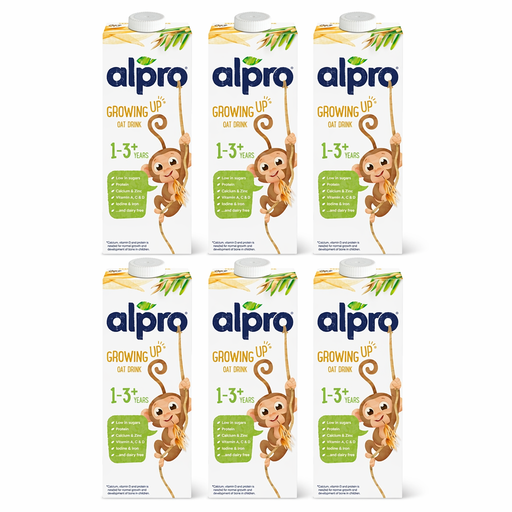
Alpro Oat Growing Up Drink (6)
A child-oriented oat drink to consider for snack time after checking the carton’s age guidance. Alpro UK lists 120 mg calcium per 100 ml for Oat Growing Up, but its product information uses conflicting age wording; confirm the age statement and full allergen information on this pack, especially for a child under three.
View on Joybuy
 No image available
Oatly Long Life Barista Oat Drink 6 × 1 L
The six-carton barista-style option can be considered for occasional use with a snack, rather than assumed to be a complete milk replacement for a young child. Check this variant’s calcium, iodine and full allergen information on the current carton, particularly where milk must be avoided.
View on Joybuy
Questions about toddler oat drinks
Can a baby under one have oat milk as their main drink?
No. Frimley Health NHS Foundation Trust says plant-based milk alternatives may be used in food and cooking from six months, but not as a main drink until after the first birthday. For a baby with cow’s-milk allergy, follow their healthcare professional’s advice about appropriate formula.
What should I check on a carton for a toddler over one?
Check its age statement, ingredients and fortification, particularly calcium and iodine. Black Country 0–18 years NHS guidance specifies at least 120 mg calcium per 100 ml and iodine when choosing a fortified plant-based milk alternative; consider energy and protein too if it will regularly replace milk.
Is a dairy-free oat drink suitable for nursery or school?
It may be, if its exact ingredients meet the child’s restrictions and the setting’s rules. UK Government guidance lists milk separately from cereals containing gluten, including oats, and requires listed allergens in prepacked products to be clearly identified in the ingredients list.
Is an organic oat drink automatically suitable as a regular milk replacement?
No. Check the specific drink’s added calcium and iodine and its intended role in the child’s diet; NHS paediatric guidance notes that not all organic plant-drink versions have added vitamins and minerals.
When should I ask for individual dietary advice?
Seek advice from the child’s healthcare professional if an oat drink would regularly replace milk in a medically managed diet, or if the child has diagnosed cow’s-milk protein allergy, multiple food allergies, poor growth or another dietary restriction. The appropriate choice depends on the child’s overall diet and the exact product.


