Parents making quick toddler suppers
For households using warm porridge as part of an occasional quick evening meal and needing to distinguish fast sachet preparation from a complete dinner.


Choose original portioned sachets when quick, individually measured preparation matters, and choose a larger multipack only if it will be used regularly by the household. For several shared servings, plain 1kg oats allow more flexibility with portions and toppings, but they need cooking and do not make a toddler dinner complete on their own.
For households using warm porridge as part of an occasional quick evening meal and needing to distinguish fast sachet preparation from a complete dinner.
For shoppers deciding whether single sachets, a larger multipack or a 1kg plain-oat bag better fits several servings and different topping preferences.
For households that need to check the exact pack’s gluten and oat labelling, precautionary statements and the individual school or nursery policy before packing food.
Start with how often porridge will be served, then compare the preparation format, exact flavour and current allergen information rather than choosing by box size alone.
| Priority | What to check | Your needs |
|---|---|---|
| Pack format | Compare sachet count, grams per sachet and total pack weight. Check whether the product is a ready-portioned sachet or plain oats that need measuring and cooking. | I need enough oats for occasional bowls, repeated shared meals or cooking several portions at once without treating one sachet as a fixed child portion. |
| Plain or flavoured base | Read the exact ingredient list and sugars information for each flavour. Check whether an original or plain product gives more control over toppings. | I want to decide how the porridge is flavoured instead of assuming a large sweetened multipack fits every family meal. |
| Allergen suitability | Check the current pack’s gluten-free claim, oat declaration and any wheat, barley, soya or other precautionary wording. Treat each flavour and variant separately. | I need a pack that matches the child’s individual requirements, recognising that gluten-free status does not remove an oat-allergy consideration. |
| Preparation and serving | Compare stated preparation time, liquid instructions and the finished texture. Allow time to stir, adjust consistency and cool porridge before serving. | I need a warm meal option that fits the evening routine while still allowing the amount and texture to be adjusted for the child. |
More sachets can reduce shopping frequency, but pack capacity does not establish whether a product suits a toddler. Flavoured variants can contain added sugar, while an original pack may provide a plain base for separately chosen toppings.
Compare the ingredients and sugars information for the exact flavour before buying a large box. An original or no-added-sugar option may better suit households that prefer to choose additions themselves.
UK listings include standard oat products with gluten-related warnings alongside explicitly gluten-free products. The Food Standards Agency explains that oats remain an allergen even in gluten-free or very-low-gluten foods.
Read the current label for every pack and flavour. Where gluten-free status is required, choose an explicitly labelled product and follow appropriate clinical advice for the child’s individual needs.
Pack servings are manufacturer formats rather than toddler-specific amounts. An NHS porridge recipe for 10- to 12-month-olds uses 20g oats, which is below several standard sachet weights.
Prepare and serve an amount appropriate for the child’s age, appetite and dietary advice. Store unused dry product as directed on its label rather than pressuring a child to finish a sachet.
Availability changes, and schools in England must publish an allergy safety policy that can affect food brought from home.
Check current retailer availability before planning a regular purchase, then confirm the individual school or nursery’s food and allergy policy before packing oats.
A UK porridge range covering original and flavoured microwaveable sachets, larger sachet packs and 1kg rolled oats.
A supermarket own-label route for standard instant sachets and a separate Free From instant-sachet option.
A bulk-oat option for households willing to cook porridge rather than use instant sachets.
A UK own-label option with a 10-sachet traditional porridge box and a separate Made Without gluten-free traditional oat range.
A quick-oat route for households wanting a plain wholegrain oat base with fast preparation rather than a large branded sachet multipack.
Joybuy product options for households comparing plain bulk oats, small portioned sachet boxes and larger flavoured sachet packs for shared porridge use.
 No image available
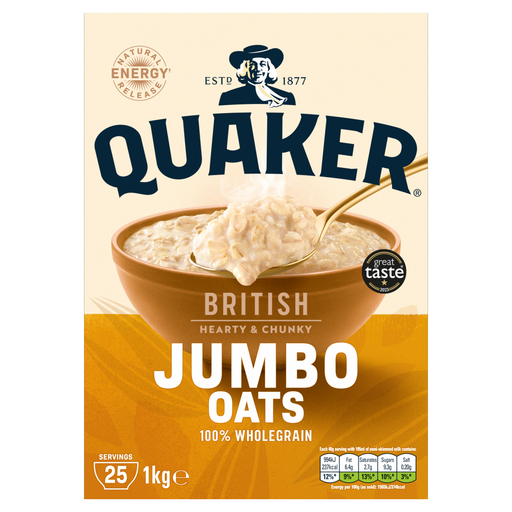
A plain 1kg oat format for preparing several bowls with adjustable portions and separately chosen toppings. The listing states 100% wholegrain oat flakes, 1g sugars and 0.01g salt per 100g; check the preparation instructions if a quick dinner is essential. It contains oats and may contain traces of wheat, so check the current label and any school or nursery policy before packing.
 No image available
A smaller boxed option for quick warm porridge with a plain base and individually measured preparation. It contains six 38.5g sachets of wholegrain rolled oats and has a stated 2½-minute preparation time; a sachet is not a toddler-specific serving, and current gluten and cross-contact information should be checked on the pack.
 No image available
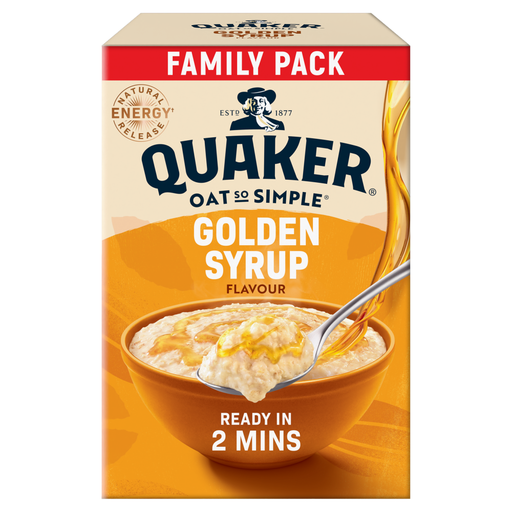
A large portioned pack for frequent shared use, with 20 sachets and a 720g total weight. Each 36g sachet is stated to microwave in two minutes with approximately 180ml milk; it contains sugar and lists 6.4g sugars per sachet, so compare it with a plain option if controlling sweetness is important. The listing also identifies gluten from oats and possible barley, wheat and soya.
 No image available
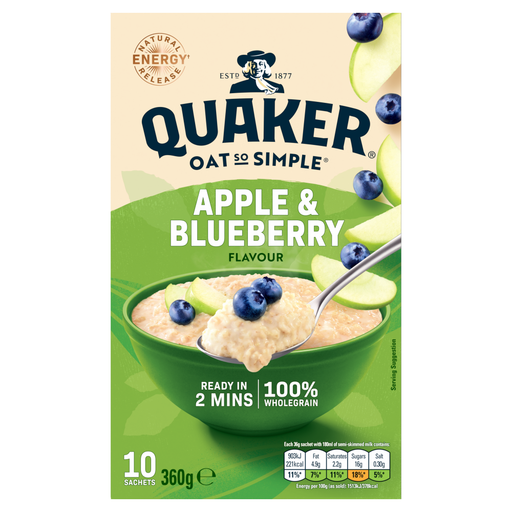
A mid-size flavoured sachet box for households wanting a ready-defined apple-and-blueberry option. The box contains ten 36g sachets, with a stated two-minute method after adding water or milk, and lists 7.7g sugars per serving. It contains oats and may contain wheat, barley and soya, so check the exact current label for individual requirements.
 No image available
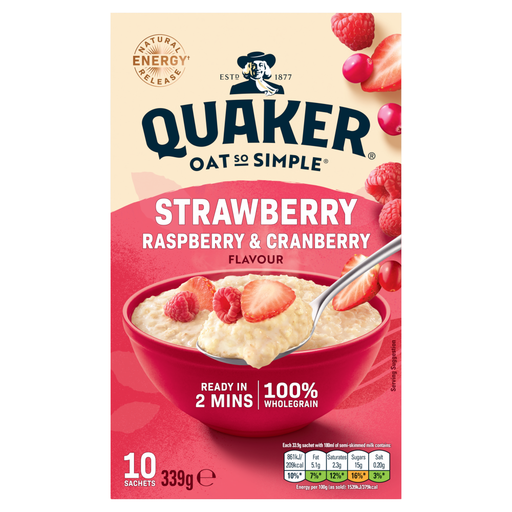
A ten-sachet berry-flavoured option for individually measured porridge. Each sachet weighs 33.9g and has a stated two-minute microwave method; the listing includes sugar and real fruit pieces. It contains cereals containing gluten and oats, and may contain barley, soya and wheat, so verify the exact label against individual allergy or coeliac requirements.
No. A sachet is a manufacturer pack format rather than a toddler-specific dinner prescription. An NHS porridge recipe for 10- to 12-month-olds uses 20g oats with 120ml full-fat milk, showing that a child’s serving can be smaller than common 27g to 36g sachets. Adjust the amount for the child’s age, appetite and dietary advice.
Not necessarily. NHS guidance describes breakfast cereals and other starchy foods as providers of energy, nutrients and some fibre, while advising a varied diet for toddlers. Treat porridge as the starchy part of a meal or snack and consider the rest of the meal rather than using pack size as a measure of completeness.
Plain or no-added-sugar options make it easier to choose what is added. NHS advice recommends reducing sugary foods and drinks for young children. Quaker Original sachets are listed as no added sugar, while Tesco’s golden-syrup gluten-free sachet lists caster sugar and 6.4g sugars per sachet, so check each exact flavour.
No. In the UK, food labelled gluten-free must contain no more than 20mg/kg gluten as sold, but the Food Standards Agency says oats must still be emphasised as an allergen because oat allergy and gluten intolerance are different issues. Use the exact pack label and follow clinical advice for the child.
For schools in England, yes. Department for Education guidance says schools must publish an allergy safety policy, and food brought from home should be considered in their allergy-safety approach. Check the individual setting’s current policy and the product label rather than assuming porridge oats will be accepted.