Parents planning a toddler pasta dinner
You want to consider the sauce and other ingredients, not just the pasta. NHS guidance says not to add salt to food or cooking water for babies and young children.


If organic sourcing matters, choose organic-labelled dried pasta, an organic tinned tomato base, or both; do not assume a prepared sauce is organic without checking its label. The Department for Environment, Food & Rural Affairs says organic labelling depends on production rules, but the label does not settle the choice of sauce or other meal ingredients. For a toddler dinner, follow NHS advice not to add salt to food or cooking water, check wheat and gluten information, and confirm the school or nursery’s own rules before packing pasta.
You want to consider the sauce and other ingredients, not just the pasta. NHS guidance says not to add salt to food or cooking water for babies and young children.
You want to distinguish organic dried pasta from organic tomatoes or passata, and decide which part of dinner you want to buy organic.
You need to check wheat and gluten information on pasta and sauce. If the meal is going to school or nursery, you also need to confirm that setting’s food policy.
For a toddler pasta dinner, choose which ingredient needs to be organic, then assess the finished meal and any wheat or gluten requirements.
Choose it when: You want the pasta itself to carry an organic claim and wheat is suitable for the child.
Bear in mind: You still need to choose the sauce and other meal ingredients; organic durum-wheat pasta contains wheat.
Choose it when: You want an organic tomato base and prefer to assemble the pasta sauce yourself.
Bear in mind: Preparing the sauce takes another step, and its other ingredients still need consideration.
Choose it when: Convenience matters and you can compare the current ingredient list and nutrition panel.
Bear in mind: A prepared sauce is not necessarily organic and may contain added salt or sugar.
| Concern | What to check | Who this matters to |
|---|---|---|
| The finished meal | Read the sauce’s ingredients and salt information; consider what else will go into the meal. | When putting together a toddler dinner, I want to consider the sauce as well as the pasta rather than choose by the organic label alone; about 42% of consumers put the finished meal first. |
| Organic sourcing | Check which product is labelled organic: the dried pasta, the tomato base or both. | If organic sourcing is my priority, I want to know exactly which part of dinner carries that claim; roughly 33% of consumers put organic sourcing first. |
| Wheat, gluten and packing rules | Read both products’ allergen information and check the school or nursery’s policy if packing food. | If my child needs to avoid wheat or I am packing pasta for nursery, I need to know what the ingredients and setting allow; about 25% of consumers put these checks first. |
The Department for Environment, Food & Rural Affairs describes organic as a production-rules claim. It does not replace checking the sauce, allergens or other meal ingredients.
Decide whether your priority is organic pasta, an organic tomato base or both, then read each product’s current label.
General pasta instructions may suggest salt, while NHS guidance says not to add salt to food or cooking water for babies and young children.
Cook pasta for a toddler without adding salt to the water.
ASDA Groceries lists 0.03g salt per 100g boiled for its Organic Penne, while Dolmio lists 0.67g per 100g for its Original Bolognese Family Size sauce. These figures describe different products, so the pasta label alone cannot tell you about the finished meal.
Read the sauce’s nutrition panel and ingredients alongside the pasta label, including any additions you plan to use.
The cited ASDA and M&S organic pasta products use durum wheat semolina. The Food Standards Agency identifies pasta as a food in which cereals containing gluten are often found.
Check the current allergen information on both pasta and sauce. Where gluten avoidance is required, look for a specifically labelled gluten-free product.
An organic dried-pasta option illustrated by ASDA Organic Penne 500g.
An organic dried-pasta option illustrated by M&S Organic Italian Fusilli.
An option for the tomato base rather than an example of organic dried pasta.
A prepared-sauce option for shoppers prioritising convenience, not an example here of an organic product.
A pasta option when the choice is between whole-wheat and separately labelled gluten-free formats, rather than organic sourcing.
These pouches are prepared pasta meals for young children, rather than dried pasta or tinned tomatoes for assembling a toddler dinner. Check the current pack if organic labelling or allergens are decisive for your choice.
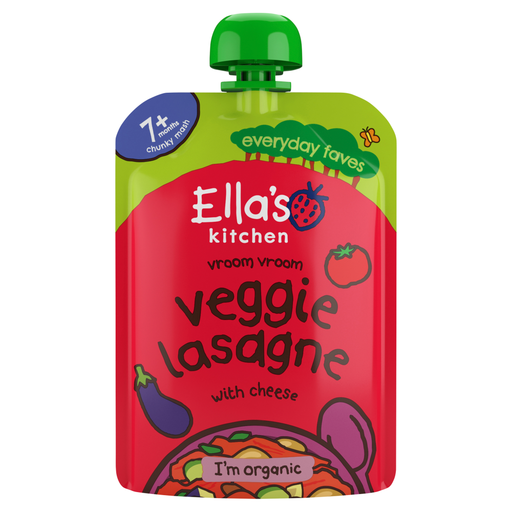 No image available
A prepared pasta meal to consider if you want a pouch rather than ingredients for cooking from scratch. The title gives a 7+ months age indication and a 130g pack size; check the current pack’s organic marking and information about wheat, egg and milk before serving.
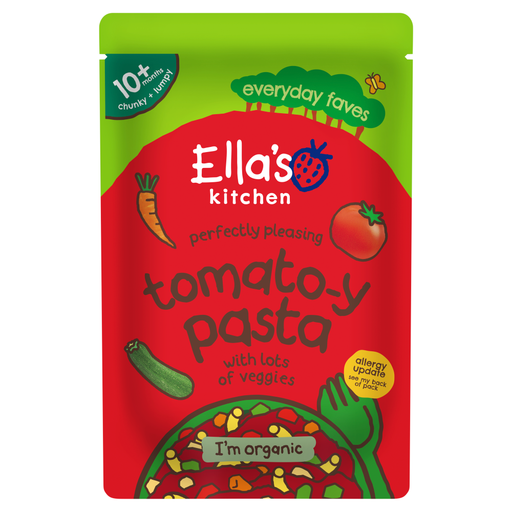 No image available
A prepared pasta pouch to consider if you are choosing a meal labelled for 10+ months rather than making a tomato sauce. The pack size is 190g; check its current organic marking and allergen information, including wheat and egg and the stated possibility of soya and mustard.
In the UK, organic is a production-rules claim: the Department for Environment, Food & Rural Affairs says food may be labelled organic only when it meets the relevant rules. It does not by itself tell you about the salt, allergens or other ingredients in a finished toddler dinner.
No. NHS guidance for babies and young children says not to add salt to food or cooking water, even if a pasta packet gives a general instruction to salt the water.
Organic labelling does not make wheat pasta gluten-free. ASDA Groceries lists durum wheat semolina in its Organic Penne; if gluten avoidance is required, check the exact pasta’s allergen information and look for a specifically labelled gluten-free product.
Choose organic chopped tomatoes or passata when you want an organic-labelled tomato base and control over what else goes into the sauce. A prepared sauce saves that preparation step, but read its current ingredients and nutrition panel; Dolmio lists 0.67g salt per 100g for its Original Bolognese Family Size sauce.