Carers keeping track of salt
If you prepare meals for a child aged 1 to 3, the sauce is one part of the day’s salt intake. The NHS gives a limit of no more than 2g of salt across the whole day for this age group.


Choose a tomato cooking base when you want to control the seasoning and have time to make a sauce. A ready-made jar is quicker, but neither route is suitable on its name alone: compare salt per 100g, work out how much is in the portion served, and check the ingredients against the child’s needs. For children aged 1 to 3, the NHS gives a whole-day limit of no more than 2g of salt, not a limit for one jar or dinner.
If you prepare meals for a child aged 1 to 3, the sauce is one part of the day’s salt intake. The NHS gives a limit of no more than 2g of salt across the whole day for this age group.
A ready-made sauce saves preparation time, but its salt value still needs checking against the amount you will serve. Products with similar tomato-based names can have different nutrition values.
Check the current ingredient and allergen information for both the pasta and sauce, then ask the receiving nursery or school about its food policy.
Compare salt per 100g across products, then use the amount of sauce you intend to serve to assess its contribution to the child’s whole-day intake.
| Concern | What to check | Who this matters to |
|---|---|---|
| Salt across the day | Read salt per 100g and calculate the salt in the sauce portion served. The NHS limit for ages 1 to 3 covers the whole day. | I want to know how this dinner fits alongside everything else my toddler eats. Keeping track of daily salt comes first for about 42% of consumers. |
| Control over seasoning | Check the tomato base’s salt declaration and the ingredients you plan to add. Government guidance says not to add salt to food for children aged 1 to 5. | If I cook from a tin, I can choose what goes into the sauce, though it takes more preparation. That control is the main concern for roughly 25% of consumers. |
| Preparation time | For a ready-made sauce, compare salt per 100g and check the amount you will use rather than relying on the product name. | On a busy evening, I need a sauce that is quick to use without overlooking its salt content. Speed is the primary need for about 17% of consumers. |
| Allergens and packed meals | Read the current sauce and pasta labels, and confirm the receiving setting’s food policy. | Before packing pasta for nursery or school, I need to know whether the ingredients and meal meet the child’s needs and the setting’s rules. For roughly 16% of consumers, that assurance comes first. |
Tesco Groceries lists Dolmio Low Fat Bolognese at 0.67g salt per 100g and 0.75g per stated 112g portion. Its name does not tell you how much salt will be in the portion you serve.
Use the nutrition panel to compare salt per 100g, then calculate the amount in the child’s portion.
Napolina lists 0.10g salt per 100g for its Chopped Tomatoes & Herbs. Tesco Groceries lists 2.16g per 100g for Napolina Sundried Tomato with Chopped Basil Stir In Sauce. The first is a cooking base; the second is a stir-in sauce.
Compare the exact products, then account for any ingredients added while cooking.
The sauce and pasta have separate ingredients, and a nursery or school may have its own food rules. A tomato-based name does not establish whether the finished meal meets a child’s requirements.
Check both current labels and confirm the setting’s policy before packing the meal.
Storage instructions belong to the specific product and can differ between sauces.
Follow the current jar’s refrigeration and use-within instructions after opening.
The named Napolina products illustrate the difference between buying a tomato cooking base and a finished stir-in sauce.
Dolmio Low Fat Bolognese is a ready-made option for households that want a jarred sauce.
M&S product pages provide information for checking individual ready-made sauces, including the Daylesford sauce it sells.
These Napolina chopped-tomato multipacks are for cooking a sauce from a tomato base, not for serving as ready-made pasta sauce. Check the current label for salt and ingredients before choosing a pack for a toddler meal.
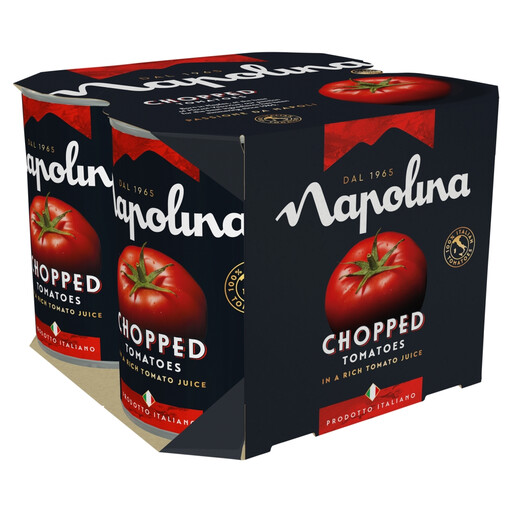 Image unavailable
For cooking a tomato sauce when you want to choose the seasoning yourself. The pack contains four 400g tins; the tomatoes need preparing as a sauce. Check the current salt and ingredient information, and do not add salt when cooking for a child aged 1 to 5.
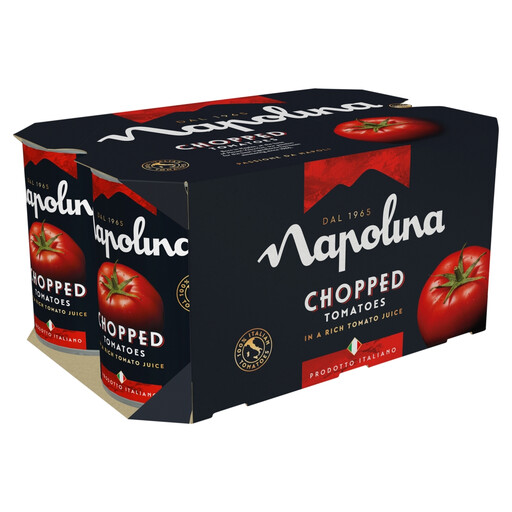 Image unavailable
For making a tomato-based pasta sauce rather than opening a finished jar. This variant contains six 400g tins. Read the current label for salt and ingredients, including any allergen information needed for the child or a packed meal.
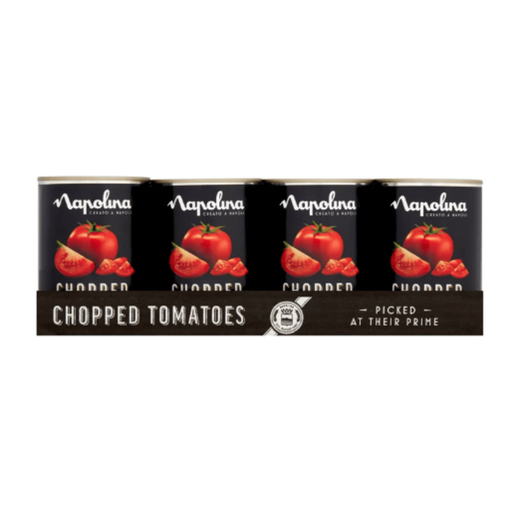 Image unavailable
For households planning to cook tomato-based sauces on more than one occasion. The pack contains twenty-four 400g tins, not a finished sauce. Check the current salt declaration and account for the other ingredients used in each meal.
The NHS gives a limit of no more than 2g of salt a day for children aged 1 to 3. That covers the whole day, not just the pasta dinner. UK government guidance also says not to add salt to food given to children aged 1 to 5.
No. Read its actual salt value per 100g and work out the amount in the portion you will serve. Consider that amount alongside the child’s other food that day and check the current ingredients for any relevant allergens.
A tomato base lets you control what you add, but it takes cooking and its finished salt content depends on the whole recipe. A ready-made sauce takes less preparation; compare its label and the portion served rather than assuming either route has a lower-salt finished meal.
No. Check the exact sauce and pasta labels rather than applying one product’s warning to every sauce. If you are packing the meal for nursery or school, also confirm the setting’s food policy.
Follow that jar’s current storage instructions, including any direction to refrigerate it and use it within a stated period. Do not transfer one sauce’s opened-jar instructions to another product.