What should you check?
Decide who will eat the food first. For a toddler’s snack, consider the NHS’s non-chocolate examples, then check the exact food and how it will be served.
| Priority |
What to check |
Your needs |
| Routine snack choice |
The NHS advises avoiding foods and drinks with sugar or sweeteners for children aged 4 or younger. Consider its examples, including fruit, plain unsweetened yoghurt, toast and vegetable sticks. |
I’m choosing a regular between-meal snack for a toddler, not chocolate in a smaller wrapper. |
| Whole nuts |
Check for a whole-nut centre as well as the product’s size. The NHS says not to give whole nuts to children under 5 because they can choke on them. |
A bite-sized piece still needs checking before it is anywhere near a young child’s snack. |
| Practical format |
Choose a food and serving format suitable for the child. For a packaged snack, read its age guidance, ingredients and sugars per 100 g; a small pack alone does not establish suitability. |
I need something straightforward to serve between meals without relying on confectionery. |
| Ingredients and allergens |
Read the exact pack rather than assuming every piece in a box has the same ingredients. Check any nursery food policy that applies. |
When chocolate is being bought for someone else, I still need to know what is in the particular product. |
Brand and format references
These chocolate brands help distinguish bars and assorted boxes bought for other purposes; their inclusion does not make them routine toddler-snack choices.
Cadbury
Cadbury UK lists bars and blocks alongside sharing bags and boxes in its range.
- The range includes both bar and gift-box formats.
- A smaller bar does not change the NHS advice on sugary foods for children aged 4 or younger; check the particular product’s ingredients.
Quality Street
Nestlé UK lists Quality Street among its chocolate and confectionery brands.
- It is a reference point when shopping for boxed confectionery rather than a single bar.
- Check the exact assortment and its packaging instead of assuming every piece has the same ingredients or texture.
Ferrero Rocher
Ferrero Rocher describes its UK 16-piece sharing box as containing pralines with a whole hazelnut centre.
- The product description makes the whole-nut centre clear for this specific box.
- The NHS says children under 5 should not be given whole nuts because of choking risk. The cited box’s ingredients also include milk, soya and wheat; check the exact pack.
Packaged non-chocolate options
These are packaged snack options for the non-chocolate route, not chocolate bars or pieces from assorted boxes. Check each pack’s ingredients, sugars and age guidance when choosing food for a toddler.
 No image available
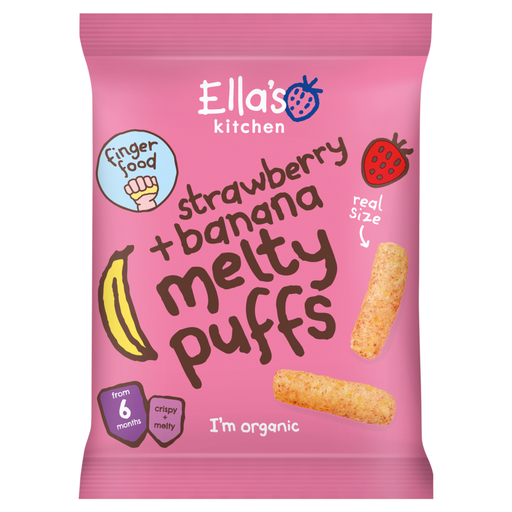
Ella's Kitchen Organic Strawberry & Banana Melty Puffs, 6+ Months, 20 g
A packaged, non-chocolate puff snack. Check the exact pack’s age guidance, ingredients and sugars per 100 g, and keep the child seated and supervised while eating.
View on Joybuy
 No image available
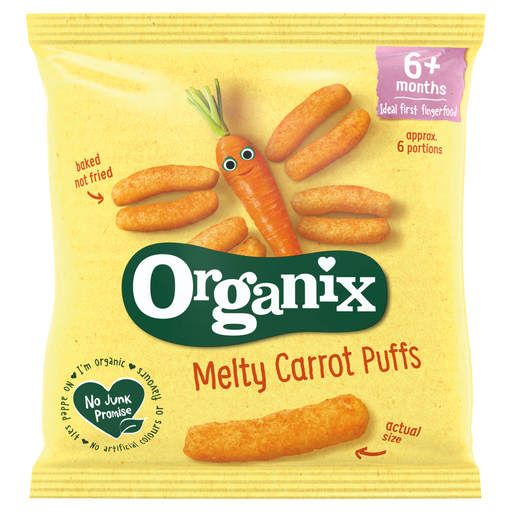
Organix Crunchy Carrot Sticks, 6+ Months, 20 g
A 20 g carrot-stick snack rather than a chocolate bar. Read the pack’s ingredients and sugars per 100 g, and supervise the child while seated and eating.
View on Joybuy
 No image available
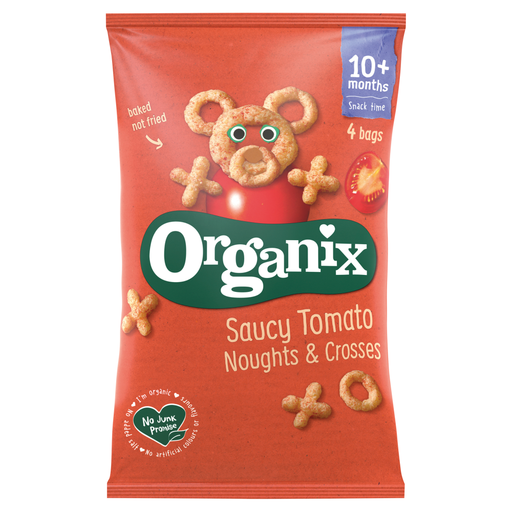
Organix Noughts & Crosses, 4 × 15 g
Four 15 g packs offer a portioned, non-chocolate format. Check the exact pack’s age guidance, ingredients and sugars per 100 g; keep the child seated and supervised while eating.
View on Joybuy
Common questions
Is a single chocolate bar suitable as a routine toddler snack?
Choose a different food for routine snack time. The NHS advises avoiding foods and drinks with sugar or sweeteners for children aged 4 or younger and lists fruit, plain unsweetened yoghurt, toast, crackers and vegetable sticks among snack options for young children.
Can a toddler have a chocolate with a whole nut inside?
Do not give a product containing a whole nut to a child under 5: the NHS says whole nuts can cause choking at that age. Ferrero Rocher describes a whole hazelnut centre in its UK sharing-box pralines, so a small chocolate piece should not be assumed free of that risk.
What if the boxed chocolates are for adults in the household?
Keep that purchase separate from the toddler’s snack and check the exact pack’s ingredients and allergen information. For example, Ferrero Rocher’s cited UK sharing box lists hazelnuts, milk, soya and wheat among its ingredients; another product or assortment needs its own pack check.
Do England’s HFSS retail rules decide what a school can serve?
No. Department of Health and Social Care guidance describes England’s HFSS restrictions on promotion and placement of certain products in retail settings, while school-food standards address food served at school separately. Check the relevant nation, setting and current food policy before deciding what may be provided there.


