What matters when choosing?
Decide whether the drink will be an occasional part of a snack or a regular milk alternative, then compare fortification, ingredients and allergen information on the current pack.
| Priority | What to check | Your needs |
|---|
| Age and regular use |
For children aged 1 or over, check that a regularly used milk alternative is unsweetened and fortified. NHS-linked North West Knowledge Now guidance identifies unsweetened fortified soya drinks as a first-choice plant-based option in this situation; check the pack for calcium, iodine, vitamin D and vitamin B12. |
“This drink will often replace milk at snack time or with cereal, so its nutrient information matters to me.” For a child under 1, seek professional advice rather than using an ordinary soya drink as the main milk drink. |
| Organic ingredients |
Check the organic label and ingredients, but compare the nutrition panel separately. SACN and COT report that UK organic-labelled plant-based drinks cannot be fortified with nutrients. |
“I prefer an organic option for an occasional snack, without relying on it to provide the added nutrients of a fortified drink.” |
| Sugars and formulation |
Read the ingredients and sugars per 100 ml. Check the exact product rather than treating “organic”, “no added sugar” and “unsweetened” as interchangeable descriptions. |
“I want to know what is in the drink I am serving and whether the current pack matches the option I intended to buy.” |
| Allergens |
Read the ingredients and any precautionary allergen statement on the current pack. GOV.UK identifies soya beans and milk as allergens that must be declared when they are ingredients. |
“I need the snack to fit my child’s allergy requirements, and I need to pass accurate product information to their nursery or childminder.” |
Organic soya drink on Joybuy
This organic Alpro option is relevant when choosing a soya drink for an occasional snack rather than relying on it as a fortified milk alternative.
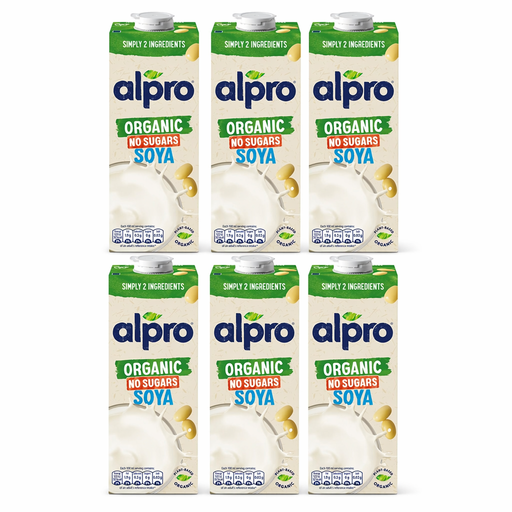 Image unavailable
6 Alpro Soya Drink OG
This organic soya drink fits a comparison of occasional snack options, not a search for a fortified milk alternative. Its product description states 8.8% soya beans, 3.3 g protein per 100 ml and 0 g sugars per 100 ml. SACN and COT report that UK organic-labelled plant-based drinks cannot be nutrient-fortified. Check the current pack for allergens, and follow the product description’s advice to speak to a healthcare professional before introducing it into a child’s diet.
View on Joybuy
Questions about toddler snack time
Can a child under 1 have ordinary soya drink as their main milk?
Do not use an ordinary soya drink as the main milk drink for a child under 1 without professional advice. NHS guidance says unsweetened calcium-fortified milk alternatives, including soya drinks, can be given from age 1.
Does organic soya drink have the same added nutrients as a fortified drink?
No. SACN and COT report that UK plant-based drinks labelled organic cannot be nutrient-fortified. If added calcium, iodine, vitamin D or vitamin B12 matter to your choice, compare the current nutrition panels rather than assuming an organic drink supplies them.
Is a dairy-free soya drink suitable for a child with allergies?
Dairy-free does not mean allergen-free: soya beans are an allergen that must be declared when used as an ingredient. Check the full current label and any precautionary statement; a healthcare professional should guide substitutions for a child with diagnosed cow’s-milk protein allergy or suspected soya allergy.
Does a toddler need a growing-up soya drink?
Not automatically. Department for Education early-years guidance says growing-up milks are not necessary as a category. For a child aged 1 or over, compare a drink’s sugars and fortification with an unsweetened fortified soya option rather than relying on its age-related name.
What should I provide for nursery snack time?
Give the setting current ingredient and allergen information for the exact drink being served, and explain the child’s individual allergy requirements. Department for Education guidance expects early-years providers to take food allergies and intolerances seriously; recheck the pack when buying again because formulations can change.


