
24/7 Customer Support

Free returns

Same-day & Next-day Delivery

Quality Guaranteed

Unlock Your Welcome Offers: FREE Delivery | Up to 80% OFF | Free 30-day JoyPlus trial
Download the APP
By Joybuy Product Recommendation Officer
A toddler step stool can make handwashing, toothbrushing and reaching a low kitchen worktop more manageable. However, a colourful appearance or a low price does not automatically mean a stool is suitable for young children. Parents and carers should look beyond the product photographs and check how the design will work in a real UK bathroom, kitchen or study.
A compact stool may fit neatly beside a sink, but a narrow base or limited standing area can make it less forgiving when a child steps on from the side. A wide-step children's stool generally gives children more room to position both feet, although the overall base and construction still need checking.
“Anti-tip” is a useful design description, not a substitute for adult supervision or correct positioning. A stool can still move on a wet bathroom floor, uneven tiles or a loose mat. Look for a broad, stable structure, a wide pedal and features that help children hold the stool while climbing on.
Sinks and kitchen areas expose furniture to splashes, soap and food residue. Deep grooves, rough edges and absorbent surfaces can make daily cleaning more difficult. Also check whether assembly uses clearly listed components and whether joints, screws and panels can be inspected after setup.
For a kids bathroom step stool or independent handwashing stool, prioritise:
Always follow the manufacturer’s stated age, weight and usage guidance. The supplied product information for the Benarita models lists a high-density board construction and reinforced structure, but it does not provide a specific maximum load or named safety certification. If those details are important to your household, confirm them before purchase.
A smooth, burr-free surface is practical for children’s furniture because it is easier to wipe and less likely to catch clothing or skin. The Benarita toddler stools are described as having high-density boards with eco-friendly water-based paint. This makes the surface specification clear, but “eco-friendly” should not be interpreted as proof of a particular environmental certification.
For regular bathroom use, wipe away water and soap promptly. Do not leave a wooden or board-based stool standing in pooled water, and inspect it periodically for swelling, loose joints, chipped paint or damaged edges.
Place the stool on a dry, level surface and move it directly in front of the sink or worktop before use. Avoid placing it on top of a thick bath mat or another unstable surface. A child should use the stool only with an adult nearby, particularly when reaching for taps, hot water, sharp utensils or items stored above worktop level.
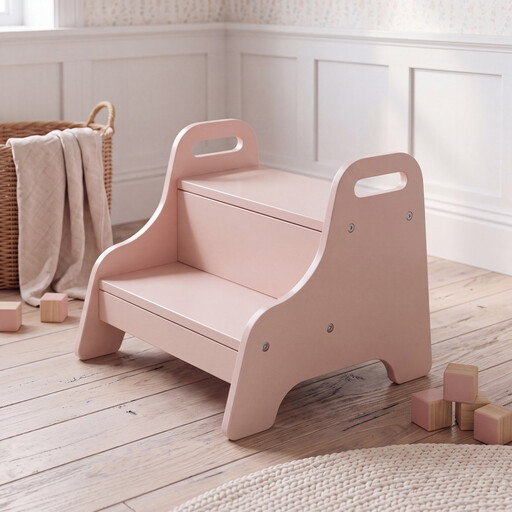
Why This Fits Their Persona: A practical pink toddler step stool for families starting a handwashing or toothbrushing routine at a standard bathroom sink.
The listing specifies a wide pedal, side handles and a mortise-and-tenon structure reinforced with screws, addressing concerns about a cramped step and lightly fixed panels.
High-density boards, water-based paint and a smooth surface designed for wiping with a damp cloth.
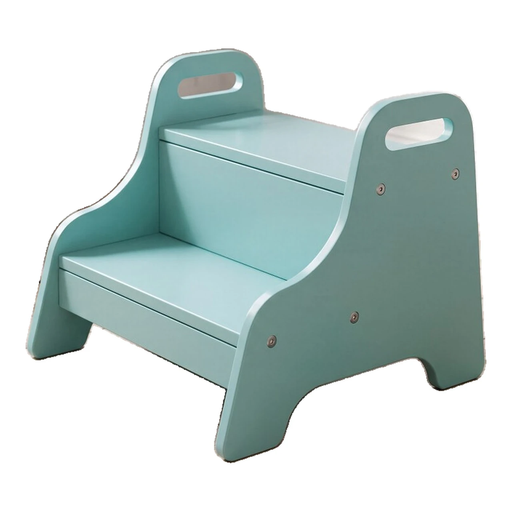
Why This Fits Their Persona: A blue toddler step stool with the same stated construction features, suitable for households wanting a coordinated children’s bathroom or study accessory.
Its listed wide step and integrated handles provide more support than a narrow, handle-free platform, while the reinforced joint design counters concerns about basic assembly.
High-density board construction and a smooth, burr-free painted finish; assembly requires the supplied boards and screws.
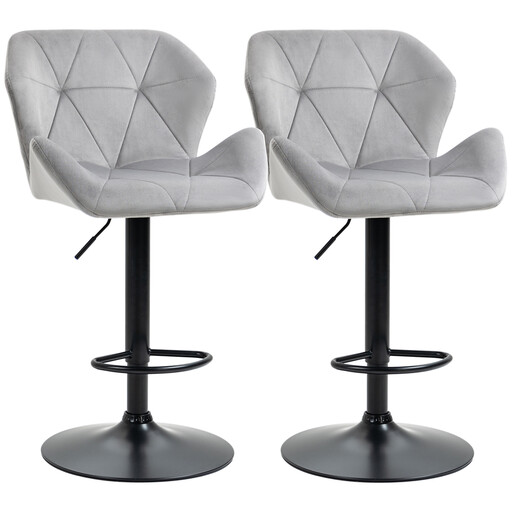
Why This Fits Their Persona: This is an adult seating option for a kitchen island or breakfast bar, not a toddler step stool. It may suit families comparing general stool types, but it should not be used as a child’s bathroom or kitchen helper.
It avoids the common mistake of treating any raised seat as a children’s stool by clearly separating adult bar seating from supervised toddler access furniture.
Adjustable 97–117cm height, rounded metal bases and a stated maximum load of 120kg per stool; intended for adult seating.
We have compiled a complete, real-time list of products that fully satisfy these strict selection criteria and UK safety regulations.
Before allowing a child to use a new stool:
A children’s kitchen step stool can support supervised participation, such as washing fruit or mixing ingredients, but it should not be used near a hob, kettle or other hot appliance without close adult control.
Choose a height based on the child’s reach and the destination surface rather than age alone. Measure the floor-to-sink distance and look for a platform that allows the child to stand upright without leaning over the basin. Follow the product’s age and weight guidance.
Lifespan depends on construction, moisture exposure, weight and how often it is moved. A smooth board-based stool can remain serviceable when kept dry and checked for loose joints or surface damage. Replace it if the structure becomes unstable, panels swell or handles loosen.
A smooth painted surface is generally straightforward to wipe after splashes and marks. The Benarita models are listed with water-based paint and a wipe-clean finish. Regardless of material, dry the stool after bathroom use and avoid standing it in pooled water.