
24/7 Customer Support

Free returns

Same-day & Next-day Delivery

Quality Guaranteed

Unlock Your Welcome Offers: FREE Delivery | Up to 80% OFF | Free 30-day JoyPlus trial
Download the APP
Choosing toys for toddlers and young children can quickly become confusing. Product pages often focus on bright colours, licensed designs and long feature lists, while the details that affect everyday use are easier to miss. For parents, grandparents and carers, the right choice depends on more than appearance: age suitability, available space, cleaning, battery requirements and supervision all matter.
This guide explains the common buying traps and highlights practical options for children aged around 1–5 years.
A toy may look suitable for a younger child, but its controls, seat height, small parts or climbing height might not be appropriate. Check both the recommended age and the manufacturer’s warnings. For example, some ride-on cars are recommended for 3–5-year-olds, while soft play products may be designed for 12–36 months.
For children under three, pay particular attention to choking warnings and detachable accessories. The LeapFrog maths book, for instance, carries a warning about small parts and is not suitable for children under two.
Lights, music, USB ports and realistic vehicle styling can attract attention, but they do not automatically make a toy more suitable. A musical toy with no volume control may be difficult to use in a flat, while an electric ride-on with a high top speed may be unsuitable for a first-time rider.
Consider how the toy will actually be used: in a garden, on a pavement, in a playroom or during supervised family play.
A kids electric ride-on car can measure more than one metre long, and soft play equipment may need a substantial clear floor area. Before ordering, measure doorways, storage space and the intended play zone.
Battery-powered car for kids models also need planning around charging. Several products listed here require 8–12 hours for a regular charge and offer approximately 45 minutes of use, depending on terrain and driving conditions.
Age guidance is only one part of suitability. Compare:
For a ride-on toy, choose a level, open area and keep the child within direct adult supervision. Helmets are specifically advised for some quad bike models, and children should not use these products near roads or traffic.
Electric ride-ons vary considerably. A 6V car may provide a gentler pace of 1.5–3km/h, while 12V models commonly offer around 3–5km/h. Some quad bikes provide two speed settings, such as 3km/h and 6km/h.
For younger or inexperienced riders, useful features include:
Always follow the supplied charging instructions and allow the battery to cool as directed before recharging.
Look for product information covering materials, cleaning and applicable standards. Toys in this guide reference standards including EN71-1-2-3, which relate to mechanical and physical properties, flammability and migration of certain elements. Powered ride-ons may also reference EN62115, the safety standard for electric toys.
These standards do not remove the need for supervision. Inspect seams, wheels, cables, connectors, covers and fasteners regularly. For soft play, wipeable PU covers can be more practical than fabric-only surfaces, particularly for snacks and messy indoor play.
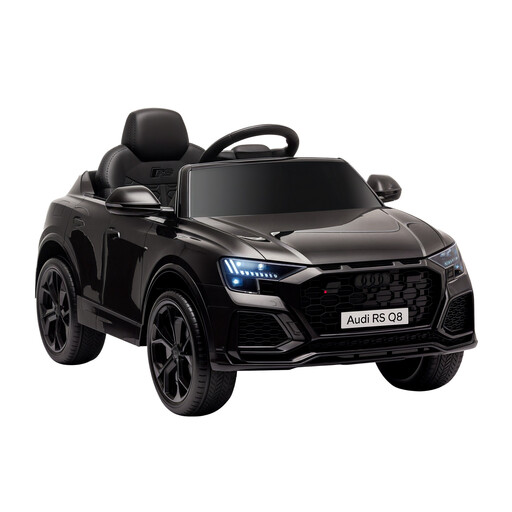
Why This Fits Their Persona: A compact option for families wanting a first ride-on toy for 3–5-year-olds, with a slower 1.5–3km/h range and parent remote for supervised garden or driveway play.
The two speed settings help avoid paying for unnecessary performance, while the dashboard battery gauge makes remaining charge easier to monitor.
Includes a seat belt, wide tyres, LED lights, music functions and approximately 45 minutes of use per full charge.
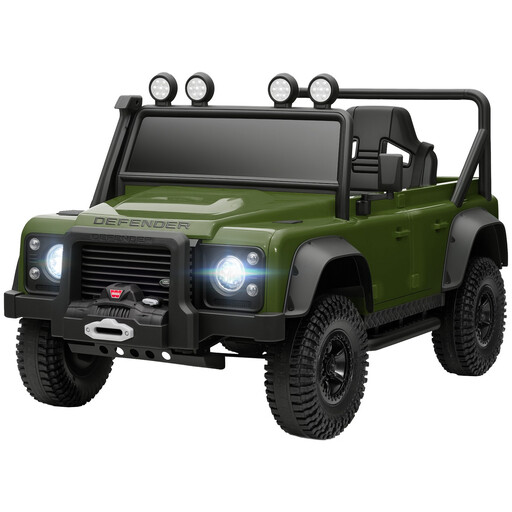
Why This Fits Their Persona: Suitable for families seeking more included features for regular outdoor play, including suspension wheels, dual motors and two driving modes.
The soft-start system and three speed settings provide more control than a simple on/off ride-on, while the remote allows an adult to guide the car.
A 12V 7Ah battery, four-wheel suspension, 30kg stated weight capacity and remote range of up to 25 metres.
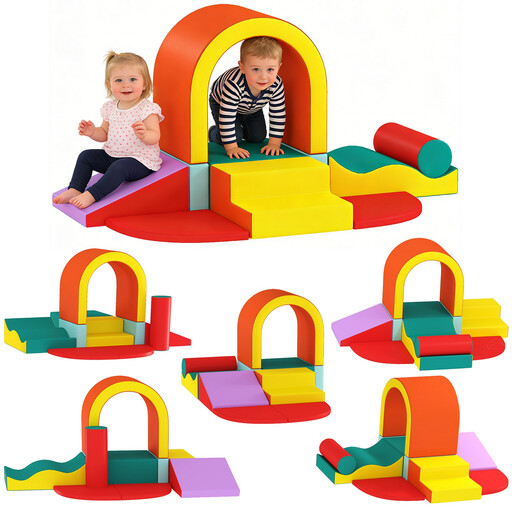
Why This Fits Their Persona: A practical indoor choice for active toddlers aged 12–36 months, particularly where British weather limits outdoor play or a playroom needs flexible layouts.
The ten pieces can be rearranged rather than fixed into one layout, and the water- and stain-resistant PU surface is designed to wipe clean.
Includes arches, ramps, stairs, a wave and mats; the set references EN71-1-2-3 and has a stated 90kg weight capacity.
For Montessori toys for toddlers, look for simple actions such as sorting, matching, turning and threading. The AIYAPLAY wooden activity cube includes a bead maze, number learning and pattern matching for children aged 18 months and over.
For musical toys for toddlers, adjustable volume is especially useful in shared homes. A children’s piano toy with 24 keys, sound modes, volume control and mute mode can support short, supervised play sessions.
If outdoor space is available, compare a kids electric ride-on car with a children’s ride-on quad bike. Cars typically offer a seated cockpit and remote control, while quad bikes provide a more open riding position and wide tyres. In either case, check the surface, charging routine and supervision requirements before purchase.
We have compiled a complete, real-time list of products that fully satisfy these strict selection criteria and UK safety regulations.
Soft play sets, stacking toys, sensory toys and a wooden activity cube can suit this age range when the product’s stated guidance matches the child’s development. Remove packaging, check for loose parts and supervise climbing or crawling play directly.
The main ongoing considerations are electricity for charging, battery condition and replacement parts. Running time depends on terrain, rider weight, speed and frequency of stopping. Follow the manual’s charging instructions rather than leaving the battery connected indefinitely.
Store electric ride-ons in a dry place, keep charging equipment away from moisture and inspect wheels and controls. For soft play, wipe surfaces regularly, remove shoes where instructed and check covers, seams and fasteners for damage. Stop using any toy that becomes damaged until it has been assessed or replaced.