
24/7 Customer Support

Free returns

Same-day & Next-day Delivery

Quality Guaranteed

Unlock Your Welcome Offers: FREE Delivery | Up to 80% OFF | Free 30-day JoyPlus trial
Download the APP
Moving your little one from a bottle or breastfeeding to their first cup is a significant milestone. It’s also a journey that can come with a surprising number of puddles on the floor, milk-splattered walls and a cupboard full of cups that just don’t quite work. Finding the right toddler training cup isn't just about preventing mess; it's about supporting your child's development, ensuring their safety and making your life as a parent a little bit easier.
As the Joybuy Product Recommendation Officer, my role is to help you navigate the options. This guide cuts through the clutter to focus on what truly matters: practicality, safety and developmental benefits. We'll look at key features to consider and share some standout options to help you make a confident choice for your family.
Before jumping into specific products, let's cover a few key considerations. Keeping these in mind will help you choose a cup that suits your child's age and stage.
One of the most important factors is how the cup supports your child's oral motor skills. Many dentists and speech therapists advise moving towards cups that encourage sipping rather than sucking. A dentist recommended sippy cup often features an open-rim design or a soft straw. These styles help children learn to use their lip, tongue and jaw muscles in a way that is more like drinking from a regular cup, which is beneficial for speech development and tooth alignment.
A cup that is difficult to clean can quickly become a breeding ground for mould and bacteria. Look for designs with minimal parts, no tiny crevices and dishwasher-safe materials. Some modern options, like an easy clean straw cup, have innovative features that allow you to open the straw for a thorough scrub, eliminating the need for special brushes and giving you peace of mind.
Toddlers are not known for being gentle with their belongings. A good training cup needs to withstand being dropped, thrown and knocked over. Look for durable, shatter-proof materials. It is also crucial to ensure the cup is made from non-toxic materials. Always check that it is a BPA-free toddler cup, as well as free from other potentially harmful chemicals like phthalates and PVC.
Based on designs that address common parent concerns like spills, cleaning and healthy development, here are our recommendations.
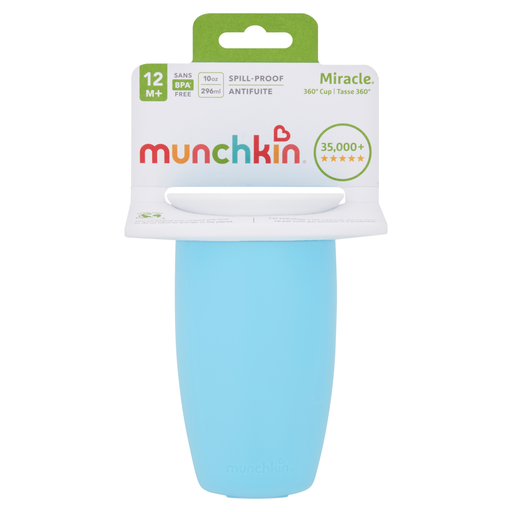
Why It Stands Out: This cup is a popular choice for a reason. Its main feature is the 360-degree spoutless rim, which allows a child to drink from any edge, just like an open cup. However, a clever silicone valve automatically seals when the child stops drinking, making it an excellent spill proof cup for toddlers.
Pros:
Who is it for? Parents looking for a transitional cup that mimics open-cup drinking to support oral development, while still offering robust protection against spills.
View the Munchkin Miracle 360° Cup

Why It Stands Out: The Munchkin Simple Clean Straw Cup directly tackles one of the biggest frustrations with straw cups: hygiene. It features a unique straw that zips open lengthwise, allowing you to scrub the inside thoroughly without needing a special, fiddly brush.
Pros:
easy clean straw cup.Who is it for? Families who prefer the convenience of a straw cup but are rightly concerned about keeping it hygienically clean.
View the Munchkin Simple Clean Straw Cup
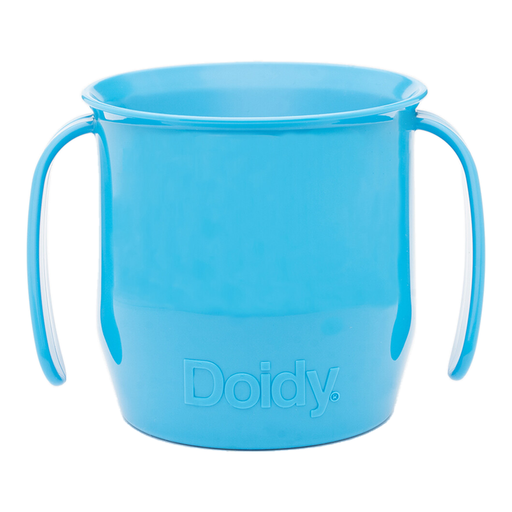
Why It Stands Out: The Doidy Cup is a classic baby weaning cup that focuses purely on teaching the mechanics of drinking from an open rim. Its unique slanted design allows a child to see the liquid without tilting their head excessively, helping them judge the flow and develop hand-eye coordination.
Pros:
Who is it for? Parents who want to introduce an open cup from a very early age and are willing to supervise their child to teach them the skill, bypassing spouted or spill-proof cups entirely.
If you're browsing for a gift rather than for your own little one, a high-quality training cup is a thoughtful and practical choice for any baby shower. For more ideas on presents that new parents will truly appreciate, you might like to explore our curated selection of baby shower guest gifts.
Most health guidelines suggest introducing a baby weaning cup around 6 months of age, which is often when babies start eating solid foods. You can start with a small amount of water at mealtimes. Some open cups, like the Doidy Cup, are designed to be used from as early as 3 months to help babies learn the motion of sipping.
Prolonged use of cups with hard spouts can potentially affect the development of a child's palate and the alignment of their front teeth. This is why many dentists and health visitors recommend transitioning to an open cup or a straw cup as soon as your child is ready. Spoutless designs like the Munchkin 360° are a great intermediate step.
To clean any toddler beaker effectively, it's important to disassemble it completely after each use. Wash all parts in hot, soapy water or place them on the top rack of a dishwasher if the manufacturer's instructions permit. Pay close attention to valves, seals and straws, as these are common areas for residue to build up. Allow all parts to air dry completely before reassembling.