For a toddler who can eat dairy, plain unsweetened yoghurt is a starting point for dinner; a child-labelled no-added-sugar yoghurt is another option when a measured portion is useful. The NHS distinguishes naturally occurring milk sugars from free sugars, so read the ingredients as well as the total-sugars figure when comparing fruit yoghurts. Lactose-free dairy yoghurt is not a substitute for milk-free food if the child has a cow’s milk protein allergy.
Who is this for?
Carers serving yoghurt with dinner
If yoghurt is part of the evening meal, the choice is between a plain portion you serve yourself and a child-sized product. The NHS gives plain unsweetened yoghurt with fruit as an example for young children; fruit can be added separately if wanted.
Carers looking for a measured portion
A child-labelled pot or pouch makes the portion size visible on the pack. Check its age guidance, ingredients and serving instructions rather than assuming that child-focused packaging means no added sugar.
Carers dealing with a milk-related concern
Milk allergy and lactose intolerance call for different checks. Cambridge University Hospitals NHS Foundation Trust explains that lactose-free dairy can still contain the milk protein involved in cow’s milk protein allergy.
What matters when choosing?
Start with the ingredient list and any milk-allergen concern, then choose a format that works for serving yoghurt with dinner.
| Priority |
What to check |
Your needs |
| Added sugar |
Read the ingredients for added sugar and check the total-sugars figure per 100g or serving. The NHS says naturally occurring sugar in milk is not free sugar, although it appears in total sugars. |
I want to tell the difference between a plain yoghurt’s milk sugars and sugar added to a flavoured yoghurt. |
| Milk ingredients |
Check the current pack for milk in the ingredients and allergen information. Cambridge University Hospitals NHS Foundation Trust says lactose-free dairy can still contain milk protein. |
If my child has a cow’s milk protein allergy, I cannot treat a lactose-free dairy yoghurt as a milk-free choice. |
| Age and format |
Check the stated age guidance and pack size on child-labelled products. A family pot lets you spoon out a portion; a small pot or pouch provides a measured pack. |
A family pot works when I can serve yoghurt in a bowl; a smaller pack may be easier when I need a set portion. |
| Storage and serving |
Follow the pack’s refrigeration, use-by and after-opening instructions. Serve the yoghurt in a way appropriate for the child; the Department for Education says young children must not be left alone while eating. |
I need a portion I can serve at dinner and store according to the pack instructions afterwards. |
Checks that are easy to miss
-
Treating total sugars as added sugar
Total sugars in dairy yoghurt include naturally occurring milk sugar. The NHS does not count that milk sugar as free sugar, so the nutrition figure alone cannot tell you whether sugar was added.
Read the ingredient list alongside the nutrition panel, then compare the stated portion sizes.
-
Assuming lactose-free means milk-free
Removing lactose does not necessarily remove milk protein. Cambridge University Hospitals NHS Foundation Trust says specialised lactose-free dairy products are unsuitable for someone with a cow’s milk protein allergy.
If an allergy is diagnosed or suspected, do not use lactose-free dairy yoghurt as an alternative; seek advice from the child’s healthcare professional.
-
Judging sugar content by child-focused packaging
The products differ: Onken lists sugar in its Raspberry & Banana yoghurt ingredients, while Yeo Valley’s Little Yeos product is labelled no added sugar.
Check the specific product’s ingredient list and label claim rather than relying on its flavour or packaging.
-
Using an old listing instead of the pack
An online product description may not be the same as the pack you take home. Ingredients and storage directions matter when serving yoghurt to a toddler.
Check the current pack’s ingredients, allergens, use-by date and refrigeration instructions before serving.
Relevant yoghurt brands
These examples illustrate different yoghurt formats and ingredient lists; assess the particular product, not the brand name alone.
Yeo Valley
Tesco Groceries lists Little Yeos No Added Sugar as a child yoghurt labelled from 6 months.
- The named Little Yeos product is labelled no added sugar.
- It contains milk; check the current pack for its format and serving instructions.
Onken
Onken’s Raspberry & Banana product is a fruit yoghurt whose published ingredients include yoghurt, fruit, sugar and vitamin D.
- The stated flavour and ingredients help carers compare it with plain yoghurt.
- Sugar and cow’s milk appear in the ingredients of this particular product.
Tesco
Tesco Groceries describes Tesco Natural Yogurt 500G as a whole-milk natural yoghurt.
- The family-pot format lets a carer spoon out a portion for dinner.
- It contains milk and is not a pre-portioned child product.
Rachel's
Sainsbury's lists Rachel's Organic Greek Style Set Natural Yogurt in a 450g pot, with milk identified in its yoghurt ingredient.
- It offers another plain yoghurt to portion from a pot.
- It contains milk and is not a child-specific serving format.
Activia
Activia lists milk and cultures in its Natural High Protein Yogurt.
- Its published ingredient list makes the milk content clear.
- The product is not presented here as a toddler-specific choice; culture or digestive claims do not establish suitability for a child’s dinner.
Müller
Müller’s yoghurt range includes products with different flavours and additions, so the brand name alone does not identify a suitable toddler-dinner option.
- There are different product types to assess individually.
- Check the chosen pack’s ingredients, milk-allergen information and serving details rather than applying one product’s details to the range.
Joybuy yoghurt options for toddler meals
These child-labelled fruit yoghurt products offer pots or a pouch for serving with a toddler meal. Compare their pack sizes and check each current label for ingredients, milk and storage directions.
 No image available
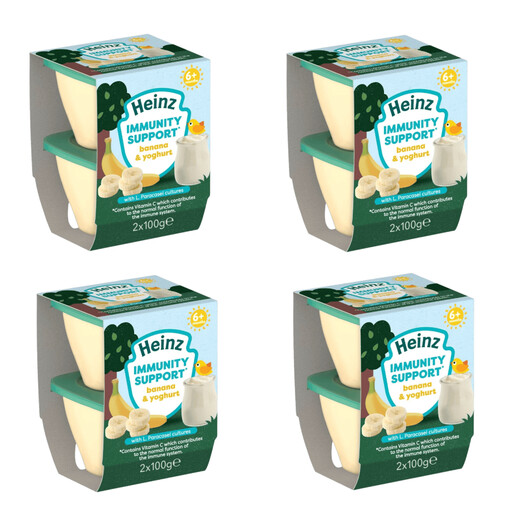
Heinz Banana & Yoghurt Pots 6+ Months, 2 × 100g, Bundle of 4
Banana and yoghurt pots for serving a portion with dinner; the bundle contains four packs of two 100g pots. The product contains milk, so it is not a choice for a child with a cow’s milk protein allergy. Check the current pack’s ingredient and after-opening instructions.
View on Joybuy
 No image available
Ella's Kitchen Organic Mango Greek Style Yoghurt Pouch 6+ Months, 90g
The 90g pouch is a measured format for a toddler meal; serve it according to the current pack directions rather than assuming it should be eaten directly from the pouch. It contains milk and is not suitable for a child with a cow’s milk protein allergy. Check the ingredients and instructions for storing any opened portion.
View on Joybuy
 No image available
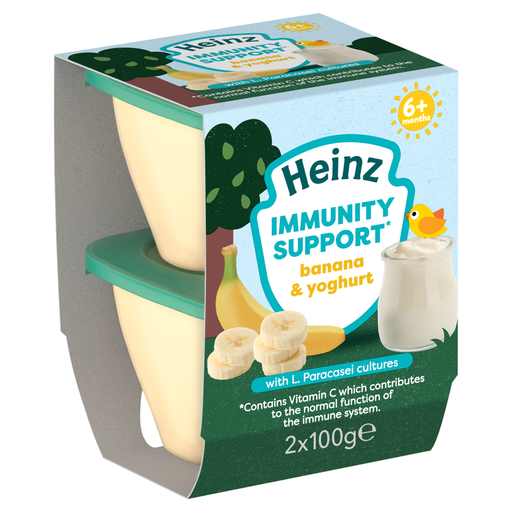
Heinz Banana & Yoghurt Pots 6+ Months, 2 × 100g
This two-pot pack offers the same stated 100g pot size without the four-pack bundle above. It contains milk and is not suitable for a child with a cow’s milk protein allergy. Read the current pack for its ingredients and instructions after opening.
View on Joybuy
Frequently asked questions
Should I choose plain or flavoured yoghurt for a toddler dinner?
Plain unsweetened yoghurt is a starting point if the child can eat dairy; the NHS suggests serving it with fruit. If you choose a flavoured yoghurt, check its ingredients for added sugar: the NHS explains that naturally occurring milk sugar is not free sugar, even though it appears in the total-sugars figure.
Can a toddler with a cow’s milk protein allergy have lactose-free dairy yoghurt?
No. Cambridge University Hospitals NHS Foundation Trust explains that lactose-free dairy can still contain the milk protein involved in cow’s milk protein allergy. Seek advice from the child’s healthcare professional about a suitable choice.
How should I serve and store yoghurt at dinner?
Follow the pack’s refrigeration, use-by and after-opening instructions, and serve the yoghurt in a way appropriate for the child. The Department for Education says babies and young children must not be left alone while eating.
Where should I check for milk on a prepacked yoghurt label?
Check the current pack’s ingredient list. The UK Food Standards Agency says allergens present in prepacked food must be emphasised in that list; do not rely solely on an older online description.


