Who is this choice for?
The useful starting point changes with the child’s age, whether they can have milk and the sort of yoghurt they will accept at dinner.
Carers serving yoghurt with dinner
For a toddler who can eat dairy, plain whole-milk yoghurt offers a mild-tasting route without added flavouring. Full-fat yoghurt is particularly relevant up to age 2 under NHS guidance; check the ingredients for sugar and sweeteners as well as the texture.
Carers choosing small or fruit-flavoured portions
A child-sized fruit yoghurt may be easier to portion or more readily accepted by a child who prefers fruit flavour. Fruit purée gives it a different taste from plain natural yoghurt, even when the pack says “no added sugar”.
Carers whose child cannot have dairy
Ordinary yoghurt contains milk. Kingston and Richmond NHS Foundation Trust advises checking dairy alternatives for calcium and iodine fortification, as well as protein and energy, because alternatives differ in their nutritional content.
What should you check?
Start with milk suitability and age, then compare ingredients, flavour and portion format. A mild product description does not tell you whether an individual child will like its texture.
| Priority |
What to check |
Your needs |
| Mild taste and texture |
Look for plain natural yoghurt if you want no fruit flavour. Tesco Groceries describes Yeo Valley Organic Natural Yogurt as smooth and mild, and Onken Set Natural Yogurt as mild with a thicker set texture; these are product descriptions, not toddler taste tests. |
I want something spoonable alongside dinner, but a thick set yoghurt might take some getting used to. |
| Sugar and sweeteners |
Read the ingredients as well as “no added sugar” on the front. Plain yoghurt contains naturally occurring lactose; fruit yoghurt can also contain sugars from fruit purée. The NHS advises avoiding foods and drinks with sugar or sweeteners for children aged 4 or younger. |
If I choose a fruit flavour, I still want to know what provides the sweetness and whether sweeteners have been added. |
| Fat content and age |
The NHS recommends full-fat yoghurt up to age 2. For an older child, its guidance allows lower-fat dairy to be introduced gradually if the child is eating and growing well; check the product label rather than assuming “light” means age-appropriate. |
For a child under 2, I’m looking for a yoghurt that fits the full-fat guidance, not simply one marketed as light. |
| Portion format |
Compare a shared tub with a child-sized pot or pouch. Yeo Valley’s Little Yeos listing describes six 42g fruit-yoghurt portions, while its Organic Natural Yogurt is sold as a 950g shared tub. |
A small portion may be convenient; with a shared tub, I can serve the amount needed and follow its storage instructions after opening. |
| Milk avoidance |
Check the current pack for milk and other ingredients before serving. If dairy must be avoided, Kingston and Richmond NHS Foundation Trust advises choosing an alternative fortified with calcium and iodine and checking its protein and energy content. |
My child cannot have milk, so a dairy yoghurt is not an option; I need to assess the alternative rather than choosing by its flavour alone. |
Brands and product lines to compare
These examples describe particular yoghurt products and formats, not a judgement about everything each brand makes.
Yeo Valley
Its Organic Natural Yogurt and Little Yeos fruit yoghurt represent different choices: a shared plain tub or small fruit-flavoured portions.
- Tesco Groceries describes the Organic Natural Yogurt as mild and creamy, made with organic whole milk and live cultures.
- Little Yeos contains fruit purée, so its flavour is not the same as plain natural yoghurt.
Onken
Set Natural Yogurt is a shared-pot option for someone looking for a thicker texture.
- Tesco Groceries describes the 450g whole-milk yoghurt as mild, creamy and thick, with no added sugar.
- A set texture may not appeal to every child; serve a small spoonful when introducing it.
Tesco
Tesco Natural Yogurt is a plain whole-milk option in a 500g shared tub.
- Tesco Groceries lists 3.8g fat and 5.2g protein per 100g for this product.
- Its listing does not describe the taste as mild, so check whether its flavour and texture suit the child.
Activia
Big Pot Natural Yoghurt is another shared natural-yoghurt format.
- The Morrisons listing names yoghurt and cultures as its ingredients and describes its sugars as naturally occurring.
- Check the current pack’s fat content and ingredients against the child’s age and needs; brand digestive-health messaging does not establish a toddler-dinner advantage.
Müller
Müller Light Toffee is a useful example of why a flavoured light yoghurt needs an ingredient check before it is considered for a toddler.
- The Tesco Groceries listing identifies it as a fat-free toffee-flavoured yoghurt.
- That listing includes aspartame and acesulfame K. NHS guidance advises avoiding foods and drinks with sugar or sweeteners for children aged 4 or younger and recommends full-fat yoghurt up to age 2.
A fruit yoghurt option on Joybuy
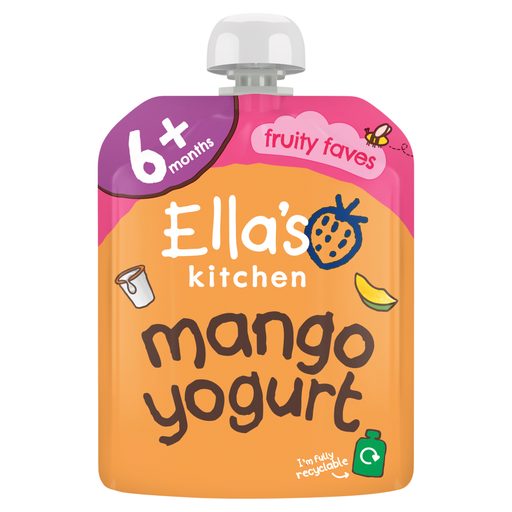
This mango-flavoured pouch is a small-portion option for a child who accepts fruit flavour. It is not a plain, neutral-tasting yoghurt, so apply the age and ingredient checks above before choosing it for dinner.
 No image available
Ella's Kitchen Organic Mango Greek Style Yoghurt Pouch, 6+ Months, 90g
The 90g mango-flavoured pouch offers a small portion for a child who prefers fruit flavour; its title states 6+ months. It contains milk, so it is not suitable for a child who must avoid milk. Check the current pack’s ingredients and fat classification if choosing for a child under 2, and keep the cap out of reach of children under 36 months.
View on Joybuy
Questions about toddler yoghurt
Does every toddler need full-fat yoghurt?
The NHS recommends full-fat yoghurt up to age 2. From age 2, lower-fat dairy can be introduced gradually if the child is eating and growing well. Seek individual advice from a health visitor, GP or dietitian if there are feeding, growth or medical concerns.
Does “no added sugar” mean sugar-free?
No. Plain dairy yoghurt contains naturally occurring lactose, while fruit yoghurt can contain sugars from fruit purée. Read the ingredients and nutrition panel to distinguish these from added sweetening.
What about yoghurt containing sweeteners?
The NHS advises avoiding foods and drinks with sugar or sweeteners for children aged 4 or younger. Check the ingredient list even if the front says “no added sugar”: Tesco Groceries lists aspartame and acesulfame K in Müller Light Toffee yoghurt.
Can a child who must avoid milk have ordinary yoghurt?
Ordinary dairy yoghurt contains milk, so do not assume it is suitable for a child who must avoid milk. Kingston and Richmond NHS Foundation Trust advises choosing a dairy alternative fortified with calcium and iodine and checking its protein and energy content, because alternatives vary.
How should I handle an opened shared tub?
Keep yoghurt refrigerated and follow the specific pack’s use-by date and after-opening instructions. Instructions can differ between products: the Morrisons listing for Activia Big Pot Natural Yoghurt says to consume it within 2 days of opening.


