Parents and carers of children under 2
If yoghurt is a routine snack, start with the NHS recommendation for full-fat yoghurt up to age 2 rather than treating low fat as an advantage.


Low-fat yoghurt should not be the default routine snack for a child under 2: the NHS recommends full-fat yoghurt up to that age. Department for Education early-years guidance says lower-fat dairy can be introduced gradually after age 2; compare the sugars and ingredients on the pack rather than choosing by the fat claim alone. Yoghurt contains milk, so check the current allergen declaration and any childcare requirements before serving it.
If yoghurt is a routine snack, start with the NHS recommendation for full-fat yoghurt up to age 2 rather than treating low fat as an advantage.
Lower-fat dairy can be introduced gradually after age 2, according to Department for Education early-years guidance. Check the particular yoghurt’s sugars and ingredients as well as its fat content.
Choose with the child’s age and the setting’s allergen process in mind. Check the current milk declaration before accepting or serving a yoghurt.
Start with the child’s age, then compare the pack labels of yoghurts that fit that age-based choice.
| Priority | What to check | Your needs |
|---|---|---|
| Age and fat content | Check whether the child is under 2 or over 2, and read the fat content on the pack. The NHS recommends full-fat yoghurt up to age 2; Department for Education guidance says lower-fat dairy can be introduced gradually after that age. | For a child under 2, I’m choosing a routine yoghurt snack with the full-fat guidance in mind. After age 2, I may want to compare lower-fat options. |
| Sugars and ingredients | Compare sugars per 100g on the nutrition panel and read the ingredients. A ‘no added sugar’ claim is different from the total sugars figure, and ‘low fat’ does not establish that a yoghurt is low in sugar. | I want to compare plain and flavoured options without relying on a front-of-pack fat claim to tell me about sugars. |
| Portion and pack | Read the stated portion size and pack format, then check that the product’s age labelling fits the child. A multipack or pouch format does not settle the fat, sugar or allergen checks. | For snacks away from home or at childcare, I need a format that works for serving while still checking what each portion contains. |
| Milk allergen | Read the current ingredient and allergen declaration. The Food Standards Agency identifies milk as a common ingredient in yoghurt; also follow the child’s documented requirements and the childcare setting’s process. | If the child has a milk allergy or intolerance, I need to check whether this dairy yoghurt is excluded before it is served. |
That choice conflicts with the NHS recommendation for full-fat yoghurt up to age 2 when yoghurt is a routine snack.
Check the child’s age first. For a child under 2, begin the comparison with full-fat yoghurt, then read its sugars, ingredients and allergens.
Tesco’s listing for Rachel’s Organic Low Fat Vanilla Yoghurt states 13.6g sugars per 100g. Its low-fat description does not tell you that sugar figure.
Compare the current nutrition panels per 100g and read the ingredient lists of the products you are considering.
Ingredients and allergen declarations can change when a product is reformulated, so an earlier listing may not describe the pack being served.
Check the current pack, particularly when a child has a milk allergy or intolerance or the yoghurt is going to childcare.
These examples show why the named product and its current label matter more than a brand-wide assumption; they do not indicate which products are available on Joybuy.
Tesco lists Little Yeos as a whole-milk yoghurt with fruit purée, labelled for ages 6 months and over.
Tesco lists a Rhubarb & Mixed Fruit Low Fat Yoghurt multipack of 8 × 115g pots.
Tesco lists Rachel’s Organic Low Fat Vanilla Yoghurt as a flavoured low-fat option.
Tesco’s low-fat and fat-free yoghurt category lists Onken Fat Free Vanilla Yogurt 450g.
Tesco’s low-fat and fat-free category includes Müller Light products.
Tesco is the retailer for the product examples above, rather than a yoghurt brand recommendation.
This strawberry yoghurt pouch is an option to compare for snacks when introducing lower-fat dairy after age 2. Read its current pack label before deciding whether it fits the child.
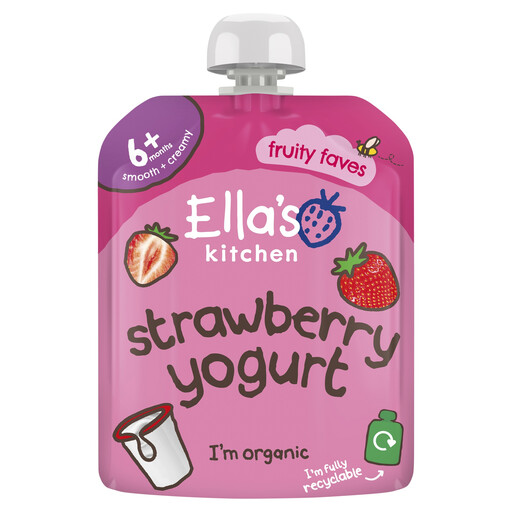 No image available
For a child over 2, compare this 90g strawberry yoghurt with other snack options using the current nutrition and ingredient label. The ‘6+ Months’ age label does not override NHS guidance recommending full-fat yoghurt for routine snacks up to age 2; check the pack’s milk-allergen declaration before serving.
Not as the default routine choice: the NHS recommends full-fat yoghurt, cheese and fromage frais up to age 2. Follow any individual dietary advice given for the child by their clinician.
Department for Education early-years guidance says lower-fat dairy can be introduced gradually after age 2. Check the particular yoghurt’s sugars, ingredients and allergens rather than choosing by fat content alone.
No. A UK yoghurt survey published in BMJ Open found that 55% of the 518 low-fat yoghurts examined contained 10–20g sugar per 100g. That survey describes the products it examined, not every yoghurt sold now, so compare current pack labels.
Do not assume dairy yoghurt is suitable. The Food Standards Agency identifies milk as a common yoghurt ingredient; check the current allergen declaration and follow the child’s documented healthcare and childcare instructions.
No. A culture or digestion-related claim does not establish that a product suits a particular toddler. Check the age-based fat guidance, then the product’s ingredients, sugars and allergens.