Carers of dairy-tolerant children under 2
For a child aged 12 months to under 2, NHS guidance recommends full-fat yoghurt. A plain or natural option can be considered alongside the other foods served at dinner.


For a child aged 12 months to under 2 who can eat dairy, NHS guidance supports choosing full-fat yoghurt; a plain or natural version lets you assess sweetness without relying on a flavoured product name. Four individual pots may make portions easier, but check each product’s ingredients and storage instructions. If the child must avoid milk, check the exact alternative against their dietary advice rather than assuming it is interchangeable with dairy yoghurt.
For a child aged 12 months to under 2, NHS guidance recommends full-fat yoghurt. A plain or natural option can be considered alongside the other foods served at dinner.
Four-pot packs can help when separate portions are useful at home or childcare. Compare the amount in each pot and its ingredients rather than using children’s packaging as a guide to sugar content.
Ordinary yoghurt commonly contains milk, according to the Food Standards Agency. Check the exact alternative’s allergen and nutrition information, and follow the child’s dietary advice if milk avoidance relates to an allergy.
A four-pot pack describes the serving format, not the yoghurt inside it. If you are looking for “4 pint” yoghurt, check the quantity and unit printed on the pack rather than treating four pints and four pots as the same thing.
| Priority | What to check | Your needs |
|---|---|---|
| Fat content | Check whether the exact yoghurt is full-fat and whether the child is under 2. NHS recommends full-fat yoghurt up to that age. | For my dairy-tolerant toddler under 2, I want the yoghurt to match the NHS age-related guidance rather than choosing fat-free by default. |
| Ingredients and sugars | Read the ingredients alongside sugars per 100g. NHS explains that total sugars includes naturally occurring milk sugars as well as free sugars, so the total alone does not identify added sugar. | I would like to compare a plain option with a flavoured one without assuming that fruit pictures or children’s branding tell me what is in it. |
| Milk and alternatives | Check the exact allergen statement. For a milk-free choice, compare fortification and nutrition as well as ingredients: Kingston and Richmond NHS Foundation Trust notes that dairy substitutes vary. | Milk must be excluded from this child’s food, so I need an alternative that fits their dietary advice, not merely a product displayed beside yoghurt. |
| Portions and storage | Compare the number and size of pots with the amount in a family pot. Follow the product’s refrigeration and post-opening instructions; Tesco’s Onken Raspberry 450g listing, for example, says to enjoy it within three days of opening. | Separate pots would suit us if we use one serving at a time; a larger pot makes sense only if we can use it within its stated storage period. |
In its 2021 survey of children’s yoghurts, Action on Sugar reported that 5% of products with child-targeted designs were rated low, or green, for sugar. That finding describes surveyed products, not the current contents of any particular pot.
Use the packaging to identify a convenient format, then compare the current ingredients and sugars information with a plain option.
NHS recommends full-fat yoghurt up to age 2. A fat-free label therefore does not, on its own, make a product the straightforward choice for a younger toddler.
For a dairy-tolerant child under 2, check the fat declaration against that age-related guidance and follow any individual professional dietary advice.
Ordinary yoghurt commonly contains milk, while dairy substitutes can differ in fortification, protein and energy, according to the Food Standards Agency and Kingston and Richmond NHS Foundation Trust respectively.
For a child avoiding milk, check the exact allergen statement and nutrition label, and follow their clinical or dietetic advice where allergy is suspected or diagnosed.
A family pot must be stored and used according to its own instructions. Tesco’s listing for Onken Raspberry 450g says to keep it refrigerated and enjoy it within three days once opened.
Compare that window with how many servings your household will use before choosing a large pot over individual ones.
Food may be wasted if an opened pot cannot be used within its stated period.
These are examples of formats in Tesco Groceries listings, not a judgement that every yoghurt from a brand has the same ingredients or suits the same child.
Tesco Groceries lists Greek Style Plain Yoghurt 4 x 90g as well as larger natural and Greek-style pots.
Tesco Groceries lists Little Yeos children’s yoghurts alongside Yeo Valley natural yoghurt in individual and larger pots.
Tesco Groceries lists Onken Kids Raspberry & Banana Yoghurt 4 x 90g and an Onken Raspberry 450g family pot.
Tesco Groceries lists Müller Corner multipacks, including varieties with fruit compote or crunchy inclusions.
Tesco Groceries lists Activia multipacks, including a Peach No Added Sugar Fat Free 4 x 115g variety.
Tesco Groceries lists Rachel's Organic Greek Style Honey Yoghurt in a 450g pot.
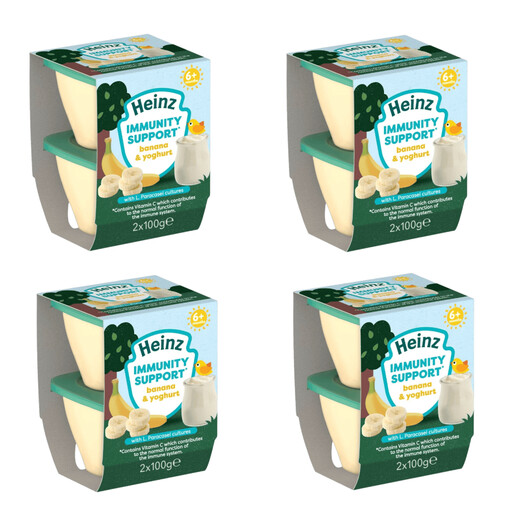
This individual-pot bundle is relevant if separate servings are the priority. Its stated age range includes toddlers, but that does not replace checking the fat content, ingredients and milk allergen for a child’s dinner.
 No image available
Eight individual 100g pots provide separate servings. This milk-containing banana yoghurt is not suitable for a child who must avoid milk; for a dairy-tolerant child under 2, check its fat declaration against NHS full-fat yoghurt guidance. Read the current ingredients and sugars information rather than using total sugars alone to judge added sugar, and follow the storage instructions on the pack.
Yes, yoghurt can be one of the milk foods in a varied diet for a child aged 12 months or over. NHS guidance recommends full-fat yoghurt up to age 2; serve it alongside other dinner foods rather than treating it as the whole meal.
NHS recommends full-fat yoghurt up to age 2. For a younger toddler who can eat dairy, check that the particular product is full-fat unless you have individual dietary advice to follow.
No. NHS explains that total sugars includes naturally occurring sugars in milk and fruit as well as free sugars. Read the ingredients list alongside the nutrition panel when comparing plain and flavoured yoghurts.
Do not choose ordinary dairy yoghurt for a child who must avoid milk: the Food Standards Agency identifies milk as a common yoghurt ingredient. Check the exact alternative’s allergen and nutrition information, including fortification, and follow the child’s clinical or dietetic advice where allergy is involved.
Neither format is preferable for every household. Individual pots separate servings, while a family pot can be portioned out as needed; choose according to the amounts you will use and the product’s storage instructions after opening.