Parents choosing snacks for a toddler under 2
NHS guidance points towards full-fat, plain or unsweetened yoghurt for young children. Check the age guidance and portion format on the product you choose.


For a toddler under 2, a plain or unsweetened full-fat organic yoghurt is a sensible starting point: NHS guidance identifies full-fat, unsweetened or plain yoghurt as a good choice for young children. Smaller pots or a pouch may be easier to serve away from home, but compare ingredients and total sugars per 100g rather than relying on an organic or no-added-sugar label. Check for milk on the exact pack and confirm how nursery snacks will be stored.
NHS guidance points towards full-fat, plain or unsweetened yoghurt for young children. Check the age guidance and portion format on the product you choose.
A small pot or pouch may be convenient, but its packaging does not settle the ingredient, allergen or storage checks. Ask how the nursery handles chilled food.
Organic dairy yoghurt still contains milk. Read the exact pack’s ingredients and check the nursery’s food policy before packing it.
Start with the child’s age and the ingredient list, then compare nutrition labels and the practical serving format.
| Priority | What to check | Your needs |
|---|---|---|
| Sugars | Read the ingredients, any no-added-sugar wording and total sugars per 100g. Milk and fruit can contribute sugars even when none are added. | I want to compare a plain yoghurt with fruit-flavoured options without mistaking no added sugar for sugar-free. |
| Age and fat | Check whether the yoghurt is full-fat and read its age guidance. NHS advice favours full-fat dairy products up to age 2. | For a child under 2, I do not want to choose an adult light yoghurt simply because its packaging sounds preferable. |
| Organic status | Confirm the organic claim on the exact pack; assess its ingredients and nutrition separately. | Organic dairy matters to me, but I still need to decide whether this particular yoghurt suits snack time. |
| Portion format | Compare family pots, small pots and pouches by serving size and directions. A family pot needs a separate portion for a snack away from home. | I can portion yoghurt at home, or I may need something practical to pack for nursery. |
| Milk and storage | Check the milk allergen in the ingredients and the nursery’s food policy. If lunchboxes are not refrigerated, the NHS advises an insulated box with an ice pack. | Before packing dairy yoghurt, I need to know it is permitted and can be kept chilled. |
Organic status does not tell you how much sugar a yoghurt contains. A UK supermarket product survey published in BMJ Open in 2018 found differences between yoghurt categories, but current products still need to be compared on their own labels.
Use the ingredient list and total sugars per 100g to compare a flavoured yoghurt with a plain one.
NHS guidance recommends full-fat dairy products up to age 2, so a low-fat label is not a reason on its own to choose that product for a younger toddler.
Check the child’s age and the yoghurt’s fat description; follow any individual dietary advice the child has been given.
A fruit yoghurt can contain sugars from its milk and fruit ingredients without added sugar.
Read the nutrition panel and compare total sugars per 100g, especially when pot sizes differ.
Milk-allergen information and chilled storage both matter when yoghurt is sent away from home.
Read the exact pack, confirm the nursery’s food policy and ask whether lunchboxes are refrigerated. The NHS advises an insulated box with an ice pack if they are not.
Its Little Yeos range offers child-sized organic yoghurt pots, including a no-added-sugar fruit-purée version listed by Tesco.
Its natural yoghurt offers a family-pot alternative to individually portioned children’s products.
Onken lists child-sized fruit yoghurt pots for families considering format alongside their organic preference.
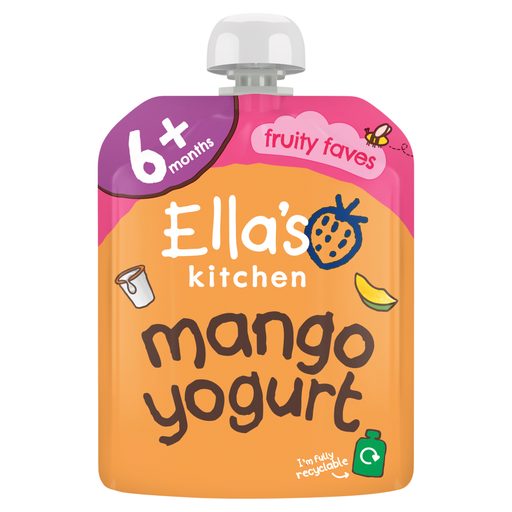
This organic mango yoghurt pouch is a portion-format option for toddler snack time. Compare its pack details with a plain, full-fat yoghurt if choosing for a child under 2.
 No image available
The 90g pouch offers a single-snack format with a 6+ months age indication. Serve it onto a spoon or into a bowl rather than letting a child drink from the pouch, and keep the cap out of reach of children under 36 months. Check the exact pack for milk-allergen information and full-fat status when choosing for a child under 2; refrigerate any unused opened portion.
No. Organic status does not tell you whether the yoghurt is plain, full-fat or appropriate for the child’s age. Check the exact ingredients and nutrition panel; NHS guidance identifies full-fat, unsweetened or plain yoghurt as a good choice for young children.
Full-fat yoghurt is the usual starting point under age 2, in line with NHS guidance on dairy products for young children. Follow any individual dietary advice given for the child instead of treating that general guidance as a personal rule.
No. Sugars can occur naturally in milk and fruit. Read the total sugars figure per 100g alongside the ingredient list and any no-added-sugar claim.
Read the ingredients on the exact pack. GOV.UK guidance says allergens present in prepacked food must be clearly identified in the ingredients list; milk-containing yoghurt is not made milk-free by being organic.
Check the nursery’s food policy and storage arrangements first. If lunchboxes are not kept in a fridge, the NHS advises using an insulated box with an ice pack for chilled food.