Parents of dairy-eating toddlers under 2
If you want a regular snack rather than a sweetened flavour by default, consider plain unsweetened full-fat yoghurt and add soft fruit. The NHS identifies full-fat yoghurt as important for young children.


For a toddler who eats dairy, plain unsweetened yoghurt with soft fruit is a practical starting point; the NHS suggests serving it with sliced banana. For children under 2, start with full-fat yoghurt. Small children’s pots are convenient away from home, but check the ingredients and nutrition label: “no added sugar” does not mean sugar-free, and some flavoured yoghurts contain added sugar.
A toddler’s age, whether they eat dairy and where the snack will be served all affect which yoghurt format makes sense.
If you want a regular snack rather than a sweetened flavour by default, consider plain unsweetened full-fat yoghurt and add soft fruit. The NHS identifies full-fat yoghurt as important for young children.
A small pot can simplify packing, but its format does not tell you whether it is plain, made without added sugar or sweetened. Read the exact product’s ingredients and nutrition panel.
If a child has a diagnosed cow’s-milk allergy or a suspected reaction, check allergen information and seek advice appropriate to the child rather than selecting a yoghurt on the basis of symptoms alone. Cow’s-milk allergy and lactose intolerance are different conditions, as Healthier Together NHS explains.
Choose a suitable dairy base first, then compare sweetness and the format you need for serving it.
| Priority | What to check | Your needs |
|---|---|---|
| Sweetness | Check whether the yoghurt is plain and unsweetened, lists added sugar, or says “no added sugar”. Compare ingredients and sugars per 100g; milk and fruit can contribute sugars without added sugar. | I want a between-meal snack without making a sweetened flavour the default. The NHS suggests plain unsweetened yoghurt with sliced banana and advises limiting sugary foods and drinks as snacks. |
| Age and fat level | Check whether the yoghurt is full-fat or lower-fat. The NHS says lower-fat dairy can be introduced gradually after age 2 if the child is eating well and growing well. | For a child under 2, I need to consider full-fat yoghurt rather than choosing a low-fat product automatically. |
| Milk and allergens | Read the current pack’s allergen information. If milk avoidance is needed, check the alternative’s full ingredient and allergen information against the child’s individual advice. | If my child must avoid cow’s milk, an ordinary dairy yoghurt is not the right snack. I cannot assume every dairy-free alternative fits their needs either. |
| Serving format | Compare a larger tub to portion at home with individual pots for packing. Check the exact pot’s milk base, ingredients and nutrition information rather than relying on children’s packaging. | For nursery or an outing, a ready-to-pack portion is useful; at home, I can portion plain yoghurt and add soft fruit myself. |
A fruit flavour does not tell you whether sugar has been added. Onken lists sugar in its Kids Raspberry & Banana yoghurt and reports 7.6g sugars per 100g.
Use plain unsweetened yoghurt as a comparison point, then read a flavoured pot’s ingredients and sugars per 100g.
The NHS identifies full-fat yoghurt as important for young children. Its guidance on gradually introducing lower-fat dairy applies after age 2, provided the child is eating well and growing well.
Check the fat description on the pack and take account of any individual advice about your child’s diet.
Healthier Together NHS distinguishes an allergy to cow’s-milk proteins from lactose intolerance. A yoghurt choice cannot establish which, if either, explains a child’s symptoms.
For a suspected reaction or a medically required milk-free diet, seek appropriate clinical advice and check the current allergen declaration.
Ingredients and allergens can change when a food is reformulated, as Tesco cautions on its grocery listings.
Before serving, read the pack in hand for allergens, ingredients, storage instructions and its use-by date.
Brand names are a starting point, not a substitute for checking the particular yoghurt and pack you plan to serve.
Its Little Yeos range includes children’s No Added Sugar pots. Tesco describes one such product as whole-milk yoghurt blended with fruit purée.
Its Kids Raspberry & Banana yoghurt is a ready-portioned fruit-flavoured option.
Tesco lists children’s yoghurt in several formats, alongside plain pots that can be compared by their individual labels.
Its natural yoghurt tubs offer a format you can portion at home and serve with fruit.
Its Natural High Protein yoghurt is a larger household tub; Activia lists milk and cultures as ingredients.
Müller lists fruit-flavoured, Corner and lower-fat Light products among its wider yoghurt range.
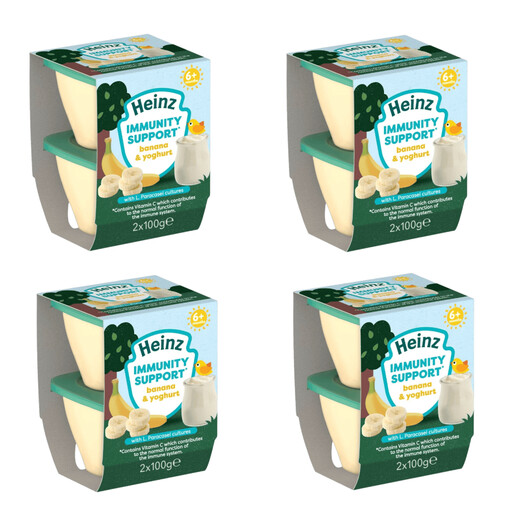
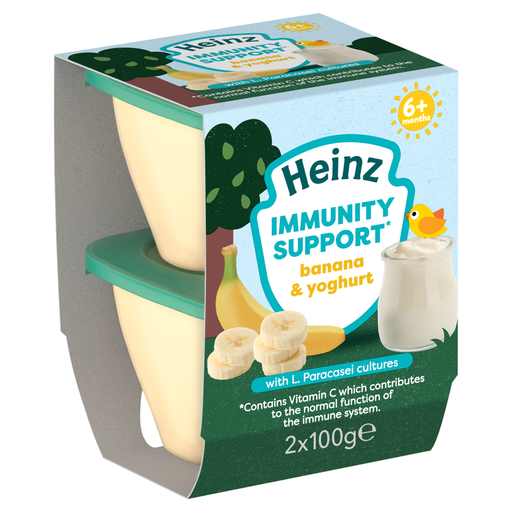
These two listings are pack sizes of the same Heinz banana-and-yoghurt snack. They represent a pre-portioned fruit-and-yoghurt option, not the plain full-fat yoghurt discussed for routine snacks.
 No image available
The bundle provides eight individual pots for occasions when you need several pre-portioned snacks. This is a fruit-and-yoghurt blend rather than plain yoghurt; check the current pack’s milk-allergen information, ingredients and fat level for your child.
 No image available
The two-pot pack is a smaller pre-portioned option for a snack away from home. Its age marking does not establish that it meets the NHS guidance on full-fat yoghurt for children under 2; check the current ingredients, nutrition panel and milk-allergen information.
Plain unsweetened yoghurt with sliced banana is a snack suggested by the NHS for young children. For a child under 2 who eats dairy, choose a full-fat yoghurt unless you have individual advice to do otherwise.
Do not make it the automatic choice for a child under 2. The NHS says lower-fat dairy can be introduced gradually after age 2 if the child is eating well and growing well.
No. A children’s yoghurt made without added sugar can still contain sugars naturally present in milk or fruit. Check both its ingredients and the sugars figure on the nutrition panel.
Not when cow’s-milk avoidance is required. The NHS advises reading food labels carefully and avoiding a food if you are unsure whether it contains an allergen to which the child is allergic; seek individual advice about suitable alternatives.
No. The Food Standards Agency explains that use-by dates concern food safety. Follow the pack’s storage instructions and do not serve it after that date.