
24/7 Customer Support

Free returns

Same-day & Next-day Delivery

Quality Guaranteed

Unlock Your Welcome Offers: FREE Delivery | Up to 80% OFF | Free 30-day JoyPlus trial
Download the APP
A toddler step stool can make everyday routines easier: washing hands at the bathroom sink, brushing teeth, reaching a kitchen surface or choosing a book from a low shelf. However, a colourful design or a low price does not automatically mean the stool is suitable for young children.
Many buying mistakes come from overlooking the details that affect stability, fit and daily usability. Before choosing a children’s bathroom step stool or kids’ kitchen step stool, check how it is built, where it will be used and whether your child can safely grip and stand on it.
Some compact stools are designed mainly as footrests or occasional household steps. They may lack side handles, have a narrow standing area or be too tall for a toddler to use comfortably. A toddler sink stool should provide enough room for both feet and should not encourage a child to lean sideways to reach the tap.
Grooves or textured surfaces can help reduce foot movement, but they do not prevent the whole stool from tipping. An anti-tip step stool for children should also have a broad base, balanced proportions and a structure that resists sideways movement. Handles may provide useful support, but they are not a substitute for adult supervision.
Wood, bamboo and high-density boards can all be practical materials, but construction quality matters just as much. Look for secure joints, smooth edges and a finish that is easy to wipe clean. A wooden step stool for toddlers should also be checked regularly for loose screws, cracks, swelling or worn surfaces, particularly when used near a sink.
For young children, stability should take priority over portability. Look for:
A wide-step kids’ stool is generally easier for a child to use than a narrow adult folding step. Nevertheless, place it on a dry, non-slip floor and keep it away from open drawers, hot appliances and climbing hazards.
Measure the distance from the floor to the surface your child needs to reach. A bathroom sink step stool may need a different height from a stool used at a desk or kitchen worktop. The child should be able to stand upright without stretching excessively or leaning over the basin.
If the stool is too low, it may not solve the intended problem. If it is too high, the child may be more likely to lose balance while stepping on or off. A step stool with handles can be helpful during mounting and dismounting, but children should still be shown how to use it correctly.
A smooth, water-resistant finish is useful in bathrooms and kitchens, where splashes are common. Water-based paint may make a surface easier to clean, but buyers should still check the product listing for relevant material information, age guidance and safety documentation.
UK buyers may also wish to ask the seller or manufacturer whether the product has been assessed against applicable standards, such as BS EN 14183, where relevant to the type of household step stool. Do not assume that a product is compliant simply because an advert uses words such as “safe”, “eco-friendly” or “anti-tip”. Retain assembly instructions and inspect the stool after set-up.
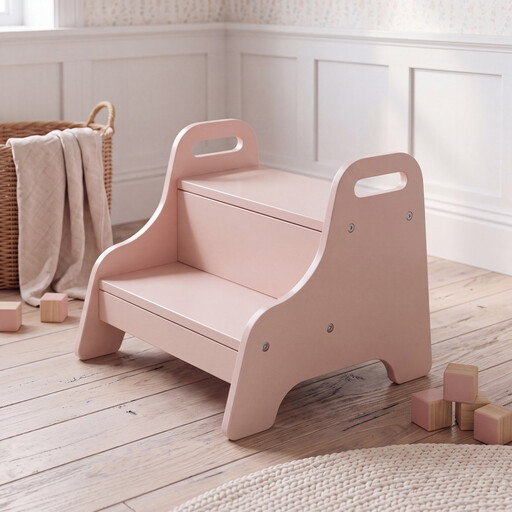
Why This Fits Their Persona: This compact indoor stool is suited to families seeking one child-focused option for bathroom, kitchen and study routines without buying separate stools for each room.
The wide pedal and integrated side handles address the narrow-platform and limited-support problems. Its mortise and tenon structure is reinforced with screws, although assembly must be completed carefully.
High-density board construction, water-based paint finish, wide standing surface and wipe-clean smooth exterior.
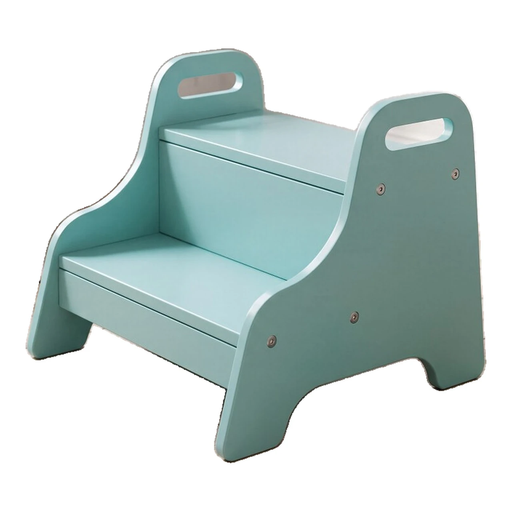
Why This Fits Their Persona: This blue version suits households that value a coordinated, child-friendly finish alongside practical construction for repeated daily routines.
The side handles and wide pedal provide more contact area than a basic narrow footstool. The reinforced joint design also gives buyers specific construction details to review rather than relying only on promotional wording.
Smooth, burr-free painted surface; suitable for bathroom sink, kitchen worktop and children’s study use.
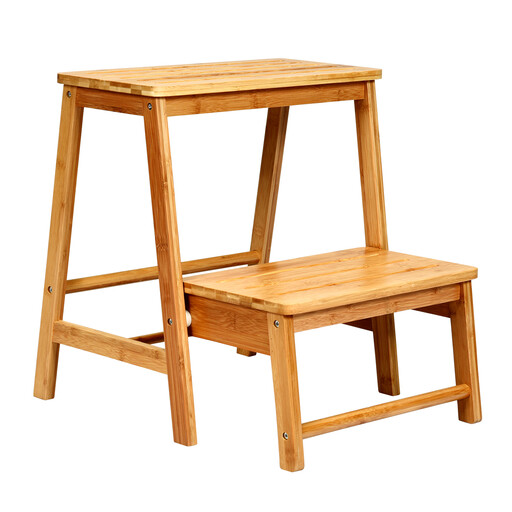
Why This Fits Their Persona: This is more suitable for a multi-purpose household needing a folding two-step ladder for general reaching tasks. It is not presented as a dedicated toddler independence stool, so adult supervision is particularly important around children.
The two wide steps have anti-slip grooves, while the trapezoidal frame is specified with a load capacity of up to 100kg per step. Its folding design helps reduce storage space when not in use.
Natural bamboo construction, two grooved steps, foldable format and listed dimensions of 45 x 52 x 48cm.
We have compiled a complete, real-time list of products that fully satisfy these strict selection criteria and UK safety regulations.
Once the stool arrives, place it on a flat, dry surface and tighten every supplied screw according to the instructions. Check that the structure does not wobble before allowing your child to use it.
Teach your child to:
Never leave a toddler alone near a hot hob, kettle, knife, open window or full sink. A stool that is stable on a tiled bathroom floor may behave differently on a loose mat, wet patch or uneven surface.
Choose a height that allows your child to reach the intended surface without leaning or stretching. Measure the floor-to-sink or floor-to-worktop distance first, then compare it with the product dimensions. The child should have a stable stance with both feet supported.
Its lifespan depends on construction, frequency of use, moisture exposure and maintenance. Wipe away spills promptly, avoid prolonged soaking and inspect joints regularly. Stop using the stool if it develops cracks, sharp edges, loose hardware or noticeable movement.
A Montessori step stool or children’s independence stool can support supervised participation, but “independently” should not mean without an adult nearby. Kitchen environments contain heat, sharp tools and liquids, so position the stool away from hazards and remain within reach during use.