Shoppers looking for protein in their snack
A salted-caramel protein bar is worth comparing if you want a stated amount of protein per bar. Its flavour does not make it traditional toffee, so check the product type as well as the nutrition panel.


If you want the snack itself to contribute protein, a salted-caramel protein bar fits that aim more closely than a literal toffee stick: Marks & Spencer lists 20g protein in its 55g bar, while Tesco lists 0.3g per 100g for Werther’s Original Stick. If you primarily want a small sweet, the toffee stick serves a different purpose. Compare the actual portion, sugars and allergen information before choosing.
A salted-caramel protein bar is worth comparing if you want a stated amount of protein per bar. Its flavour does not make it traditional toffee, so check the product type as well as the nutrition panel.
A single toffee stick suits someone choosing confectionery after exercise without expecting it to provide the protein listed on a protein bar. Tesco’s Werther’s Original Stick is a 50g example.
Waitrose lists a 50g TREK salted-caramel flapjack labelled vegan and gluten-free. Check its current allergen statements too: the product information identifies soya and warns of possible milk, nut and peanut contact.
Decide whether you want a sweet treat or a bar with stated protein, then compare the portion you would actually eat.
| Priority | What to check | Your needs |
|---|---|---|
| Snack purpose | Compare protein per bar, not just a toffee or caramel flavour. Marks & Spencer lists 20g in its 55g salted-caramel bar; Tesco lists 0.3g per 100g for Werther’s Original Stick. | I want to know whether I am choosing a sweet or a bar that contributes a stated amount of protein. |
| Sugars and portion | Check whether the figure is per 100g or per bar, and look at the pack size. Tesco lists 71.6g sugars per 100g for Werther’s Original Stick; Waitrose lists 1.1g per 40g FULFIL bar. Total sugars on a label are not necessarily the same as free sugars, as NHS guidance explains. | For a single snack, I want to compare the amount I would eat rather than mistake a per-100g figure for a serving figure. |
| Ingredients and warnings | Read the current pack for allergens and precautionary statements. The M&S and FULFIL bars carry warnings about laxative effects from excessive consumption; the TREK flapjack is labelled vegan and gluten-free but has additional allergen statements. | Milk, soya, nuts, peanuts, wheat or sweetener warnings could affect which bar I can choose. |
| Training schedule | Consider when your next session is and what else you will eat and drink. The British Dietetic Association advises starting with carbohydrate-rich food and fluids promptly after exercise when quick refuelling is required; needs vary with training demands. | If I have another demanding session soon, I need to think about refuelling beyond the flavour or protein figure on one bar. |
| Pack format | Distinguish one portion from one retail pack. The Joybuy options below are four- or twelve-bar packs, even though their titles give a weight for each bar. | I may want one bar to take with me, but I also need to know how many bars I am buying. |
Tesco lists 0.3g protein per 100g for Werther’s Original Stick. Its single-stick format does not give it the protein content stated for the compared salted-caramel protein bars.
Choose the type of snack first, then compare protein using each product’s actual bar size.
The M&S and FULFIL bars have allergen limitations and warnings about excessive consumption. A nutrition figure does not replace the ingredients and allergen information.
Read the current physical pack before eating, particularly if milk, soya, nuts, peanuts, wheat or sweeteners affect your choice.
As NHS guidance explains, a label’s total-sugars figure can include naturally occurring sugars as well as sugars relevant to free-sugar guidance.
Use the ingredients list, product type and portion size alongside the nutrition panel; do not convert total sugars directly into a free-sugars figure.
Government guidance distinguishes restrictions on certain retail promotions and placements from requirements for food provided in state-funded schools in England. Those rules do not, by themselves, determine whether an individual can buy a snack.
Use the product’s own ingredients, nutrition information and pack size to assess this personal purchase, rather than its shelf position or a school-food rule.
Its 55g High Protein Salted Caramel Protein Bar is an example for comparing stated protein per bar with a traditional toffee sweet.
Waitrose lists a 40g FULFIL chocolate salted-caramel protein snack bar.
Its 50g salted-caramel protein flapjack offers an oat-based format instead of a traditional toffee stick.
Tesco lists its 50g Stick as a single confectionery option for someone seeking literal toffee flavour.
Its Chewy Special Toffee is a traditional-toffee reference, but the Morrisons listing is for a 150g box, not one bar.
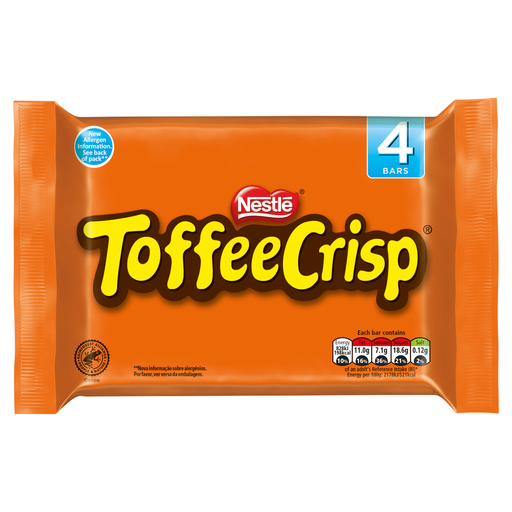
These options cover caramel-flavoured protein bars and a Toffee Crisp confectionery bar. Each listing is for a multipack, so the weight of one bar is not the pack quantity.
 No image available
Consider this for a caramel-flavoured protein-bar option rather than literal toffee. The listing is for twelve 50g bars; its product information identifies milk and soya and flags a polyol-related serving warning, so check the current pack.
 No image available
This salted-caramel bar is an option when you want to compare a meal-support product with other bar formats. The pack contains four 60g bars; check the current label for milk, soya and polyol information.
 No image available
Choose this format to compare a salted-caramel nut bar with the other caramel-style options, not as plain toffee. It is a pack of four 40g bars; the listing identifies peanuts, almonds, milk and soya, so check the current pack if allergens matter to you.
 No image available
For a confectionery-style snack rather than a protein-bar option, this pack contains four 38g Toffee Crisp bars. It is not a plain toffee stick; the listing identifies milk and wheat and warns of possible nuts, peanuts and soya.
Not if you specifically want the snack to contribute the stated protein offered by a protein bar. Tesco lists 0.3g protein per 100g for its 50g Werther’s Original Stick, making it a different choice from the salted-caramel protein bars. The British Dietetic Association advises prompt carbohydrate-rich food and fluids when quick refuelling is required, but individual needs depend on training demands.
Marks & Spencer lists 20g protein in its 55g salted-caramel bar, while Waitrose lists 14g in a 40g FULFIL bar. These are amounts for different bar sizes, so compare the stated portion as well as the protein figure; neither figure alone establishes how a bar will suit your whole post-exercise meal plan.
No single allergen statement covers all of them. The M&S bar is marked unsuitable for several specified allergy groups and for coeliacs; the FULFIL product information identifies milk, soya, peanut and hazelnut ingredients. TREK is labelled vegan and gluten-free but contains soya and carries precautionary allergen statements. Check the current pack for the particular bar you intend to eat.
The Department of Health and Social Care’s guidance describes restrictions on certain promotions and placements of qualifying high-fat, salt or sugar products by affected retailers selling to England, including online equivalents; it does not set out a general ban on an individual purchase. Do not assume every toffee product has the same classification or apply England’s retail rules across the whole UK.
No. The Department for Education’s school-food guidance concerns food and drink provided in state-funded schools in England, not an adult’s personal snack purchase. Its September 2026 guidance says proposed changes for September 2027 remain subject to Parliamentary approval.