
24/7 Customer Support

Free returns

Same-day & Next-day Delivery

Quality Guaranteed

Unlock Your Welcome Offers: FREE Delivery | Up to 80% OFF | Free 30-day JoyPlus trial
Download the APP
Tofu cat litter has become a popular alternative to traditional mineral litter for UK households wanting plant-based cat litter, lower dust and simpler daily cleaning. However, product descriptions can make similar promises while the actual materials, granule sizes, scent and disposal instructions differ considerably.
Before choosing a bag, look beyond phrases such as “eco-friendly”, “instant clumping” or “flushable”. The right option depends on your cat’s paw sensitivity, litter-tray habits, household plumbing and how often you want to restock.
Some tofu-based products are water-soluble, but that does not automatically mean they should be flushed in large quantities. UK drainage systems, septic tanks and older plumbing may not cope well with litter. Even products described as flushable commonly recommend flushing small batches.
Always follow the product label and local wastewater guidance. If the instructions explicitly say not to flush, place used clumps in a sealed household-waste bag instead. XUCUIHUA’s plant-based products, for example, specifically instruct users not to flush used litter or clumps.
Fine granules can be more comfortable under a cat’s paws, but pouring, scooping and vigorous digging may still release some particles. Product descriptions may use terms such as “99% dust-free”; treat this as a product specification rather than a guarantee that no dust will ever appear.
A lidded storage container, slow pouring and a litter mat can help reduce dust and tracking around the tray.
Green tea, creamy and pea scents may be pleasant to some households, but cats can be selective about fragrance. Strongly scented litter may discourage a cat from using the tray or make it difficult to identify a genuine cleaning problem.
For scent-sensitive cats and owners, an unscented cassava-and-corn formula may be a more suitable starting point. For other homes, baking soda or a plant-based deodorising ingredient can provide odour control without relying only on fragrance.
Check the granule measurement where it is provided. The PETSHY options use 1.5mm micro granules, while the ochama tofu litter uses 2mm granules. Fine, sand-like particles can feel gentler under paws and may reduce claw snagging, but they can also be easier to scatter.
For cats that kick litter from the tray, look for wording such as anti-tracking pellets, lightweight granules or a design intended to reduce scatter. A high-sided tray and mat remain useful even with low-tracking litter.
Clumping cat litter should form a stable mass around wet areas so that urine can be removed without taking large amounts of clean litter with it. Look for descriptions that specify fast or instant clumping, firm clumps and non-stick performance.
Daily scooping is important. Leaving urine clumps in the tray for several days can increase odour, encourage waste spreading and make the litter less pleasant for your cat. Refill the removed volume and follow the recommended depth, commonly around 3–7cm, depending on the product.
Tofu litter is generally made from processed plant material, while related plant-based litter may use cassava, corn, starch or green tea ingredients. Blended products can combine tofu with bentonite to alter clumping or absorbency.
Read the ingredients and disposal instructions rather than relying on the word “natural”. An unscented cassava-and-corn litter is not the same as a green tea tofu litter with baking soda. If your cat has previously rejected scented litter, begin with an unscented option and introduce any change gradually.
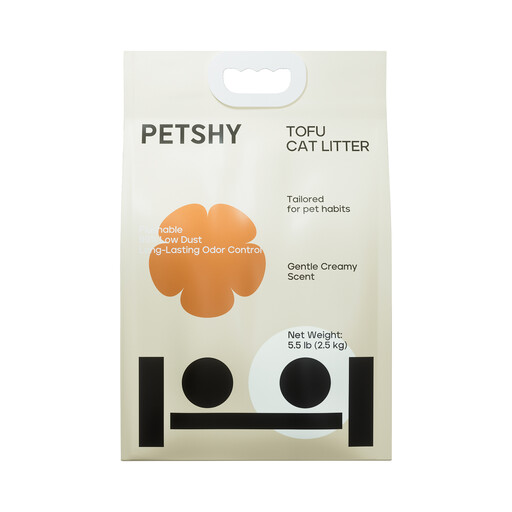
Why It Suits This Buyer: A straightforward 2.5kg pack for owners moving from mineral litter or trying tofu litter for the first time.
Its product information states instant tight clumping, anti-tracking pellets and a 99% dust-free specification, while clearly identifying the formula as 100% plant-based.
1.5mm granules, tight clumping, a gentle creamy scent and flushable product information.
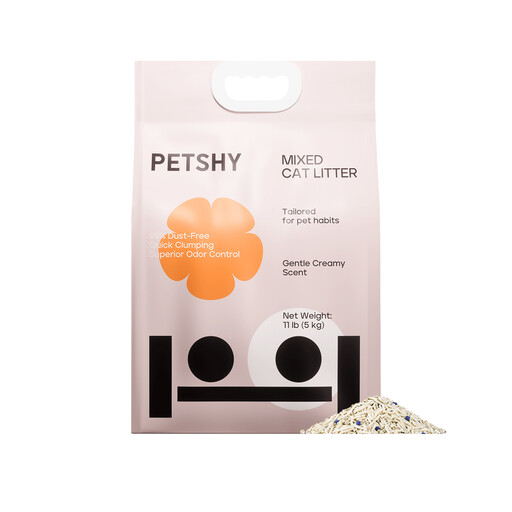
Why It Suits This Buyer: The larger 5kg format suits multi-cat homes or owners who prefer fewer replacement orders.
The tofu-and-bentonite blend is specified rather than hidden, helping buyers understand that this is not a 100% tofu formula.
1.5mm micro granules, paw-friendly positioning, a gentle creamy scent and a stated 30% lower usage claim.
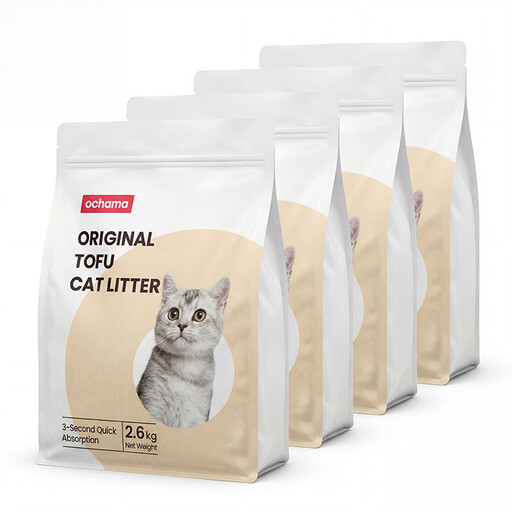
Why It Suits This Buyer: The 10.4kg total format is practical for multi-cat households and regular litter-tray use.
The pack quantity, 2mm granules and unscented specification are stated clearly, avoiding uncertainty about ongoing supply and fragrance.
The product information lists fast firm clumping, fourfold water absorption and flushing in small batches.
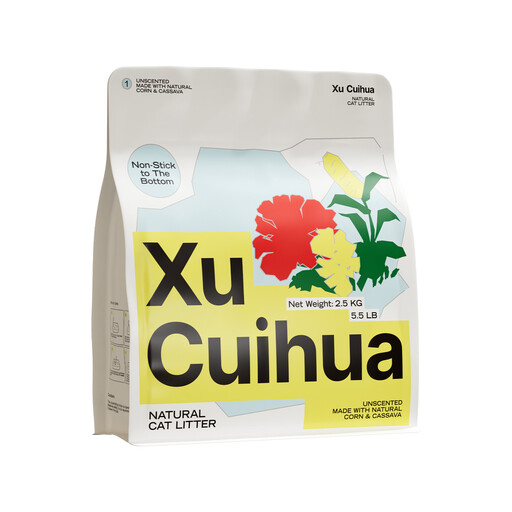
Why It Suits This Buyer: A cassava-and-corn option for households looking for an additive-free, unscented approach.
It explicitly states that used litter should not be flushed, removing ambiguity for homes where toilet disposal is unsuitable.
Cassava and corn materials, fast firm clumping, low dust when pouring and a fine, sand-like texture.
We have compiled a complete, real-time list of products that fully satisfy these strict selection criteria and UK safety regulations.
Only when the product instructions permit it, and even then, flush small quantities. Never flush litter labelled “do not flush”. Local plumbing, shared drainage and septic-tank arrangements may require all used litter to go into household waste.
There is no single lifespan. It depends on the cat’s size, diet, urine output, number of cats, tray dimensions and scooping routine. A 2.5kg bag may suit a short trial or one-cat household, while multi-cat homes may find a multi-pack more convenient. Track how much you add each week to compare real running costs.
Performance varies by formula and cleaning routine. Tofu, bentonite and tofu and bentonite cat litter can all form clumps, while baking soda or plant-based deodorising ingredients may support odour control. Compare the material, scent and clumping instructions rather than assuming one category will suit every cat.