
24/7 Customer Support

Free returns

Same-day & Next-day Delivery

Quality Guaranteed

Unlock Your Welcome Offers: FREE Delivery | Up to 80% OFF | Free 30-day JoyPlus trial
Download the APP
Tofu cat litter has become a practical alternative to clay and silica-based products for UK households seeking plant-based cat litter, easier cleaning and lower dust. However, not every bag offers the same balance of clumping, odour control, tracking or disposal convenience.
A low price can be misleading if the litter breaks apart during scooping, spreads across the floor or needs replacing more frequently than expected. Before buying, focus on the material composition, pellet design and disposal instructions rather than relying only on phrases such as “natural”, “flushable” or “dust-free”.
Tofu litter is often water-soluble, but that does not mean every toilet or drainage system can handle unlimited quantities. Some products specifically advise flushing only small amounts, while others must be disposed of with household waste.
Always check:
When in doubt, scoop used litter into household waste. Cat faeces should not be flushed, particularly where local guidance advises against it.
Many products use pea fibre, soy fibre, cassava, corn or other botanical materials. However, mixed formulas may also contain bentonite clay, activated carbon or mineral ingredients. These can alter clumping behaviour, weight, tracking and disposal requirements.
Check the full materials list rather than relying on the front-of-pack description. A tofu and clay blend may suit owners prioritising firm clumps, but it is not the same as a 100% plant-based formula.
Green tea, jasmine, creamy and white tea fragrances may help create a fresher-smelling room for some households. Nevertheless, cats can be selective about scent and texture. A strongly scented litter may discourage tray use, especially during a changeover.
Unscented tofu litter can be a more suitable starting point for cats that already use their tray reliably or households wanting to minimise added fragrance. Introduce any new litter gradually by mixing it with the existing product.
Pea fibre and tofu-based pellets are lightweight and absorbent. Fine pellets can feel closer to sand under paws, while larger pellets may reduce scattering and tracking. A blended pellet size can offer a compromise between paw comfort and keeping litter inside the tray.
For kittens and adult cats, consider whether the texture is familiar to your cat and whether the pellets can become caught between claws. A depth of around 5–7 cm is commonly stated in product instructions, although the ideal level depends on the tray and your cat’s digging habits.
A practical clumping cat litter should absorb urine without creating a wet layer at the base of the tray. Look for product information describing fast absorption, firm clumps and non-stick performance. Strong clumps are easier to lift with a scoop and can reduce the amount of clean litter removed during daily maintenance.
Avoid judging performance solely by “instant” or “tight” wording. The useful questions are whether the product specifies its ingredients, recommended depth and cleaning routine, and whether the clump remains intact when scooped.
Low-dust cat litter can make pouring and tray cleaning more comfortable, but “99% dust-free” and similar figures are product claims rather than a guarantee of zero airborne particles in every home. Pour slowly and keep the bag close to the tray to reduce disturbance.
Tracking depends on pellet size, your cat’s paws and the tray design. A mat placed outside the box can help collect stray pieces. For odour-control cat litter, absorption, daily scooping, ventilation and regular tray washing are all important. Fragrance can mask smells but does not replace good hygiene.
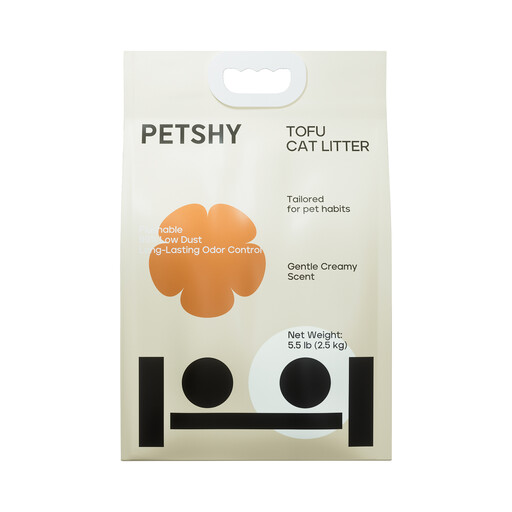
Why This Fits Their Persona: A straightforward 2.5kg option for owners trying tofu litter for the first time without committing to a multipack.
The product information states a 100% plant-based formula, 1.5mm pellets and flushability, helping shoppers compare specific details rather than vague natural-litter wording.
Instant tight clumping; listed as 99% dust-free with anti-tracking pellets.
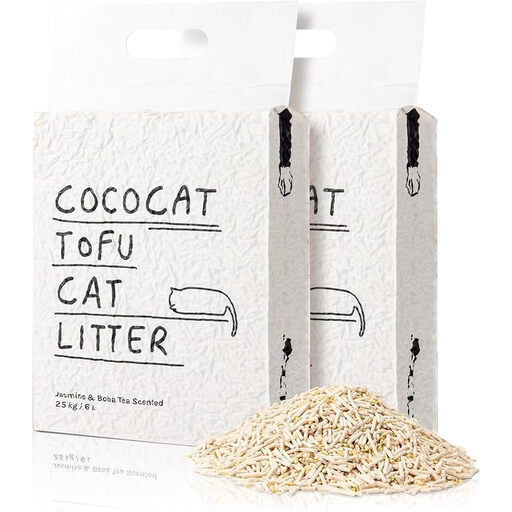
Why This Fits Their Persona: A vacuum-sealed twin pack with a jasmine milk tea scent for owners who value convenient storage and a fragranced tray area.
Its listed composition is 80% pea fibre and 20% millet, with rice flour, corn starch and guar gum also specified. This gives a clearer material picture than a generic “natural” label.
Two 2.5kg bags; listed as low dust and compatible with most automatic litter trays.
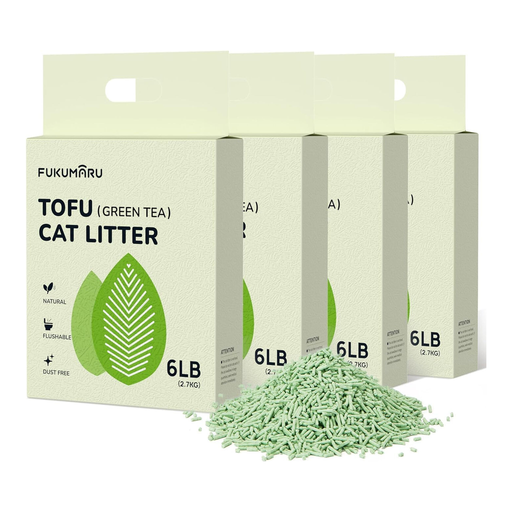
Why This Fits Their Persona: The 10.8kg four-bag format is suited to multi-cat litter users who want fewer replenishment purchases.
The formula is clearly listed as 69% tofu pellets, 30% bentonite and 1% activated carbon, so buyers can account for the mixed-material disposal instructions.
Four 2.7kg bags; 2mm pellets and a white tea fragrance are specified.
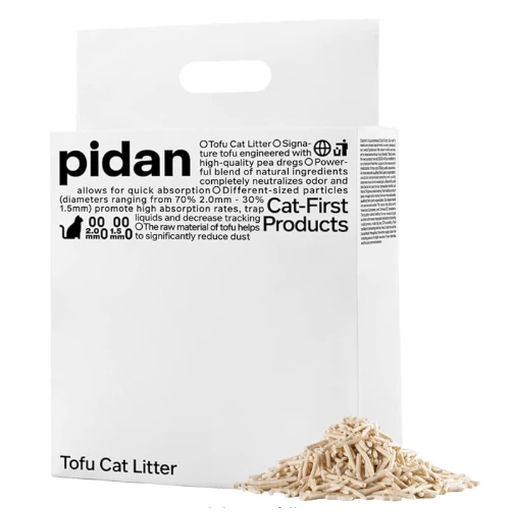
Why This Fits Their Persona: An unscented single bag for owners who want to introduce natural cat litter gradually or avoid fragranced products.
The product is described as 100% pea fibre, with a 70% 2mm and 30% 1.5mm pellet blend. Its instructions also advise flushing only small amounts.
Unscented formula; vacuum-sealed packaging with low-scattering pellet design.
We have compiled a complete, real-time list of products that fully satisfy these strict selection criteria and UK safety regulations.
For automatic or self-cleaning trays, check the product listing carefully. Some tofu formulas are suitable for automatic trays, while others are recommended for manual use only.
Many tofu litter products are listed as suitable for kittens and adult cats, but individual cats may react differently to a new texture or fragrance. Choose a clearly labelled formula, introduce it slowly and prevent ingestion. If a kitten consumes a significant amount, contact a vet for appropriate advice.
Lifespan depends on the number of cats, tray size, litter depth, scooping routine and urine output. A multi-cat household will generally use more litter than a single-cat home. Comparing total weight, number of bags and stated capacity provides a more useful cost comparison than looking at the price of one pack alone.
Some tofu litter is water-soluble and labelled flushable, but disposal rules vary. Flush only the quantity specified on the packaging, never assume mixed tofu-and-clay litter is suitable and check local sewage guidance. If there is any uncertainty, use household waste disposal instead.