
24/7 Customer Support

Free returns

Same-day & Next-day Delivery

Quality Guaranteed

Unlock Your Welcome Offers: FREE Delivery | Up to 80% OFF | Free 30-day JoyPlus trial
Download the APP
If you are comparing Together Health supplements, the wide range can make choosing difficult. There are wholefood multivitamins, magnesium capsules, mushroom supplements, vegan vitamin D3 and targeted options for energy, stress, joints and beauty. However, attractive packaging and phrases such as “natural” or “high strength” do not always tell you whether a product suits your diet, routine or existing supplements.
The practical approach is to look beyond the headline claim. Check the active ingredients, serving size, source, allergen information, dosage and relevant warnings before buying. This helps UK shoppers avoid paying for unnecessary blends or doubling up on nutrients.
A product may advertise a high milligram figure, but the number might refer to a complete blend rather than one active nutrient. With mushroom supplements, for example, 800mg of total extract is not directly comparable with 800mg of a single mushroom powder.
Look for:
Natural food supplements can still interact with medicines or be unsuitable during pregnancy, breastfeeding or certain medical conditions. Herbal products such as ashwagandha, turmeric and 5-HTP need particular care. A vegan supplement may also contain allergens such as mustard, yeast or botanical ingredients.
Always read the product label and consult a GP, pharmacist or other healthcare professional if you take prescription medication or have an underlying condition.
Taking a multivitamin alongside separate vitamin D3 capsules, zinc, iron or magnesium capsules can increase your total intake. Compare the nutrient tables and Nutrient Reference Values (NRVs) before combining products. NRVs are reference amounts used on UK food labels; they are not personalised medical targets.
For shoppers looking for organic supplements, vegan supplements UK shoppers can use or plant-based vitamins, check the source of every key ingredient. Together Health products in this range include ingredients from citrus pulp, guava leaf, lichen, mushrooms, seaweed, mineral-rich water and nutritional yeast.
A wholefood formulation may appeal if you prefer food-derived ingredients and fewer isolated additives. However, “wholefood” does not automatically mean more effective for every person. The deciding factor should be whether the nutrient amount and format match your needs.
For mushroom products, check whether the label identifies the mushroom species and whether it uses fruiting bodies or mycelium. The Together Health mushroom products listed here specify organic fruiting bodies and vegetable cellulose capsules.
The serving instructions vary across the range:
These figures make products easier to compare. They also show why capsule count alone is not a reliable measure of value.
Look for vegan, organic or allergen-free status only where it is clearly stated on the product information. Packaging can also matter to environmentally conscious shoppers: several Together Health products use plastic-free or compostable materials according to their listed descriptions.
Check the seal, best-before date and storage instructions when your order arrives. Most capsules should be kept in a cool, dry place away from direct sunlight and out of children’s reach. Do not use a product if the seal is broken or missing.
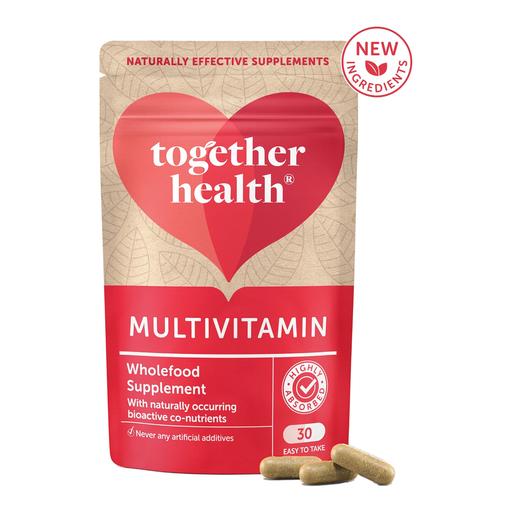
Why This Fits Their Persona: A one-capsule daily format is a straightforward starting point for adults seeking broad nutritional coverage rather than several separate products.
Its label lists individual nutrients and amounts, helping you compare the formula instead of relying on a generic “complete” claim.
One capsule per day; plant, algae and mineral-rich water sources; suitable for vegetarians and vegans according to the listing.
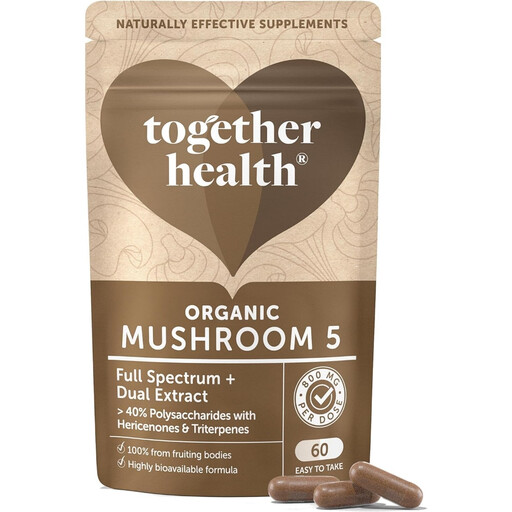
Why This Fits Their Persona: Suits shoppers who want one multi-mushroom product covering Lion’s Mane, Chaga, Reishi, Shiitake and Maitake.
The listing identifies organic fruiting bodies and provides extract ratios plus polysaccharide and beta-glucan figures, rather than only stating “mushroom blend”.
Five named organic mushrooms; 60 capsules; vegan and plastic-free packaging stated in the product information.
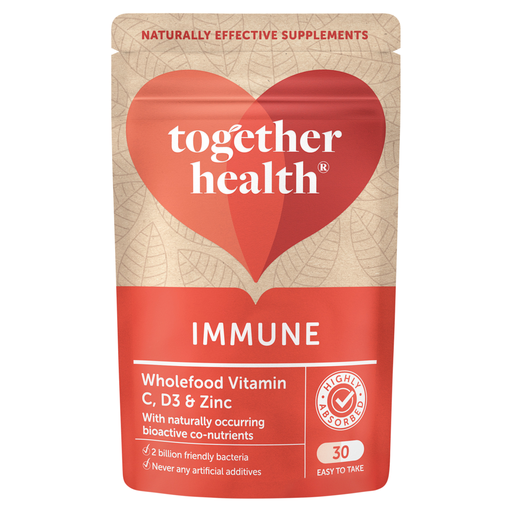
Why This Fits Their Persona: Appropriate for adults seeking a combined formula with vitamin C, vitamin D3, zinc, selenium and a listed probiotic culture.
The label states nutrient quantities and gives a culture count at the end of shelf life, making the probiotic specification clearer.
Free from dairy, soya and gluten according to the listing; dosage instructions allow up to three capsules daily during illness, subject to the stated guidance.
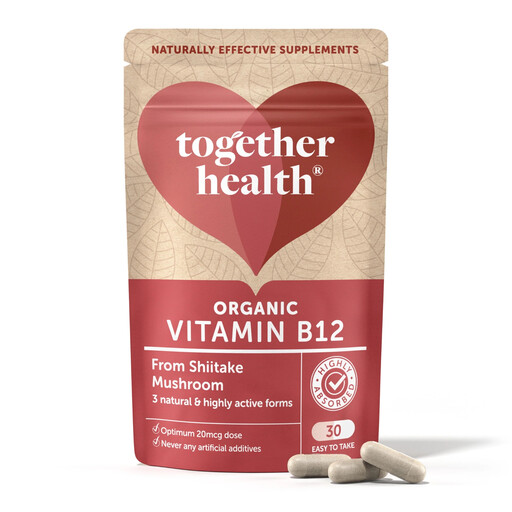
Why This Fits Their Persona: A targeted option for vegans and vegetarians who want a clearly labelled B12 supplement rather than a full multivitamin.
It names the three B12 forms and gives the amount per capsule, so shoppers can compare it with fortified foods or other supplements.
Organic mushroom-derived ingredients; 20 micrograms of vitamin B12 per capsule; vegetable cellulose capsule.
We have compiled a complete, real-time list of products that fully satisfy these strict selection criteria and UK safety regulations.
Many products in the range are described as vegan and use vegetable cellulose capsules. Suitability varies by product, so check the current label rather than assuming every item has identical ingredients. The men’s multivitamin, for example, lists mustard as an allergen.
You can compare the nutrient tables, but combining products may duplicate vitamin D, zinc, magnesium, iron or B vitamins. Follow each product’s recommended daily intake and ask a pharmacist or GP for personalised advice, particularly if you are pregnant, breastfeeding, taking medication or managing a medical condition.
Keep them sealed in a cool, dry place away from direct sunlight. Follow the product label for use-after-opening guidance, and do not use the capsules if the internal seal is damaged or missing. A supplement should complement a varied, balanced diet and healthy lifestyle rather than replace either.