
24/7 Customer Support

Free returns

Same-day & Next-day Delivery

Quality Guaranteed

Unlock Your Welcome Offers: FREE Delivery | Up to 80% OFF | Free 30-day JoyPlus trial
Download the APP
A toilet roll holder might seem like a minor detail, but choosing the wrong one can lead to daily frustration. From models that rust within months to freestanding units that constantly topple over, it’s easy to waste money on a product that fails to do its one job properly. As a Joybuy Product Recommendation Officer, my role is to help you navigate the options and identify the key features that separate a durable, practical holder from one destined for the bin.
This guide will break down the common pitfalls to avoid and highlight the essential factors to consider, ensuring your next purchase is a lasting and stylish addition to your bathroom.
Before you add anything to your basket, be aware of these common issues that plague many low-quality options on the market.
freestanding toilet roll holder offers great flexibility, but many are designed with a narrow, lightweight base. The result? They wobble or fall over every time you pull a sheet of paper, especially on slightly uneven tiled floors. A practical holder needs a stable, weighted foundation.no drill toilet roll holder seems ideal. However, some use overly aggressive adhesives that can strip paint or damage wall surfaces upon removal. Conversely, others use weak pads that give way after a few weeks, sending your toilet roll clattering to the floor.To avoid these traps, focus on these three non-negotiable parameters.
Your first decision is how the holder will be fixed in your space.
Wall-Mounted: This is the classic, space-saving choice. It keeps the floor clear and ensures the holder is always in a fixed, convenient position. There are two main types:
self adhesive toilet roll holder is an excellent solution for renters or anyone wanting to avoid drilling into tiles. Look for systems that specify the type of adhesive used and are designed for easy, residue-free removal.Freestanding: Perfect for those who want zero installation or the flexibility to move the holder. The critical feature here is the base. Look for a wide, heavy or weighted base that provides a low centre of gravity to prevent tipping. Many also double as a toilet roll holder with storage, which is a practical bonus.
The material dictates how well your holder will withstand daily use and moisture.
chrome toilet roll holder offers a timeless, easy-to-clean look.matt black toilet roll holder provides a modern, durable finish that is resistant to chipping and scratches.Finally, consider how you use your space. Do you need a simple, minimalist holder for a single roll, or would a unit with integrated storage for spare rolls help keep your bathroom tidy? For those looking to make a statement, a novelty toilet roll holder can add a touch of personality, but always check that its design doesn't compromise its stability or ease of use.
Based on these criteria, here are a few options suited to different needs and preferences.
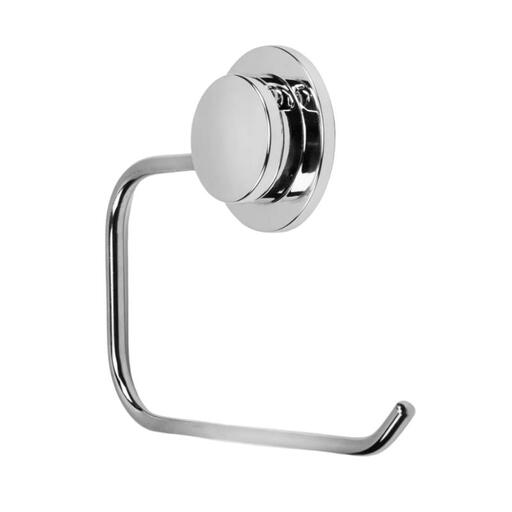
Why This Fits Their Persona: This is an ideal choice for anyone in rented accommodation or who simply wants to avoid drilling. The tool-free installation means you can have it up in minutes without any permanent changes to your walls.
It directly counters the "damage-free adhesive" pitfall. The Stick 'n' Lock system uses a strong pressure-activated adhesive pad designed for secure mounting on flat, finished surfaces, which can be removed without leaving residue.
Completely tool-free installation and comes with a 5-year rust-free guarantee, providing confidence in its durability.
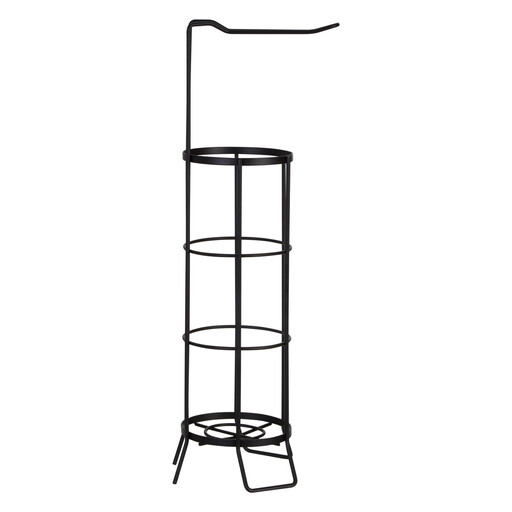
Why This Fits Their Persona: For a busy household, running out of toilet roll is a common annoyance. This freestanding unit solves that by providing storage for three spare rolls plus one in use, keeping everything organised and within easy reach.
It avoids the "unstable freestanding" trap with a sturdy metal frame and a well-proportioned base (20cm x 19cm). This provides a stable foundation that is less likely to be knocked over than top-heavy, narrow alternatives.
Offers a compact footprint while delivering significant storage capacity. The minimalist black metal frame fits well with modern bathroom décor.
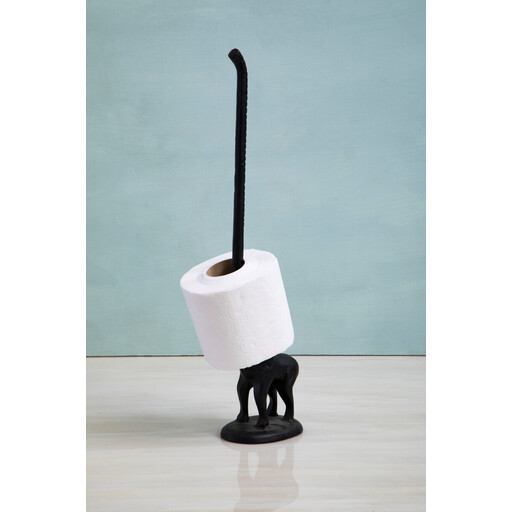
Why This Fits Their Persona: For someone who sees every item as a chance to express their style, this novelty holder is more than just functional—it's a piece of décor. The charming elephant design adds a unique, artistic touch to safari-inspired or eclectic bathrooms.
This holder sidesteps the "unstable freestanding" pitfall common in novelty items. It is made from robust and heavy cast iron (1.41kg) and features a solid plinth base, giving it substantial weight and stability.
Combines a unique, decorative design with a durable and weighty cast iron construction, making it both a conversation piece and a practical accessory.
We have compiled a complete, real-time list of products that fully satisfy these strict selection criteria and UK safety regulations.
A common guideline is to position it approximately 26 inches (66 cm) from the floor and 8-12 inches (20-30 cm) in front of the toilet bowl's edge. The most practical approach is to sit on the toilet and test what feels like a comfortable and natural reaching distance for you before marking any drill holes.
It is generally not recommended. Most high-strength adhesives are formulated for smooth, non-porous surfaces like ceramic tiles, glass or metal. Applying them to wallpaper or a painted wall can cause the surface layer to tear and peel off when weight is applied or when you try to remove the holder. Always check the manufacturer's guidance for suitable surfaces.
For holders with adhesive pads, you can often soften the glue by gently warming the bracket with a hairdryer on a low setting. Afterwards, you may be able to slide dental floss or a thin plastic scraper behind the fixture to carefully slice through the adhesive. Any remaining residue can typically be cleaned off with a suitable adhesive remover, but it is wise to test it on a small, inconspicuous area first.