
24/7 Customer Support

Free returns

Same-day & Next-day Delivery

Quality Guaranteed

Unlock Your Welcome Offers: FREE Delivery | Up to 80% OFF | Free 30-day JoyPlus trial
Download the APP
Starting toilet training can be challenging enough without buying a seat that slips, traps dirt or makes your child feel uncomfortable. The right toilet training seat should provide a stable, confidence-building transition from nappies to the family toilet or a standalone potty.
For parents and carers in the UK, the main choice is between a toddler toilet seat that fits over an existing toilet and a separate toilet training potty chair. Both can work well, but their designs suit different homes, routines and stages of development.
A universal toilet training seat is generally designed to fit most standard toilet seats, but toilet bowls vary in shape and size. Before buying, check the product dimensions and compare them with your toilet. A seat that does not sit flat may move when your child climbs on or off.
A lightweight child toilet training seat can be convenient, but low weight alone does not indicate safe performance. Look for anti-slip contact points, non-slip feet, raised handles or a supportive backrest. These features help reduce movement and can make your child feel more secure.
Children should always be supervised. A toilet training seat is not a step stool, and your child should not stand on it.
Small gaps, permanently attached bowls and difficult-to-reach corners can make daily cleaning frustrating. Marketing descriptions often highlight appearance or portability while giving little attention to hygiene. For regular use, choose a design with smooth surfaces and a removable bowl or construction that limits dirt-trapping joins.
For an over-the-toilet toilet seat for toddlers, confirm that the dimensions suit your existing toilet. The seat should rest securely on the adult seat, with its anti-slip sections fully touching the surface.
For a standalone potty training seat, use it on a flat, stable floor. Non-slip feet can help limit movement, but they do not replace supervision or correct positioning.
Also consider how your child will get on and off. Wide handles can provide something to hold, while a high backrest may offer additional support for children who are still developing balance and confidence.
A splash guard toilet seat can help reduce mess, particularly for boys, although it cannot prevent every spill. An angled seat may also direct the child into a more suitable sitting position.
Comfort matters because a child who feels unstable or cramped may resist using the toilet. Look for a rounded or reduced-size seat, a supportive backrest and a design appropriate for the manufacturer’s stated age range. The products below are listed for children aged 12 months or over, but readiness varies from child to child.
Plastic is common because it is lightweight and easy to wipe. Soft rubber contact areas can improve grip, while a seamless or integrated construction may reduce spaces where residue can collect.
Before purchase, check for:
A wipe-clean surface is useful, but regular cleaning with a mild detergent and damp cloth remains important. Inspect the seat periodically and stop using it if you find cracks, breaks or worn anti-slip components.

Why This Fits Their Persona: A standalone potty chair can suit families beginning at home who want a familiar, child-sized option without using the bathroom toilet for every attempt. Its portable format makes it practical for different rooms.
It avoids relying on a potentially poor fit with an adult toilet. The flat-base design is intended for placement on a stable surface, while the removable bowl makes routine emptying more straightforward.
Suitable from 1+ according to the listing; includes a high backrest, raised splash guard and removable bowl with handle.
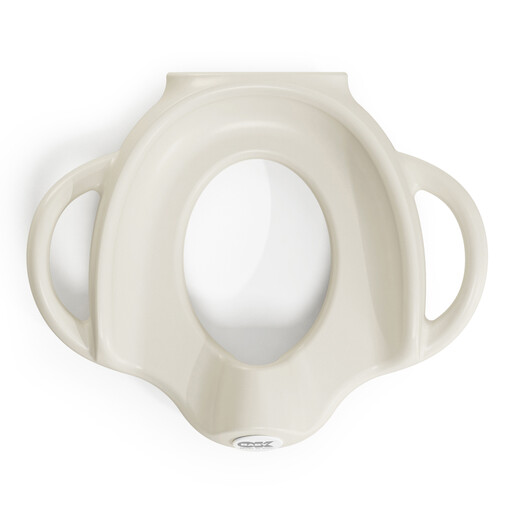
Why This Fits Their Persona: This option suits families ready to move from a potty to the standard bathroom toilet, particularly where comfort and supported independence are priorities.
The listing specifies soft anti-slip rubber, wide raised handles and a high backrest, addressing movement and insecure seating. Its dual-injection construction is designed without gaps between the rubber and plastic.
Suitable from 12 months+ according to the listing; includes a splash guard, angled ergonomic design and self-standing storage.
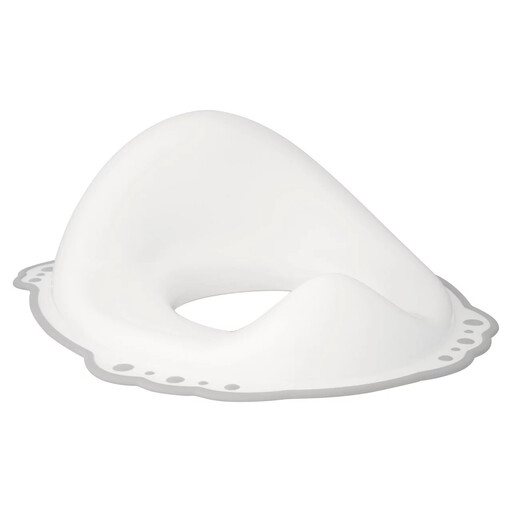
Why This Fits Their Persona: This may suit households looking for a sturdy, lightweight option that can be moved between suitable locations and used by children aged 18 months+ according to the listing.
The product listing clearly states a maximum weight of 100kg and identifies non-slip feet. It should still be used only on a stable, flat surface and never as a step.
Made from sturdy plastic; has a D-shaped design, non-slip feet and a lightweight format for easier handling.
Choose an over-the-toilet toddler toilet seat if your child is comfortable using the bathroom and you want to build familiarity with the household toilet. It can also reduce the transition between potty training and independent toilet use.
A toilet training potty chair may be more suitable when your child needs a lower seat, more privacy or easier access in a bedroom or play area. A removable bowl can simplify emptying, but it requires prompt cleaning after use.
For either format, position the product securely, follow the supplied instructions and supervise your child. Avoid rushing the process: comfort, routine and easy access can be more useful than additional features.
We have compiled a complete, real-time list of products that fully satisfy these strict selection criteria and UK safety regulations.
Age guidance depends on the product. The options listed here are specified for children from 12 months+, 18 months+ or 1+ respectively. Read the manufacturer’s instructions and consider whether your child can sit steadily, follow simple directions and show interest in toilet routines.
For a toilet-mounted seat, check that the anti-slip surfaces are fully in contact with the adult seat and that the product is correctly positioned before every use. For a potty chair, place it on a flat floor and ensure its non-slip feet are clean and intact. Supervise your child when climbing on or off.
There is no fixed lifespan. Continued use depends on the material, frequency of cleaning and condition of the seat. Inspect it regularly for cracks, loose parts, damaged rubber or reduced stability. Replace it if any part becomes unsafe, even if your child has not yet completed toilet training.