
24/7 Customer Support

Free returns

Same-day & Next-day Delivery

Quality Guaranteed

Unlock Your Welcome Offers: FREE Delivery | Up to 80% OFF | Free 30-day JoyPlus trial
Download the APP
Choosing between toilet training seats and potties can feel straightforward until you compare the details. Some products look secure but move on the toilet, while others are difficult to clean or too bulky for a small bathroom. A decorative adult toilet seat may also be unsuitable for a toddler if it lacks a properly integrated child seat.
This guide focuses on the features that make a practical difference for UK households, from stability and hygiene to toilet compatibility and portability.
A toddler toilet training seat described as universal may fit most standard toilets, but toilet pans vary in shape and size. D-shaped, oval and more rounded pans can require different positioning. Before buying, check the product dimensions and confirm that the child seat will sit flat without rocking.
For a replacement adult seat, measure the pan’s length, width and hinge-hole spacing. Features such as adjustable hinges can make installation easier, but they do not remove the need to check the toilet shape.
A seat with narrow gaps, exposed hinges or a permanently attached bowl can take longer to clean. Toilet training involves frequent spills, so a removable bowl, quick-release hinge or seamless construction can be more useful than decorative features.
Look for smooth plastic surfaces and components that can be removed or wiped with a mild detergent. Avoid harsh chemicals unless the manufacturer specifically allows them, as these may damage plastic or rubber.
Non-slip feet and rubber grips can help reduce movement, but they cannot guarantee that a child will remain safe. A potty or child toilet seat must be placed correctly on a stable surface or toilet pan, and toddlers should be supervised throughout use. Children should not stand on a training seat.
A non-slip toilet training seat should have feet or rubber contact points that sit fully on the adult toilet seat. Handles can also help a child sit down and rise independently, but the seat should never be used if it rocks, slides or leaves a large gap around the pan.
For a standalone toddler potty chair, check that the base is broad enough for the child and that it sits on a level bathroom floor. A raised splash guard may help reduce mess, while a high backrest can provide additional support.
Age suitability is an important starting point. The products below include options suitable from 12 months+, 18 months+ or 1 year+, but readiness differs between children. Follow the product instructions rather than selecting by age alone.
Where a maximum weight is specified, treat it as a firm limit. For example, the Solution Non-Slip Toilet Training Seat has a stated maximum weight of 100kg. This does not mean every child will find its shape comfortable, so dimensions and intended use still matter.
Families using a training seat daily may value washable materials and quick cleaning more than extra accessories. For travel, folding legs, a carry bag and disposable liners can make a product easier to use away from home.
For a family toilet seat with child seat, consider whether the child section can be removed when no longer needed. A soft-close toilet seat can reduce noise and prevent sudden slamming, while quick-release hinges make cleaning around the pan simpler.
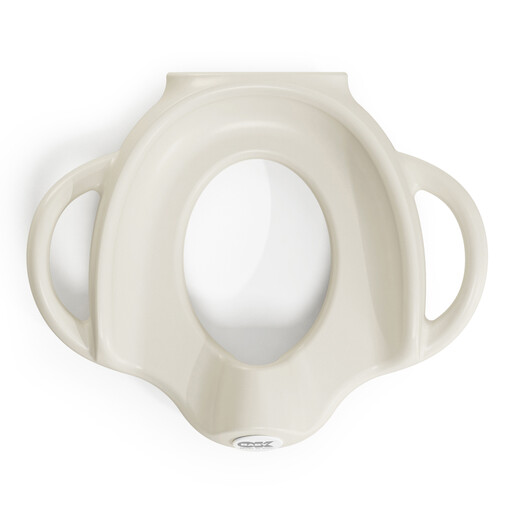
Why This Fits Their Persona: A straightforward choice for families moving from a potty to the main bathroom toilet, with a lightweight format that is easy to store.
Soft anti-slip rubber and raised handles address movement and balance concerns. The seat is designed for children aged 12 months+ and should be checked for secure contact before use.
High backrest, splash guard and seamless plastic-and-rubber construction. It can stand alone for storage.
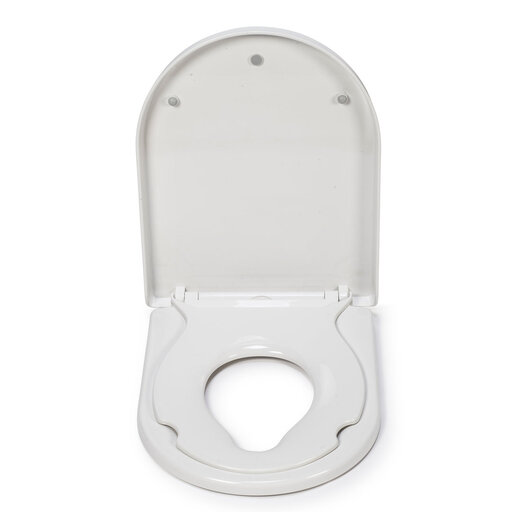
Why This Fits Their Persona: Suitable for households wanting one coordinated bathroom fitting for adults and toddlers rather than a separate removable trainer.
The removable magnetic child seat avoids repeatedly placing a loose trainer on the pan. Its D shape should still be matched to the toilet before installation.
Soft-close action on both seats, quick-release hinges, anti-bacterial treatment and supplied fittings for top or bottom fixing.

Why This Fits Their Persona: A practical match for families taking toddlers on car journeys, holidays or days out where a familiar toilet option may not be available.
The folding design and carry bag address storage problems. Anti-slip feet support both potty and reducer modes, but the product must be placed on a flat, stable surface.
Three modes, a washable bowl insert with an 800ml capacity and three disposable liners with absorbent pads holding up to 300ml each.

Why This Fits Their Persona: A suitable option for a child who may feel more comfortable beginning with a dedicated toddler potty chair at home.
The stable standalone format avoids the mismatch that can occur when a child trainer is used on a toilet pan that is too large or unusually shaped.
Rounded seat, high backrest, raised splash guard and a removable bowl with a handle for emptying and cleaning.
We have compiled a complete, real-time list of products that fully satisfy these strict selection criteria and UK safety regulations.
It depends on the child and your bathroom routine. A potty chair offers a lower, standalone starting point and can be placed near the bathroom. A child toilet seat helps a toddler move directly towards using the family toilet. A 3-in-1 travel potty can provide both options, which may be useful for families who are away from home regularly.
Place it centrally on a clean, dry adult seat and ensure all rubber feet or contact points are fully supported. Check that the child seat matches the toilet pan shape. Never use a seat that rocks or shifts under light pressure, and supervise the child every time.
There is no universal lifespan. Regularly inspect the product for cracks, loosened parts, damaged rubber or signs of wear. Replace it if stability or hygiene is compromised, even if it has not been used for long. Follow the care instructions and keep reusable toilet training products clean and dry between uses.